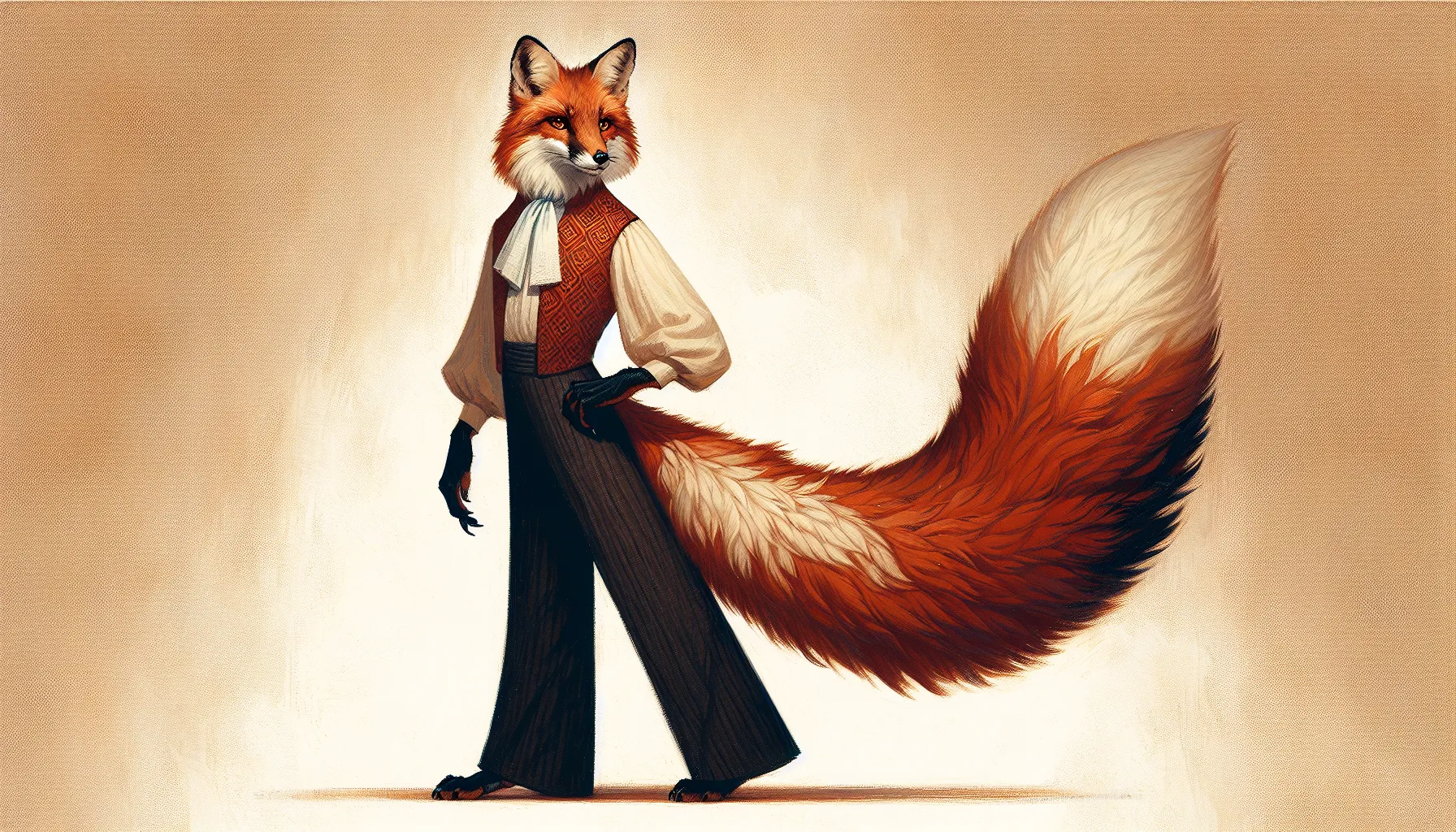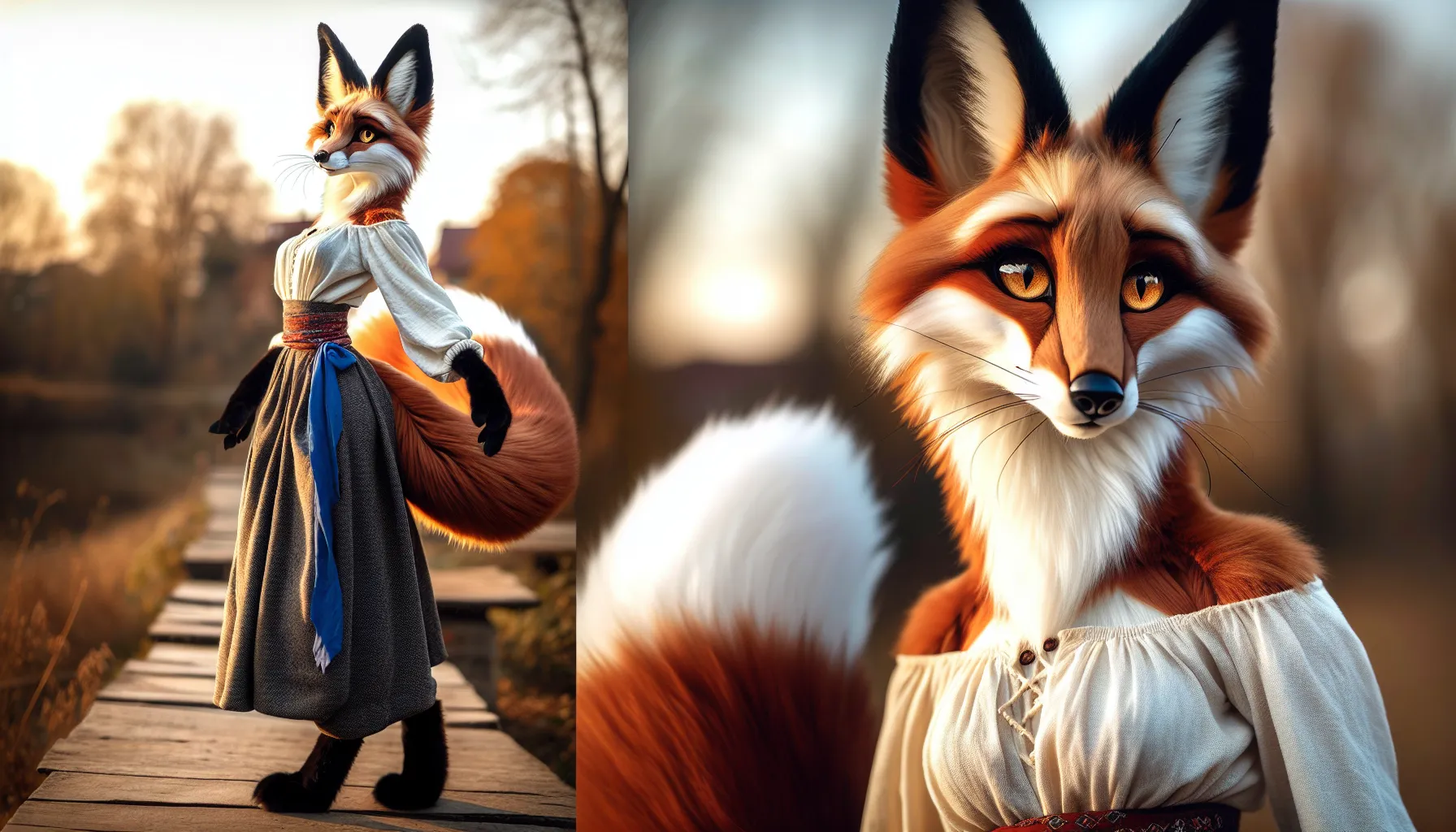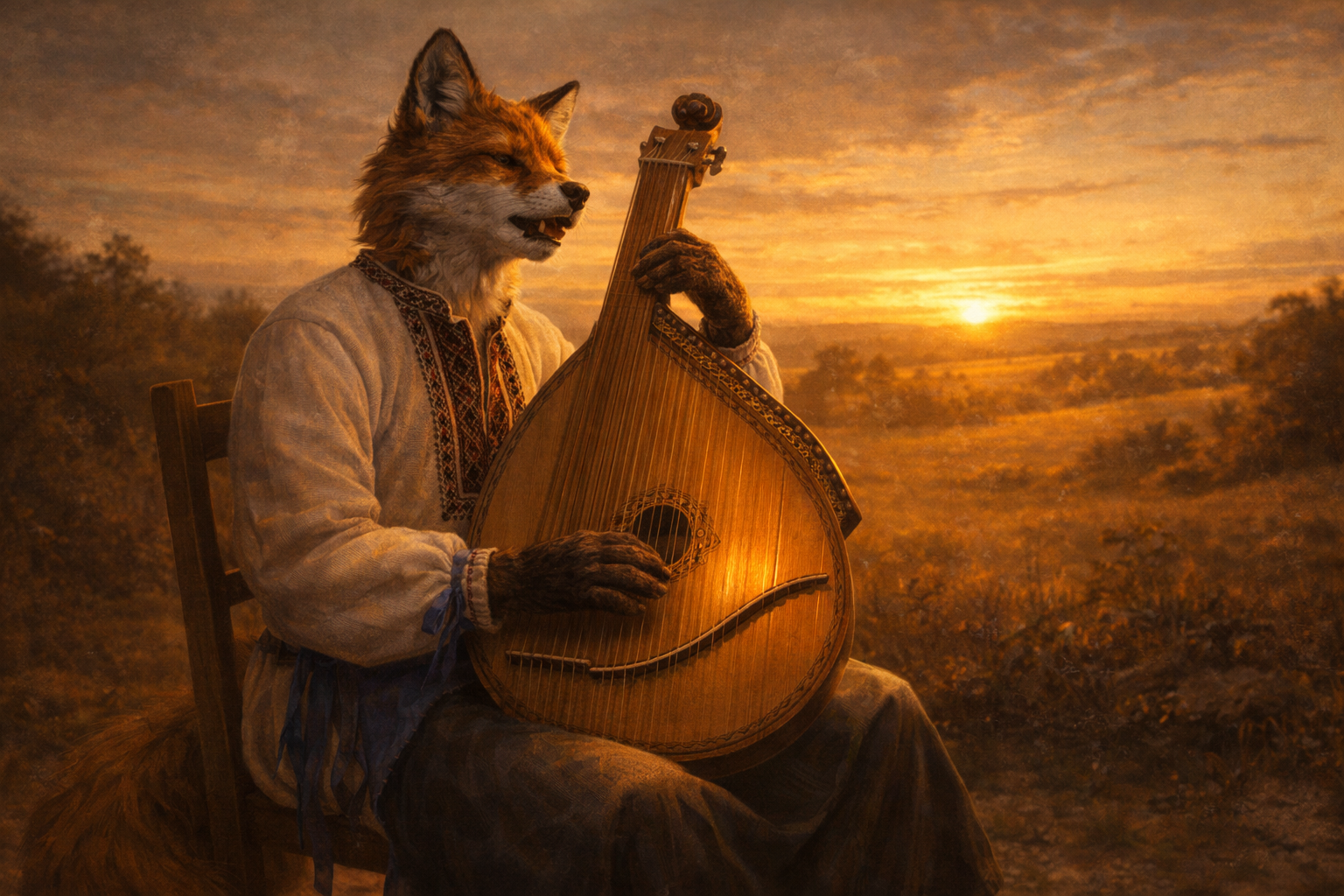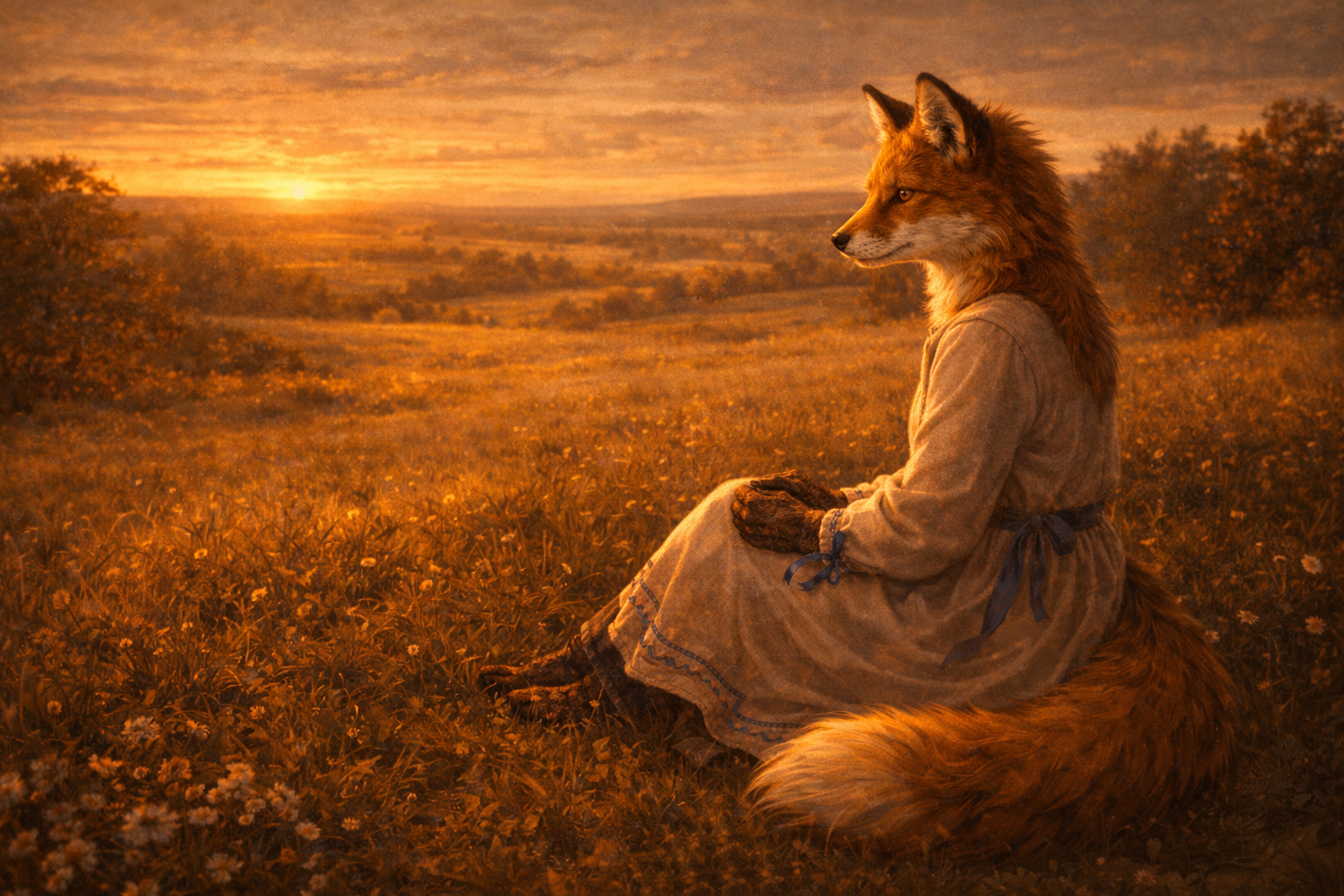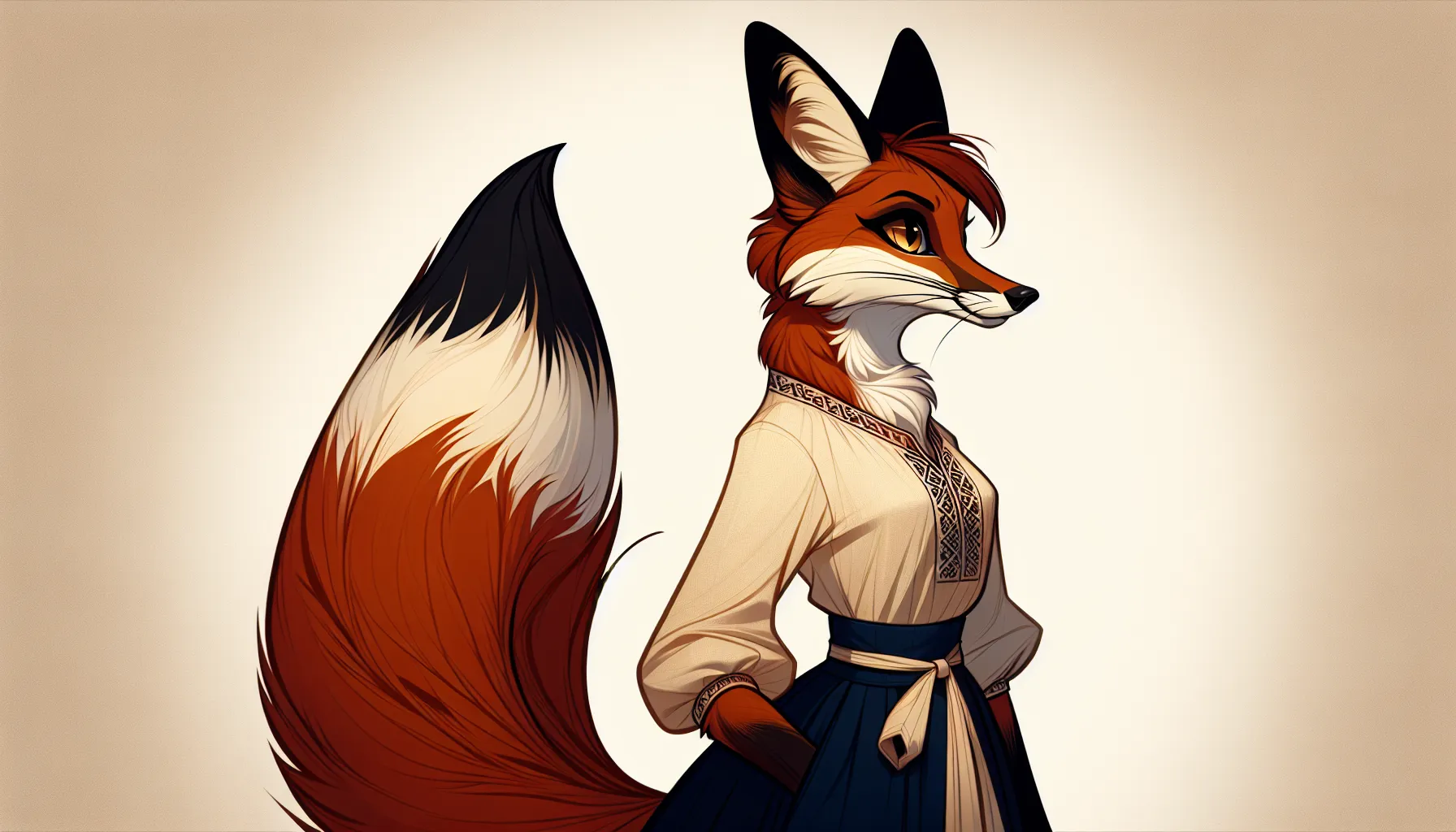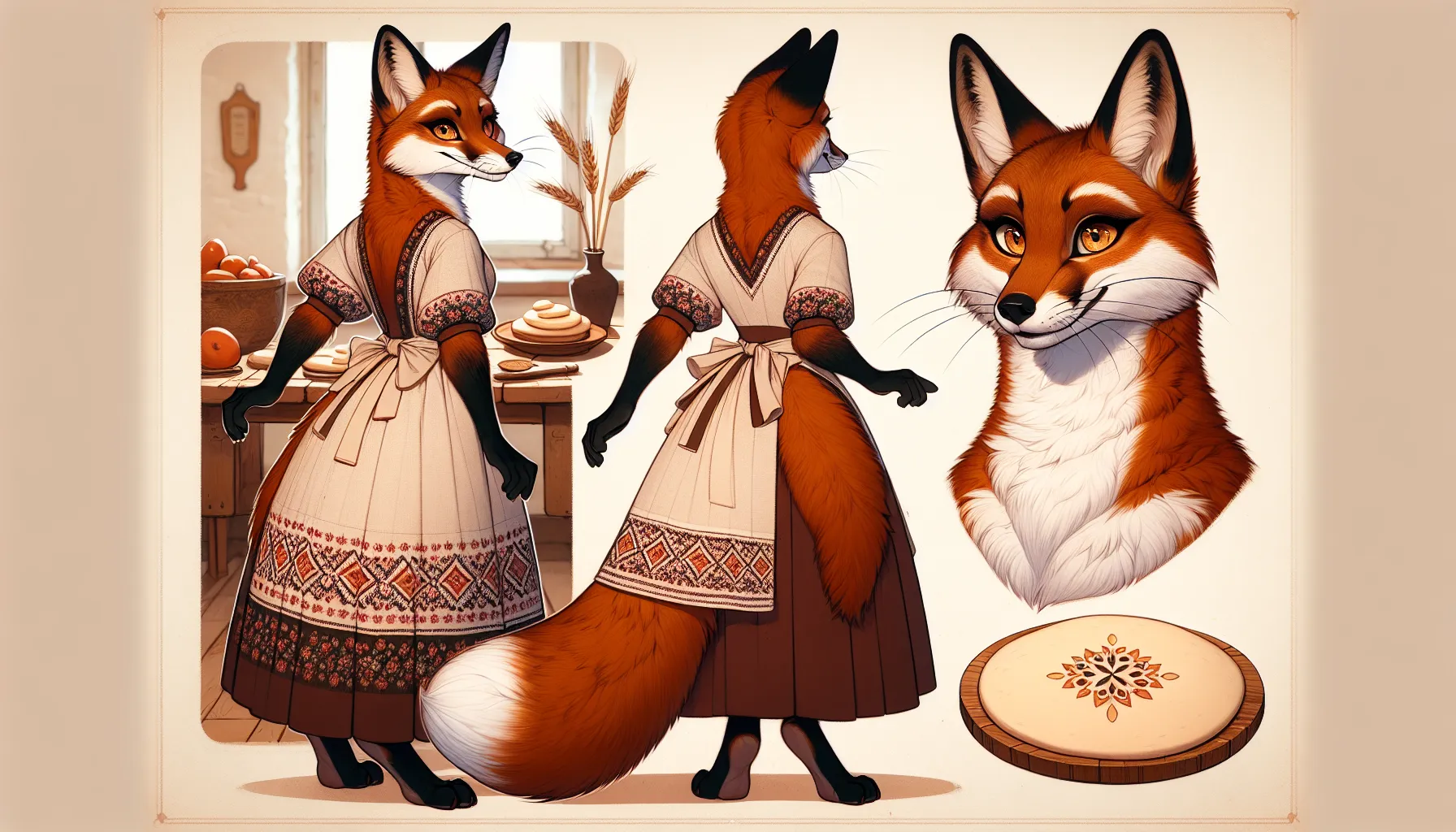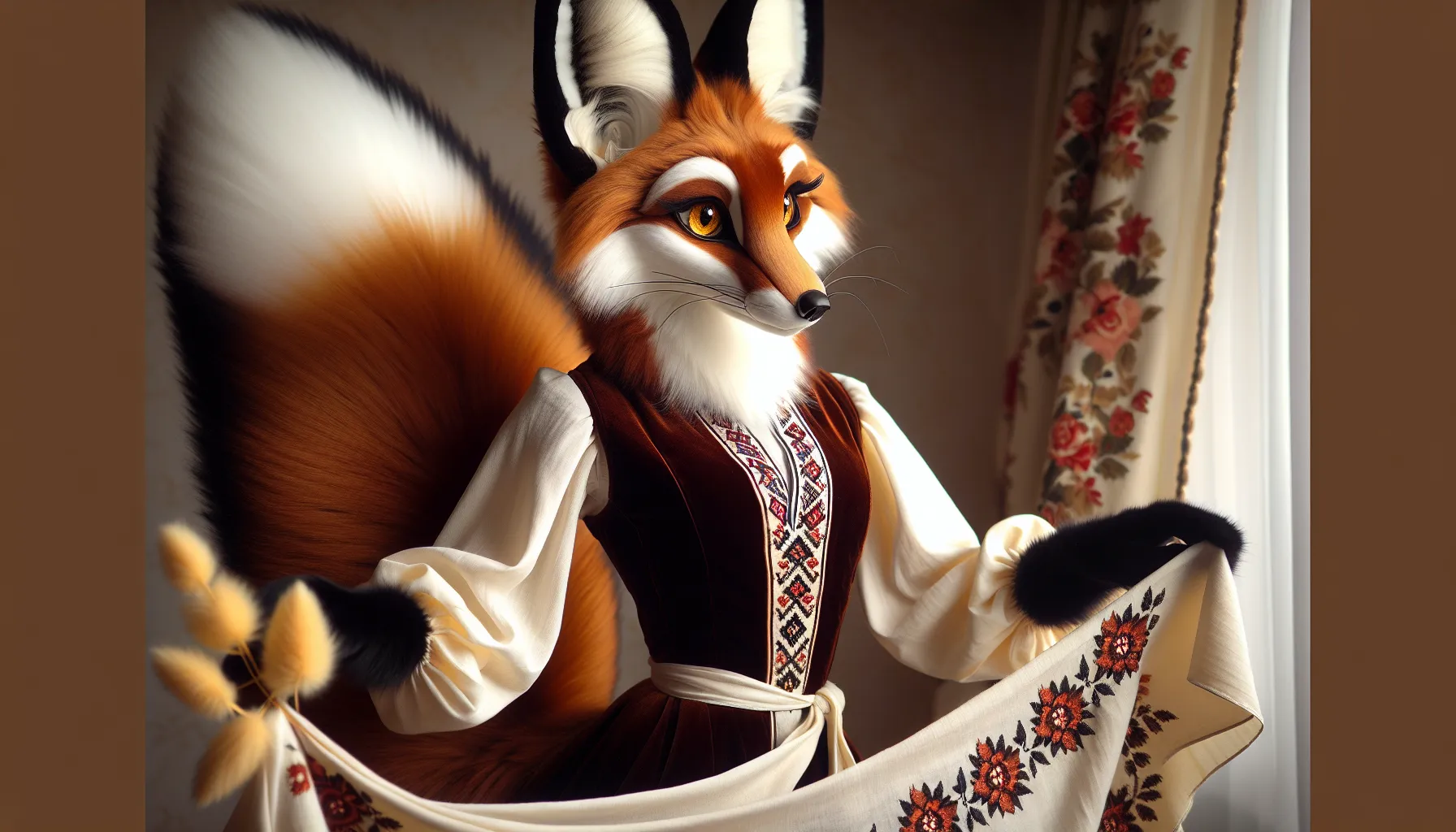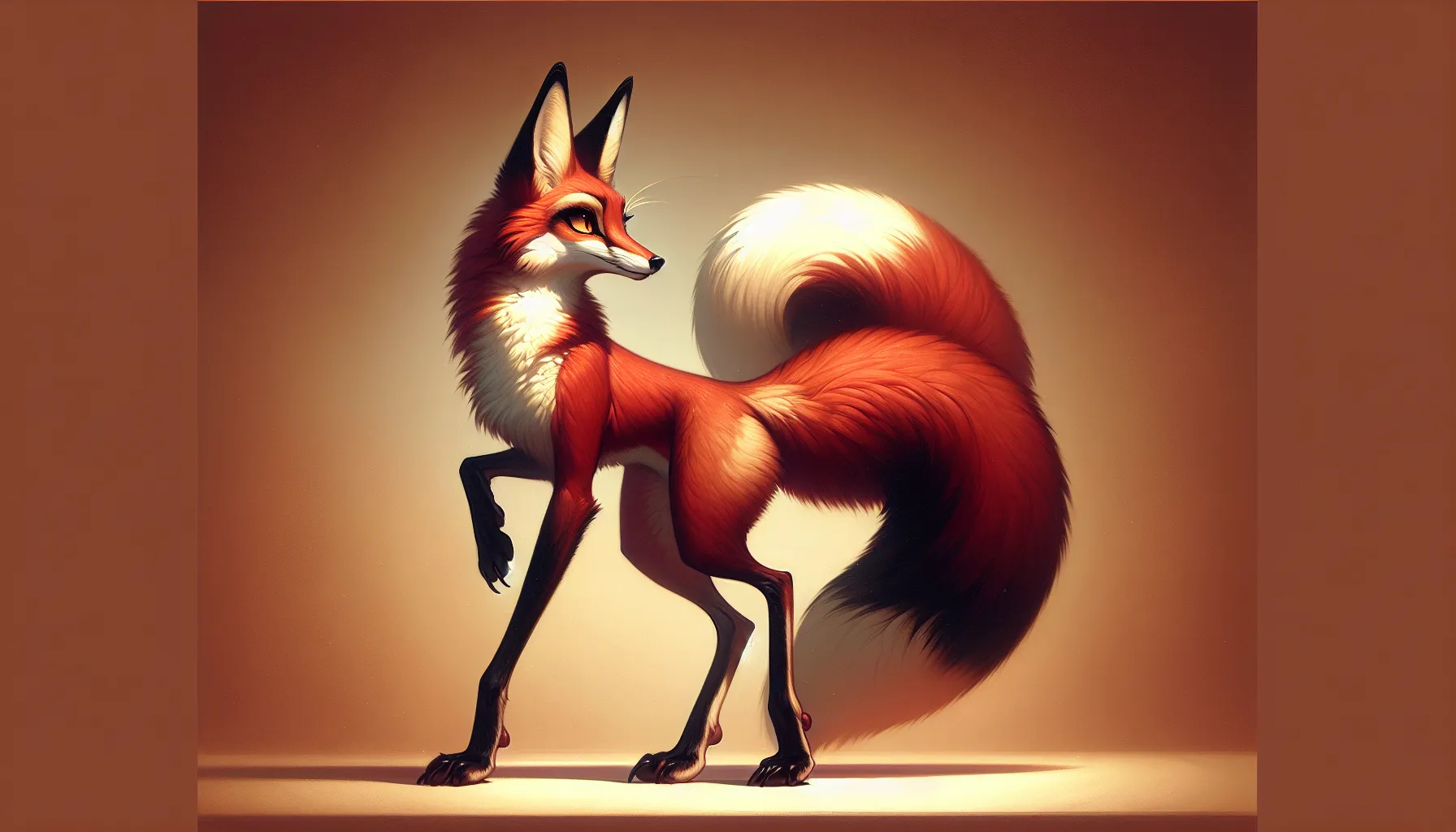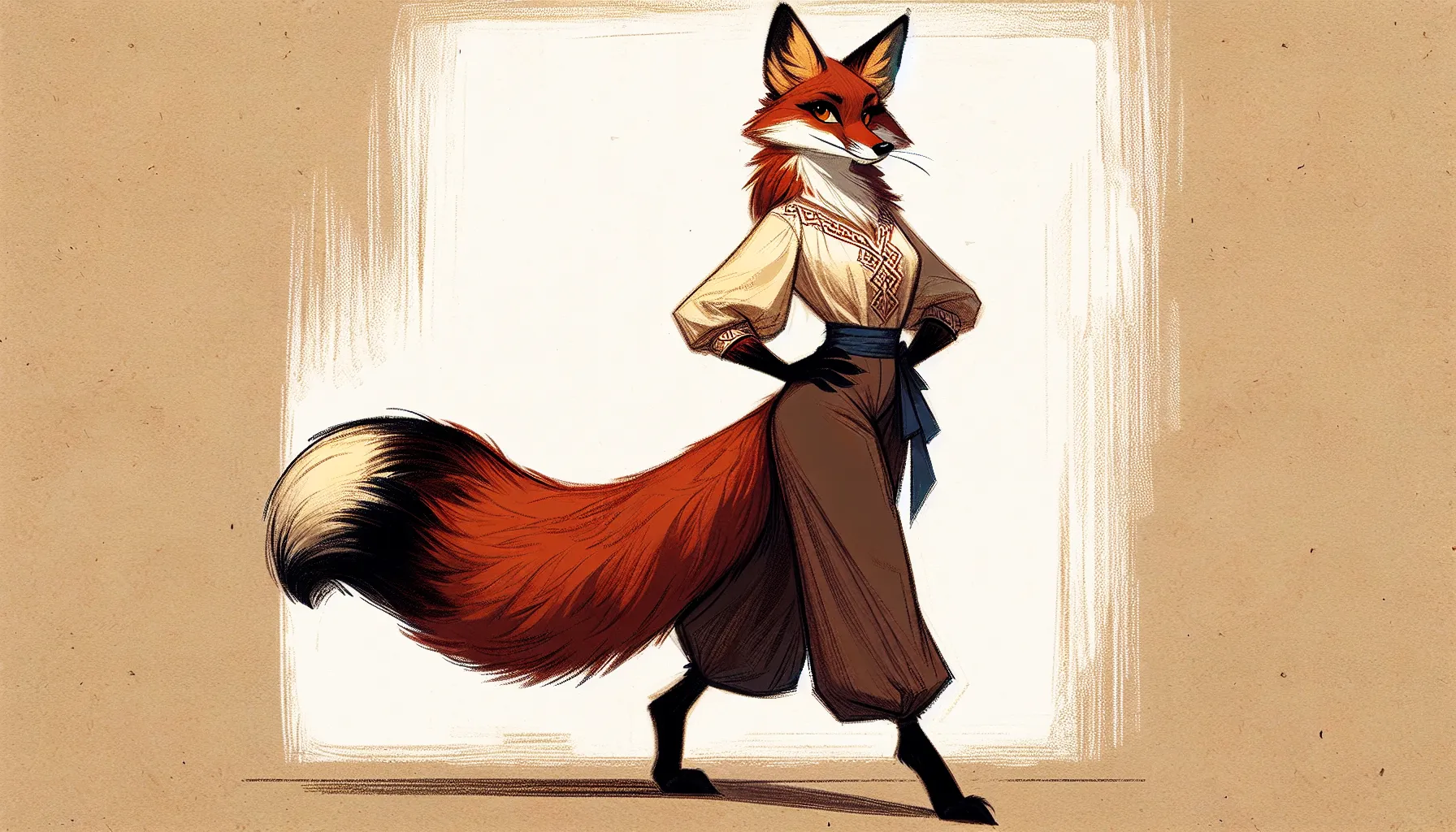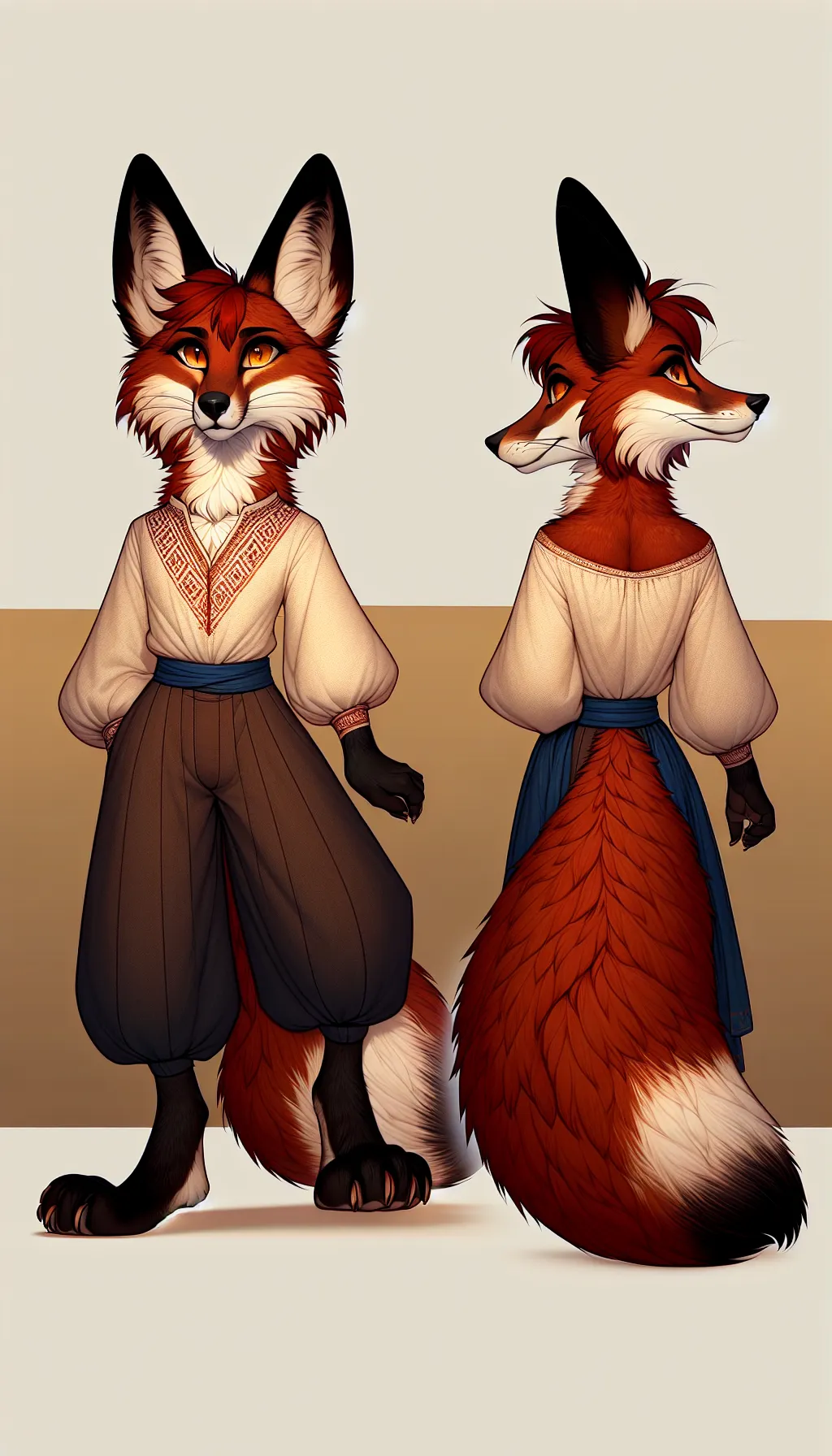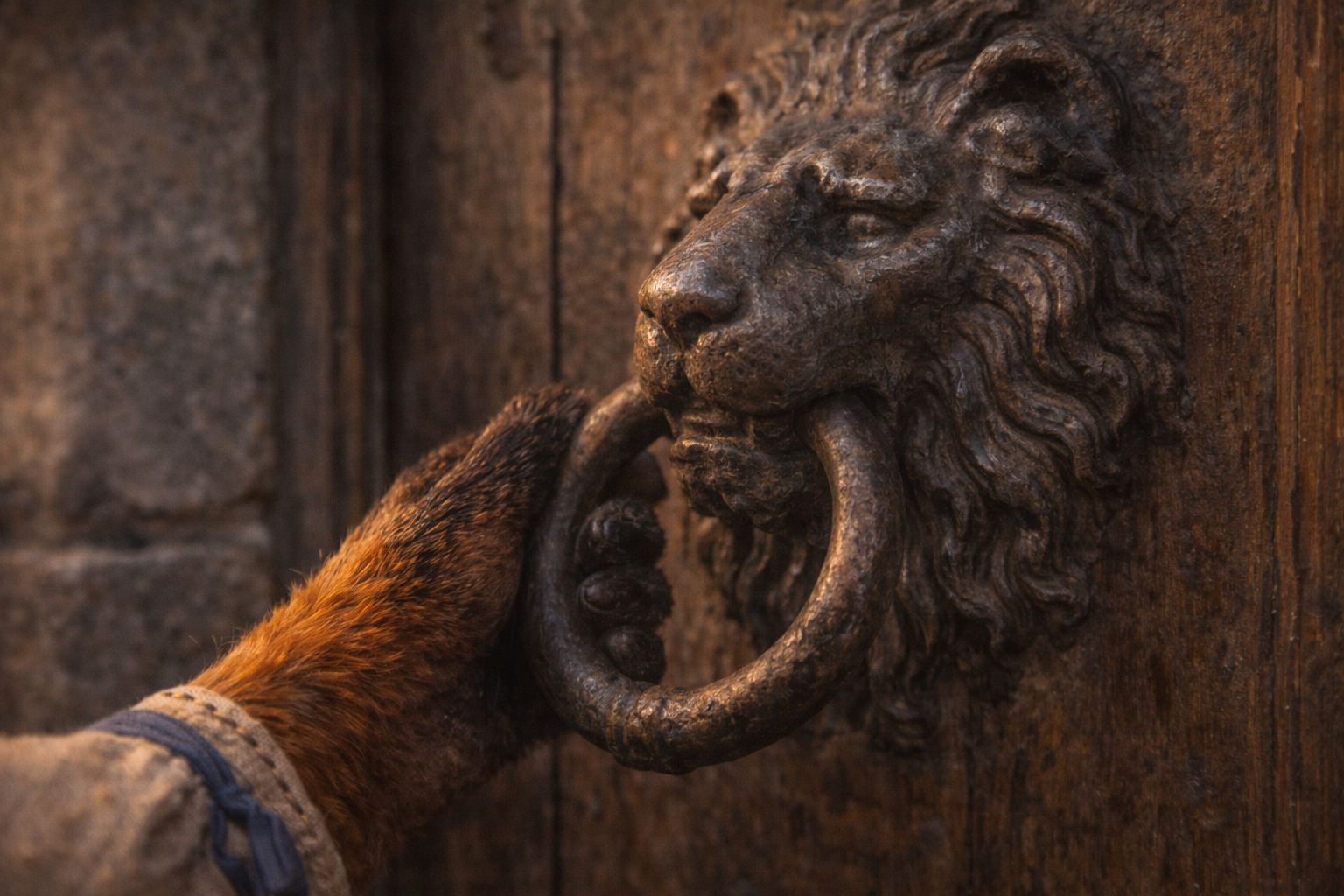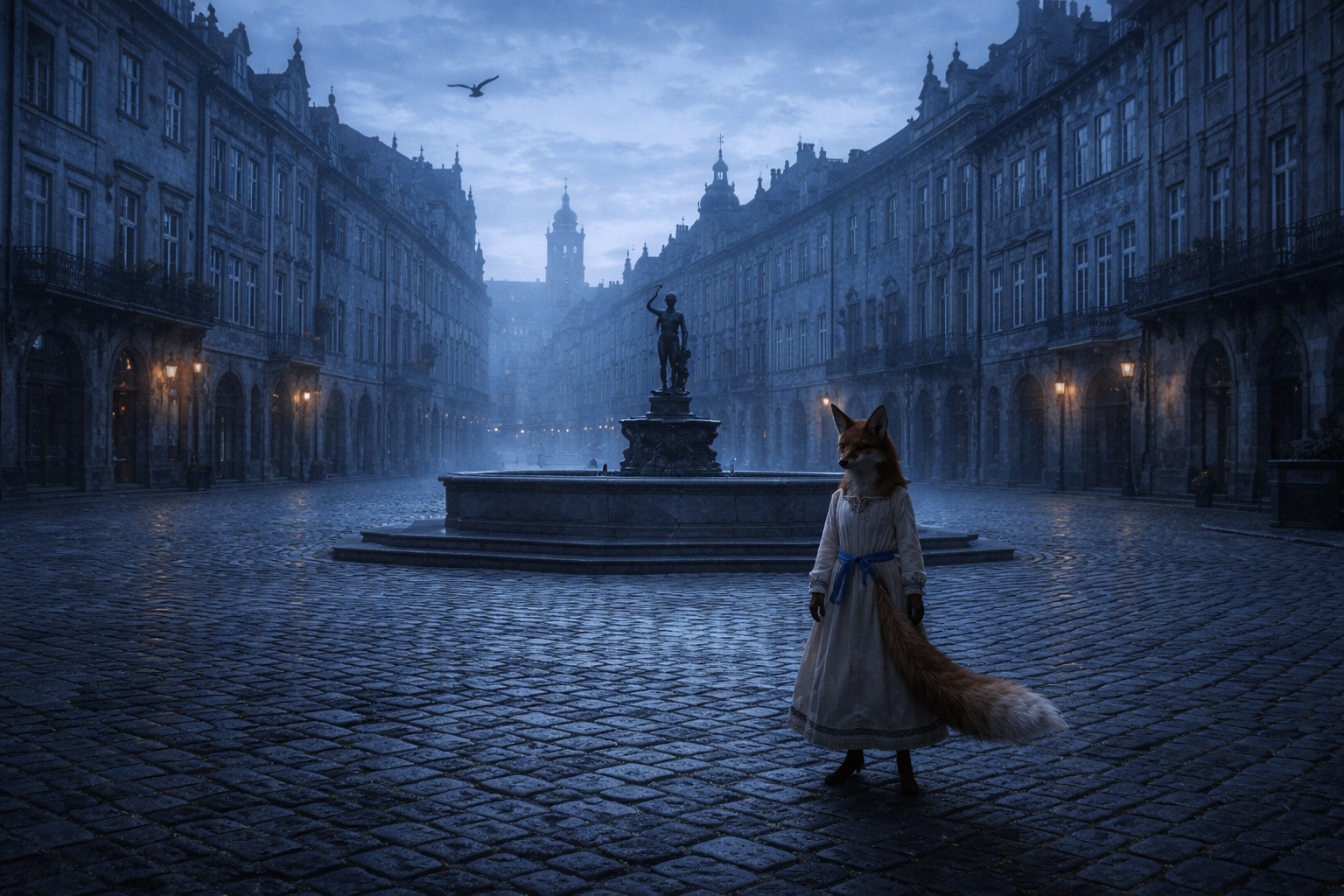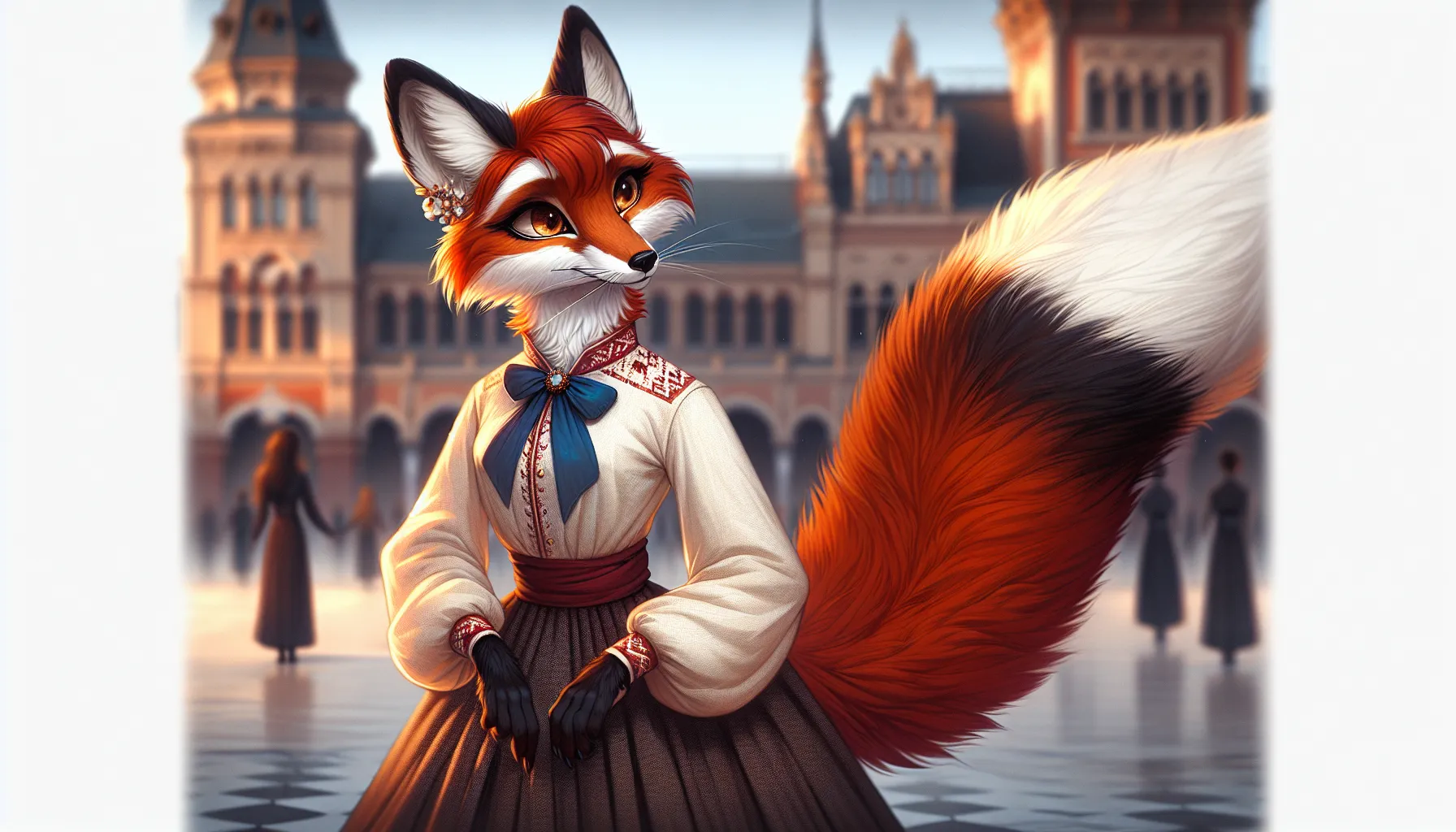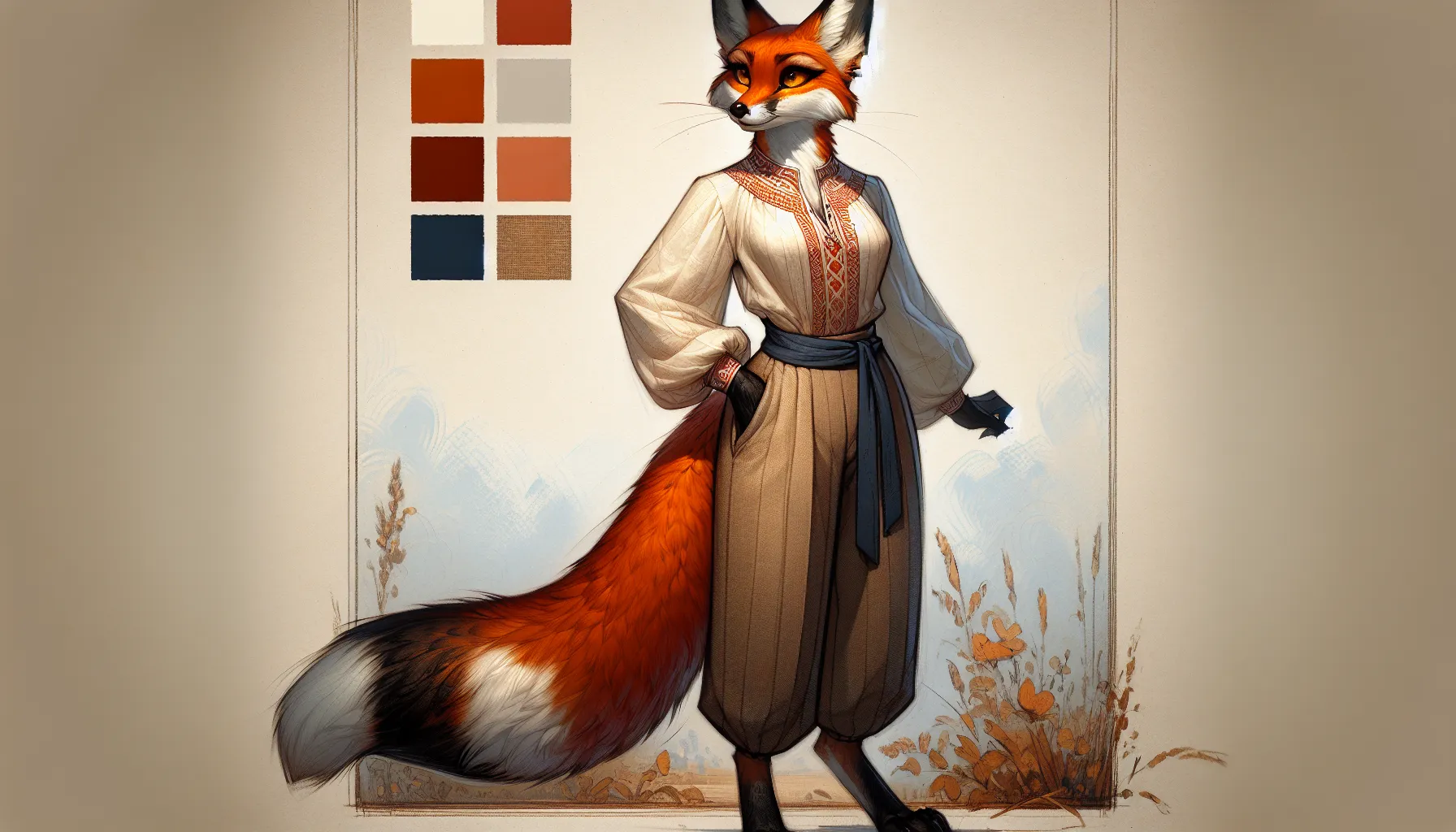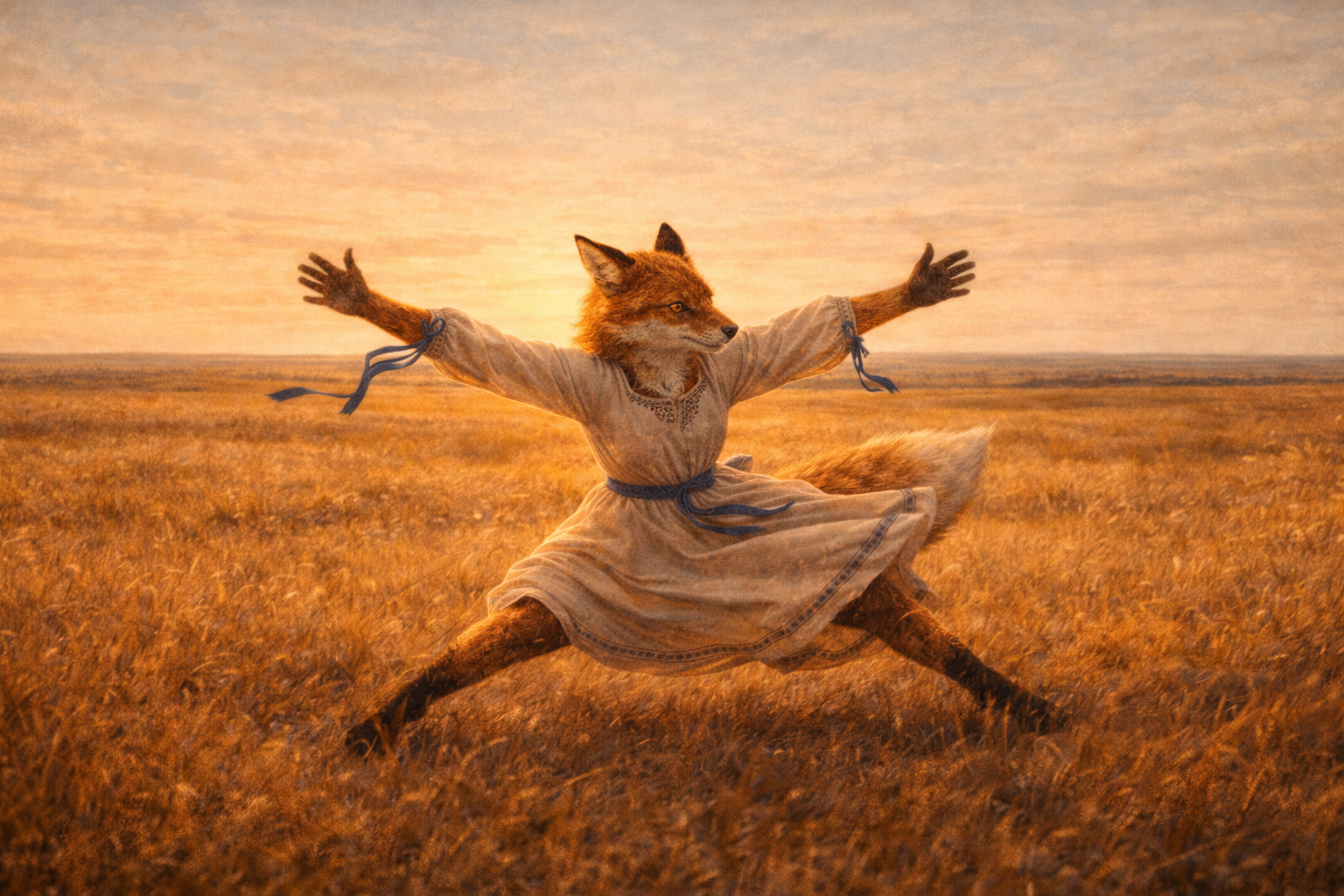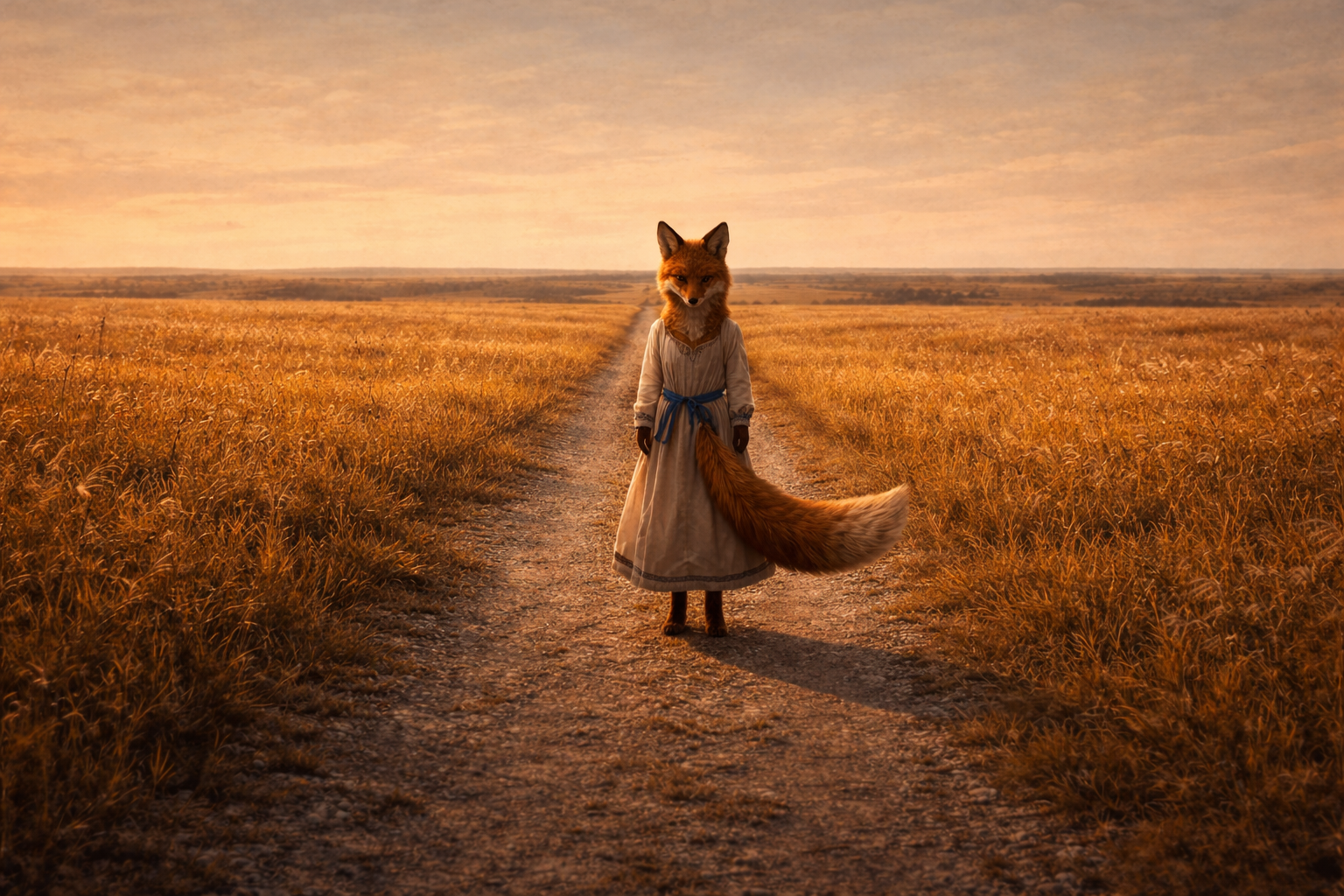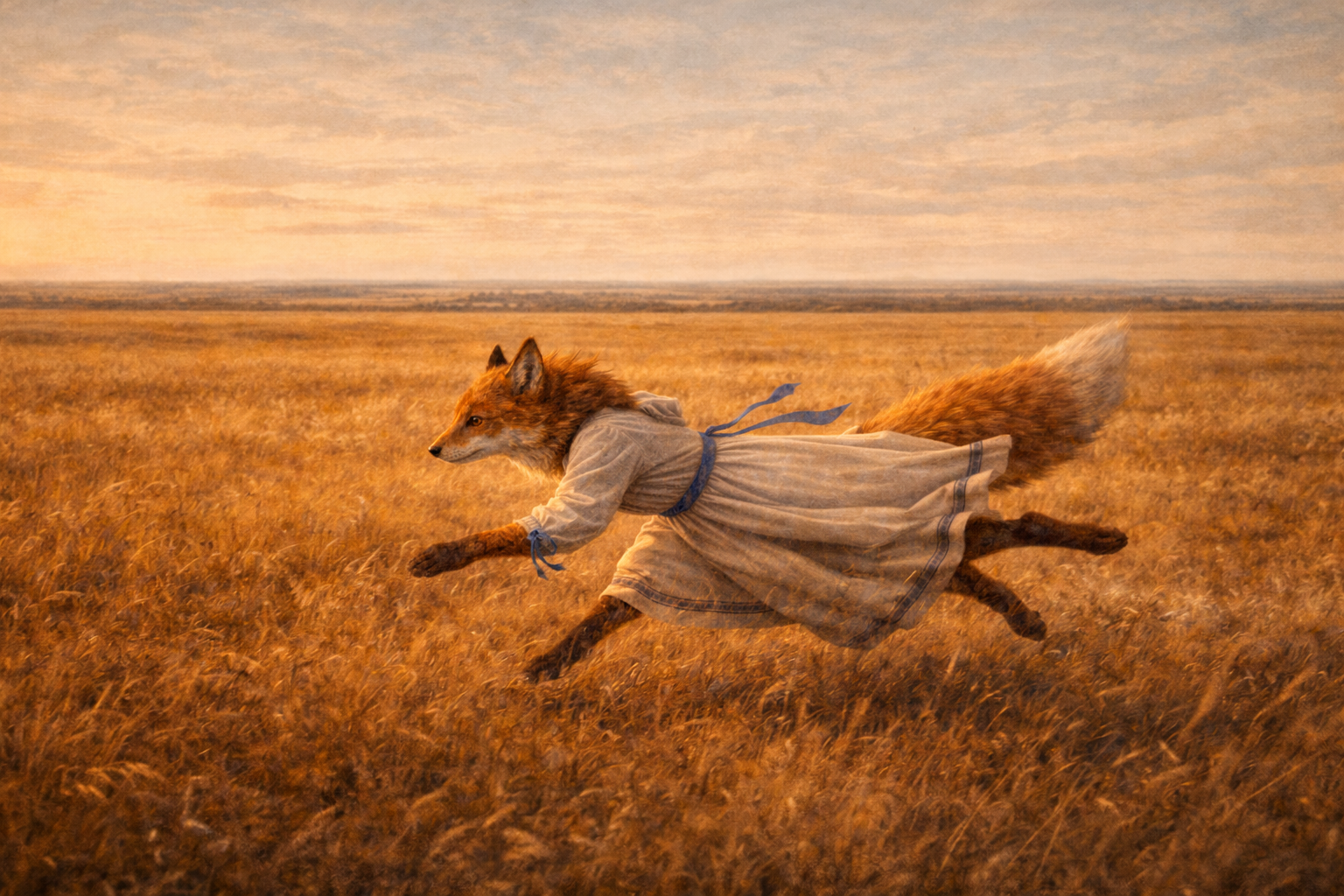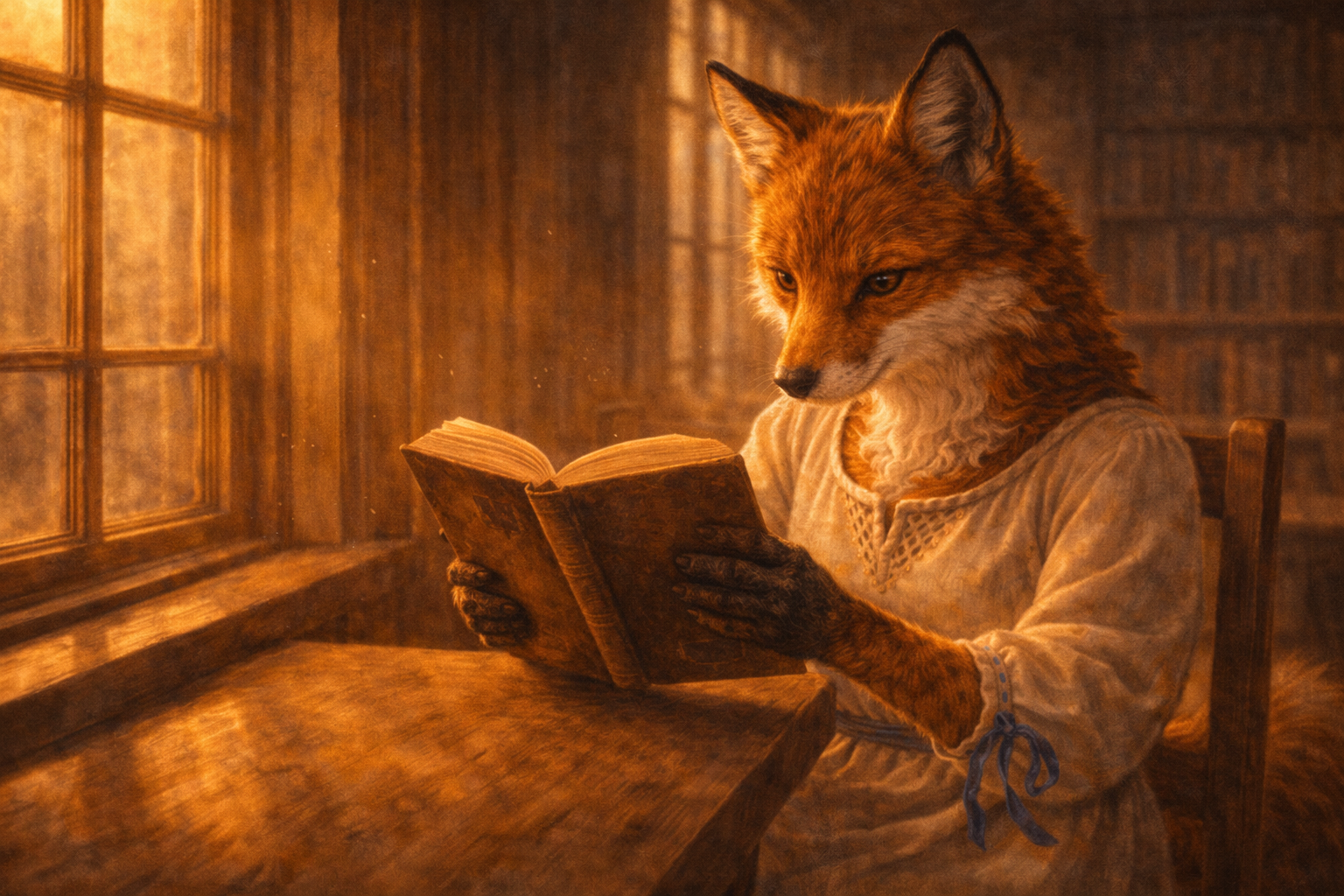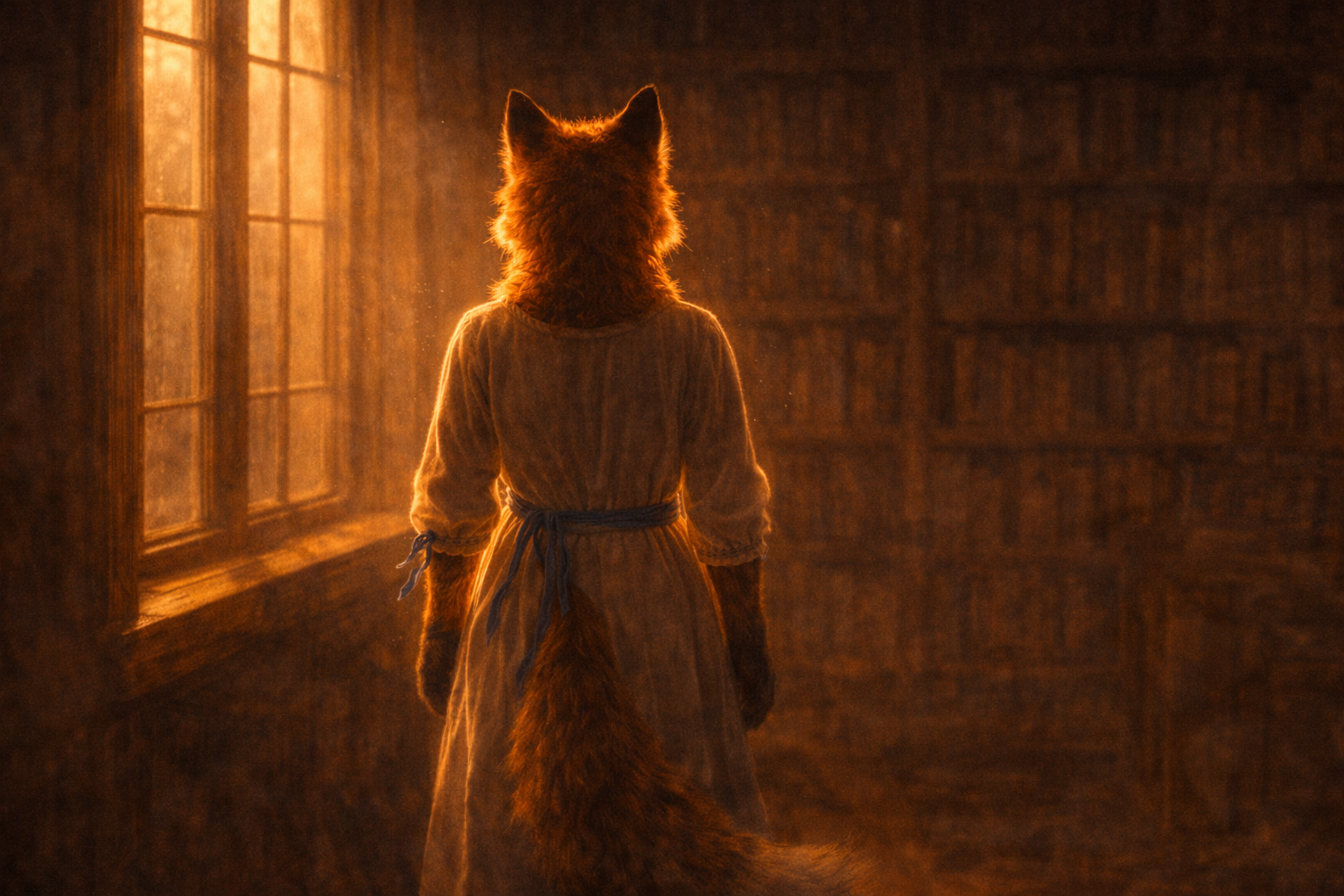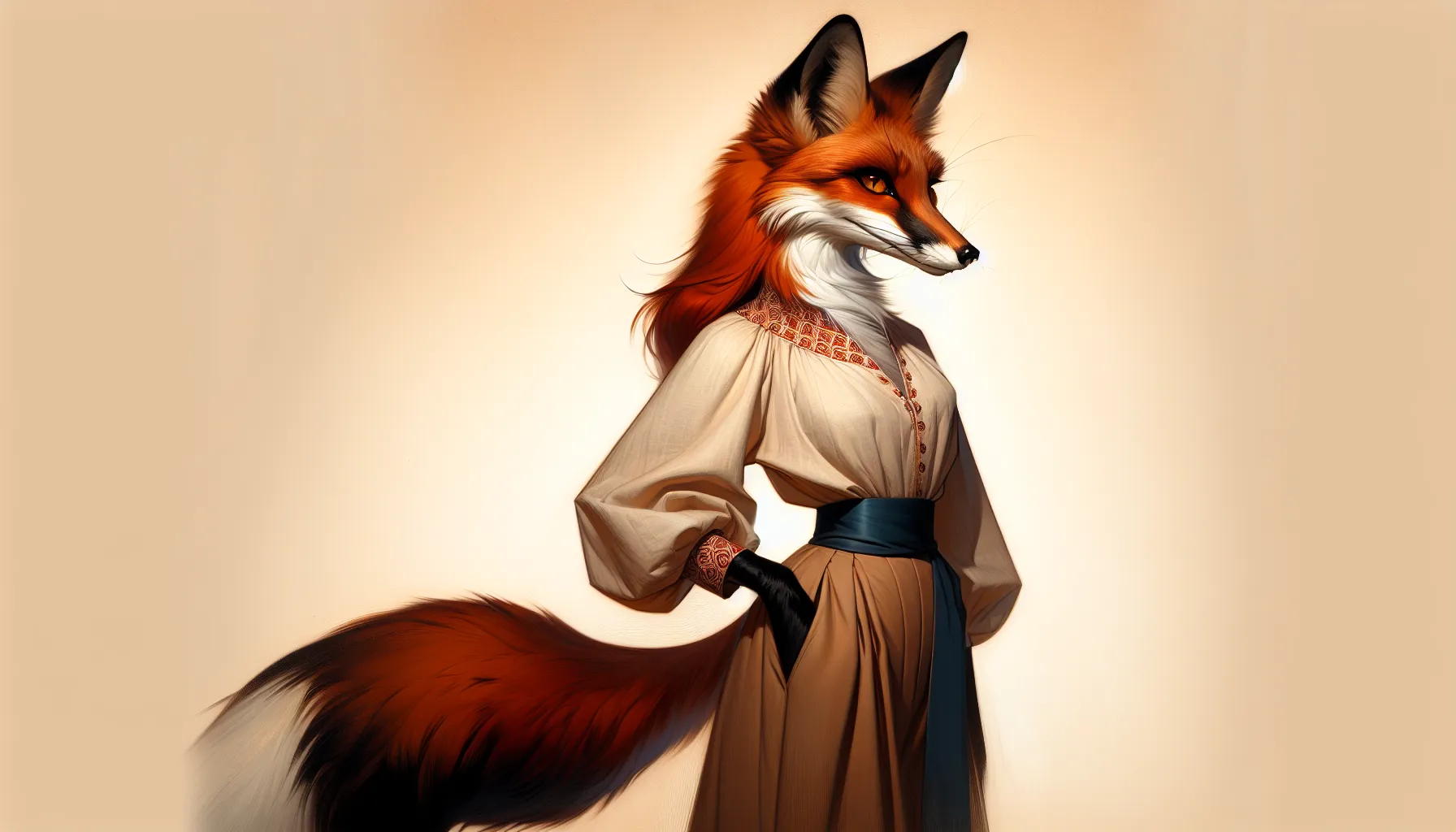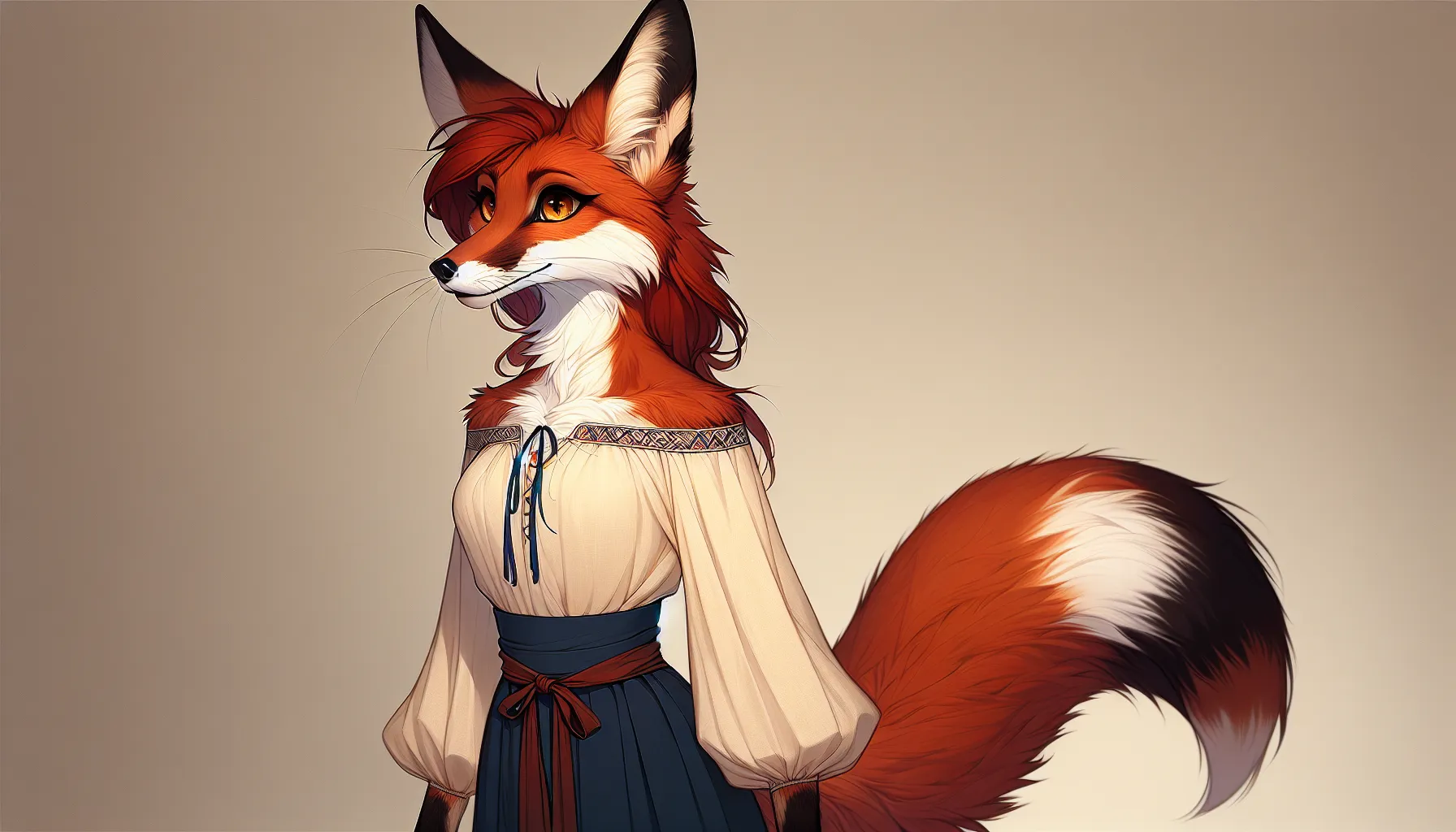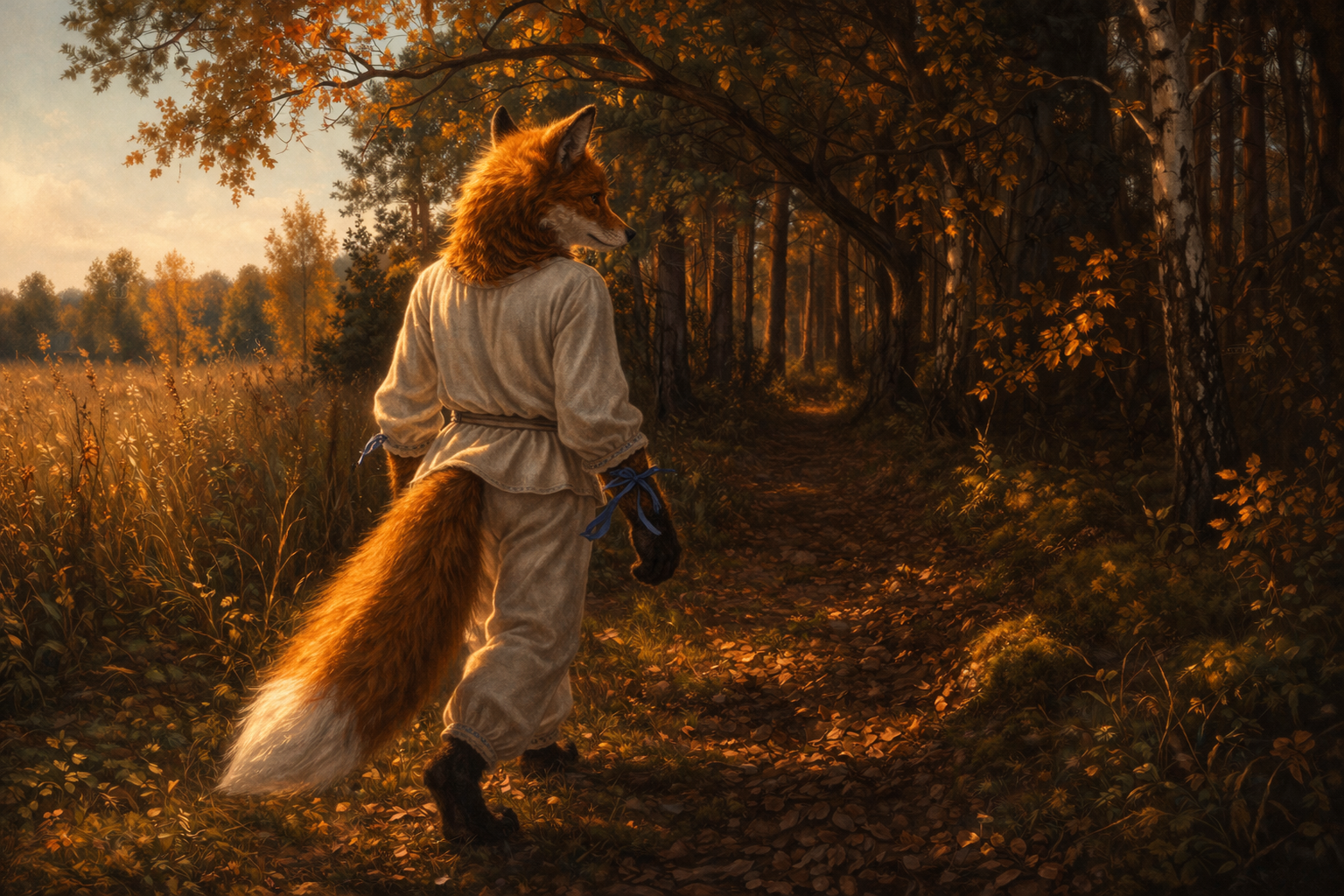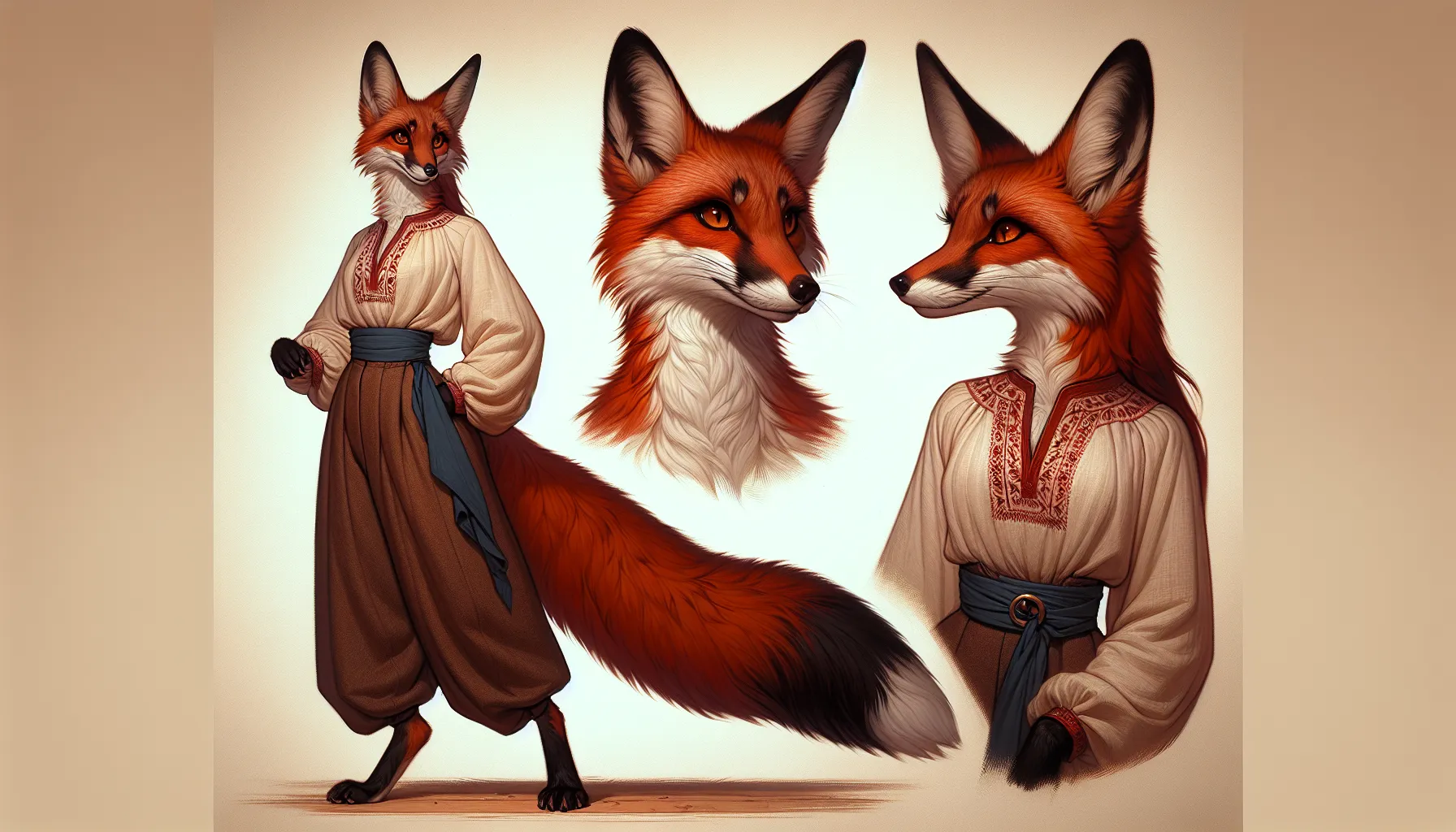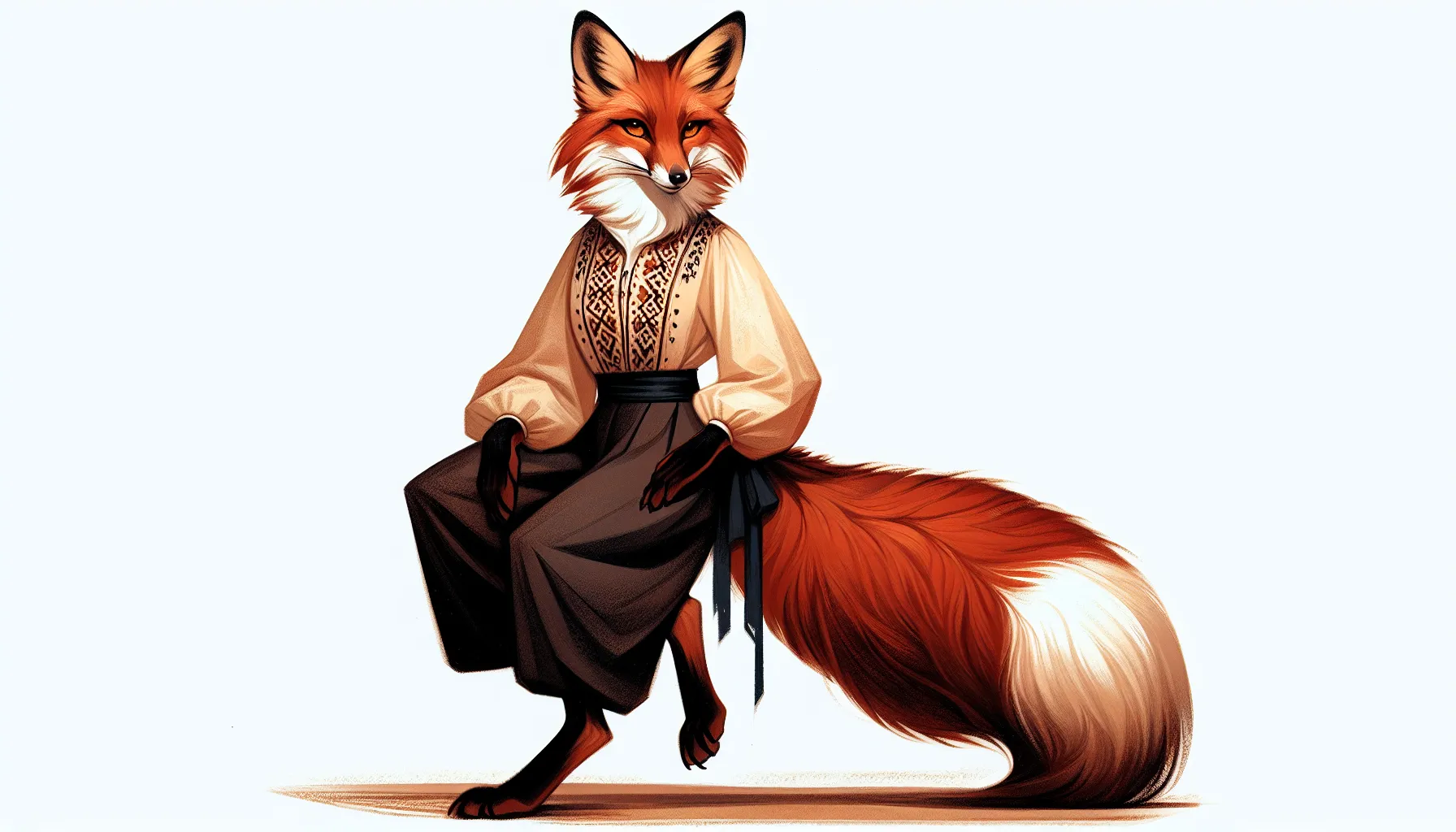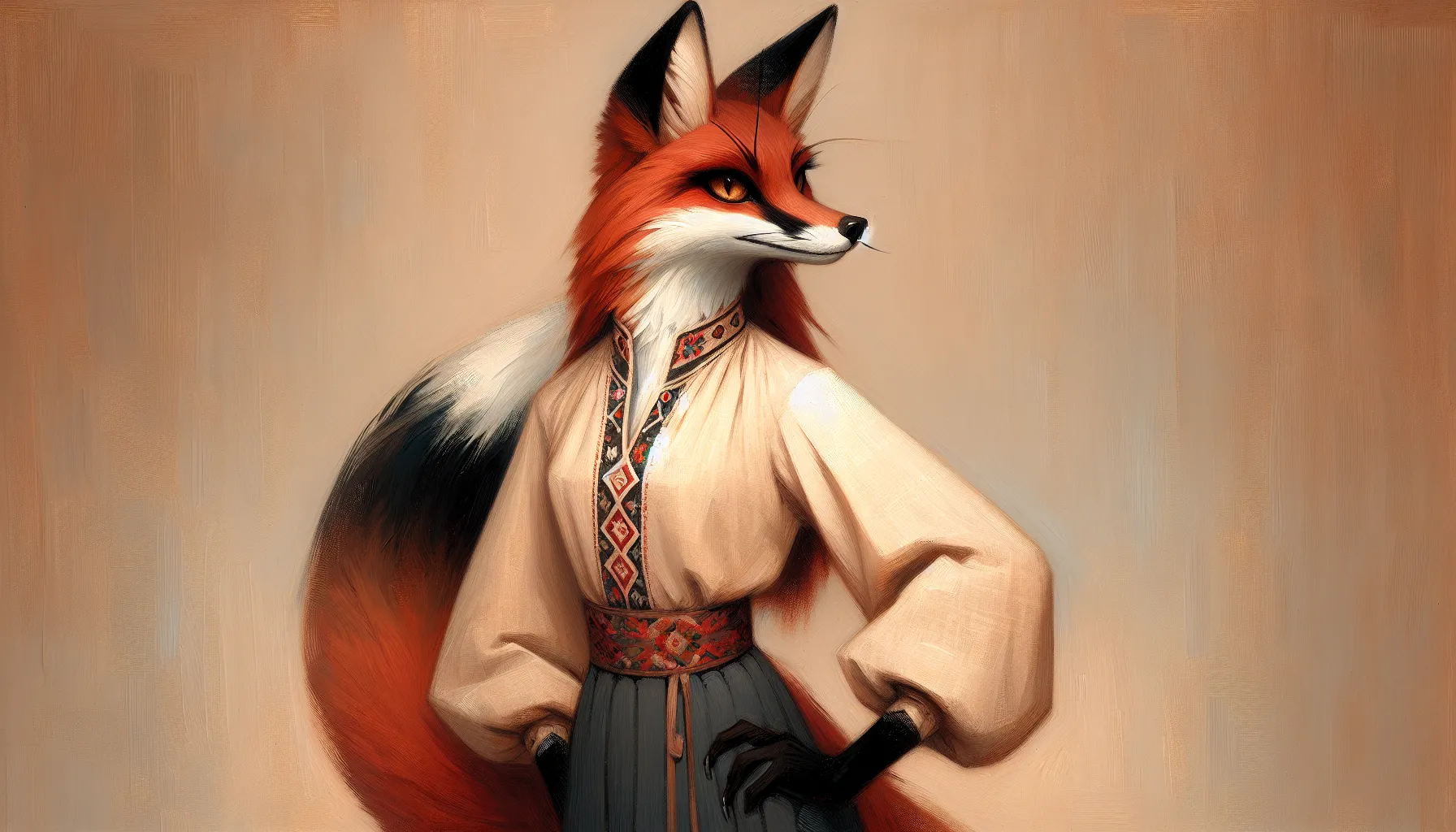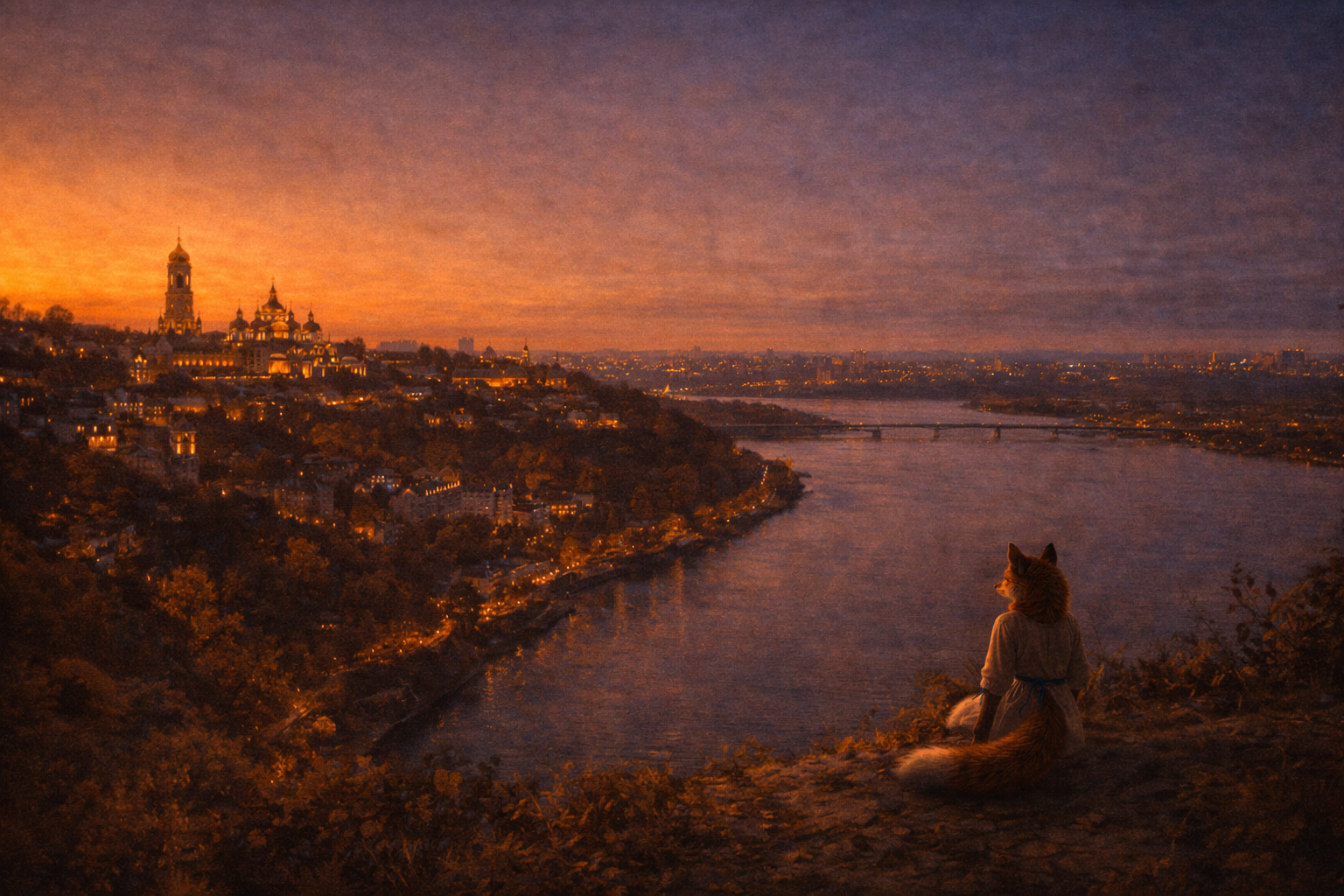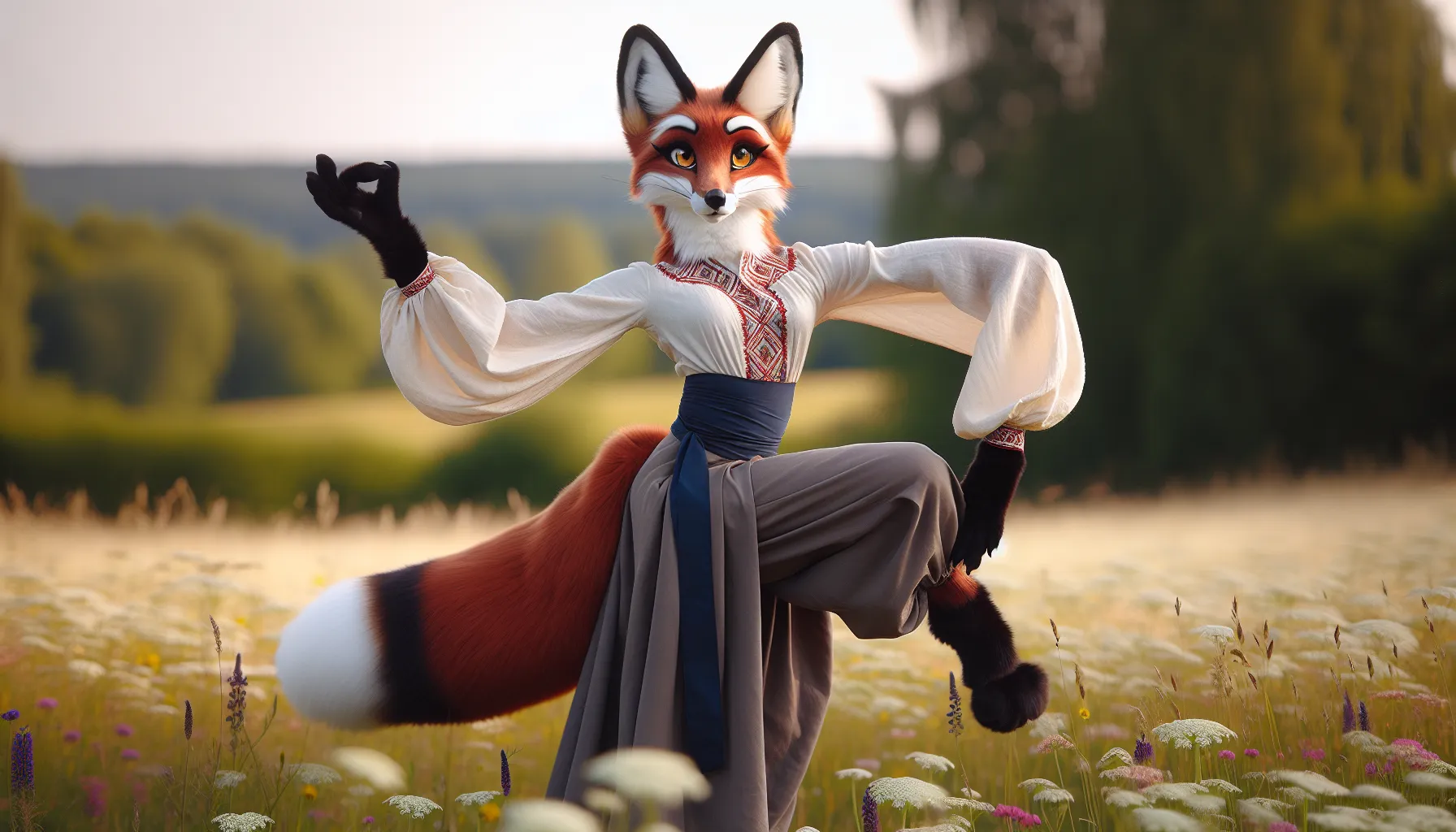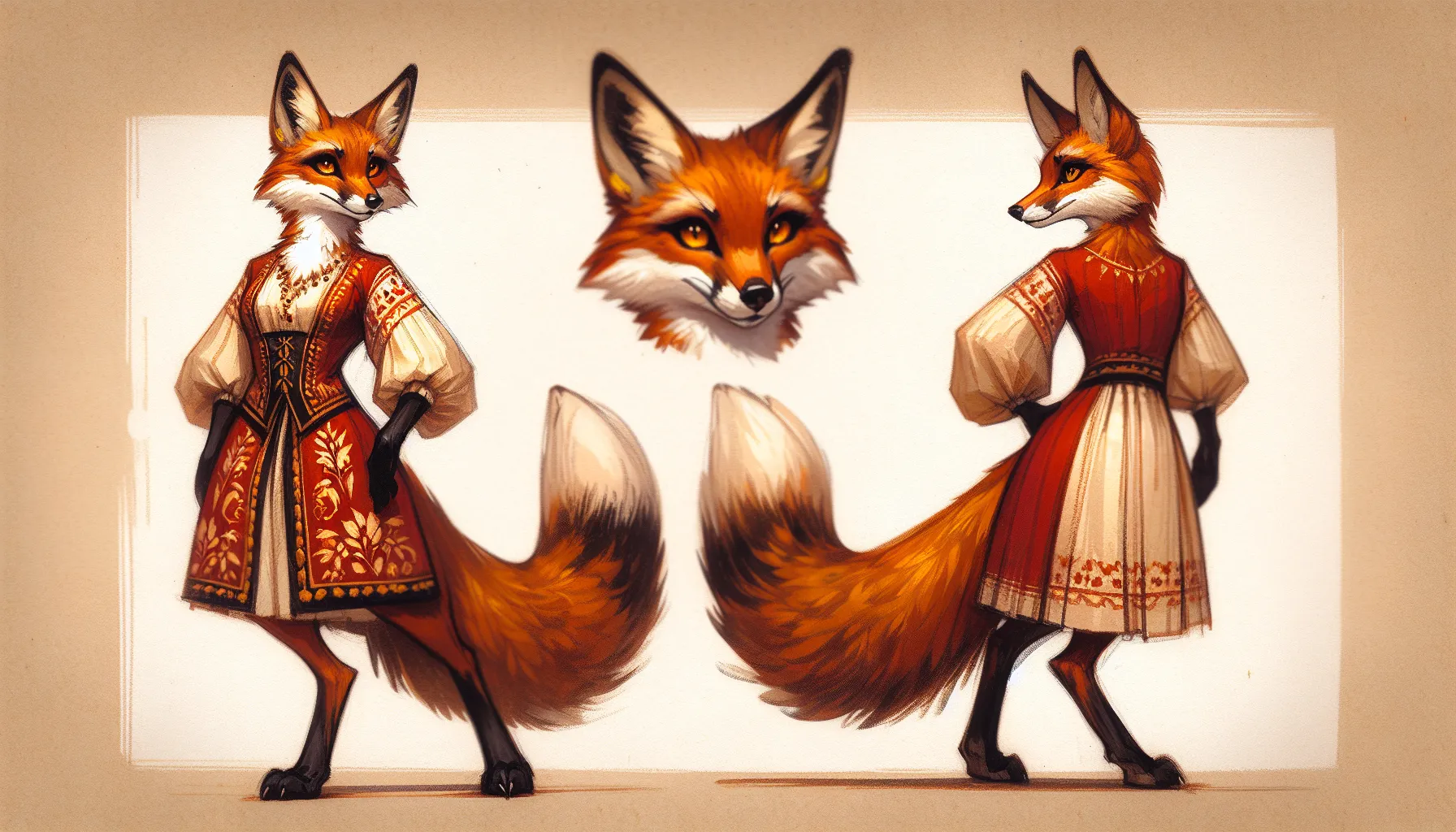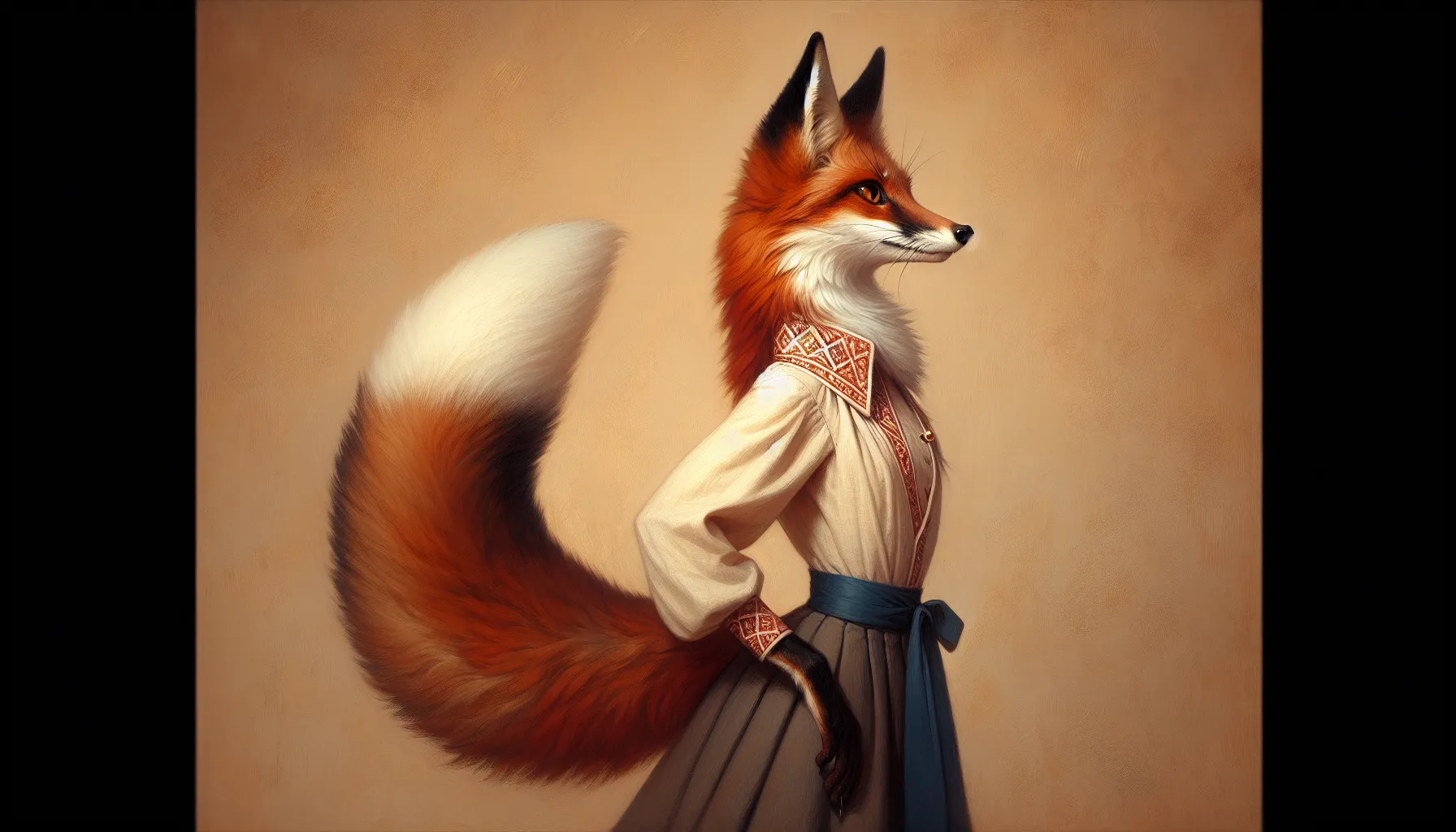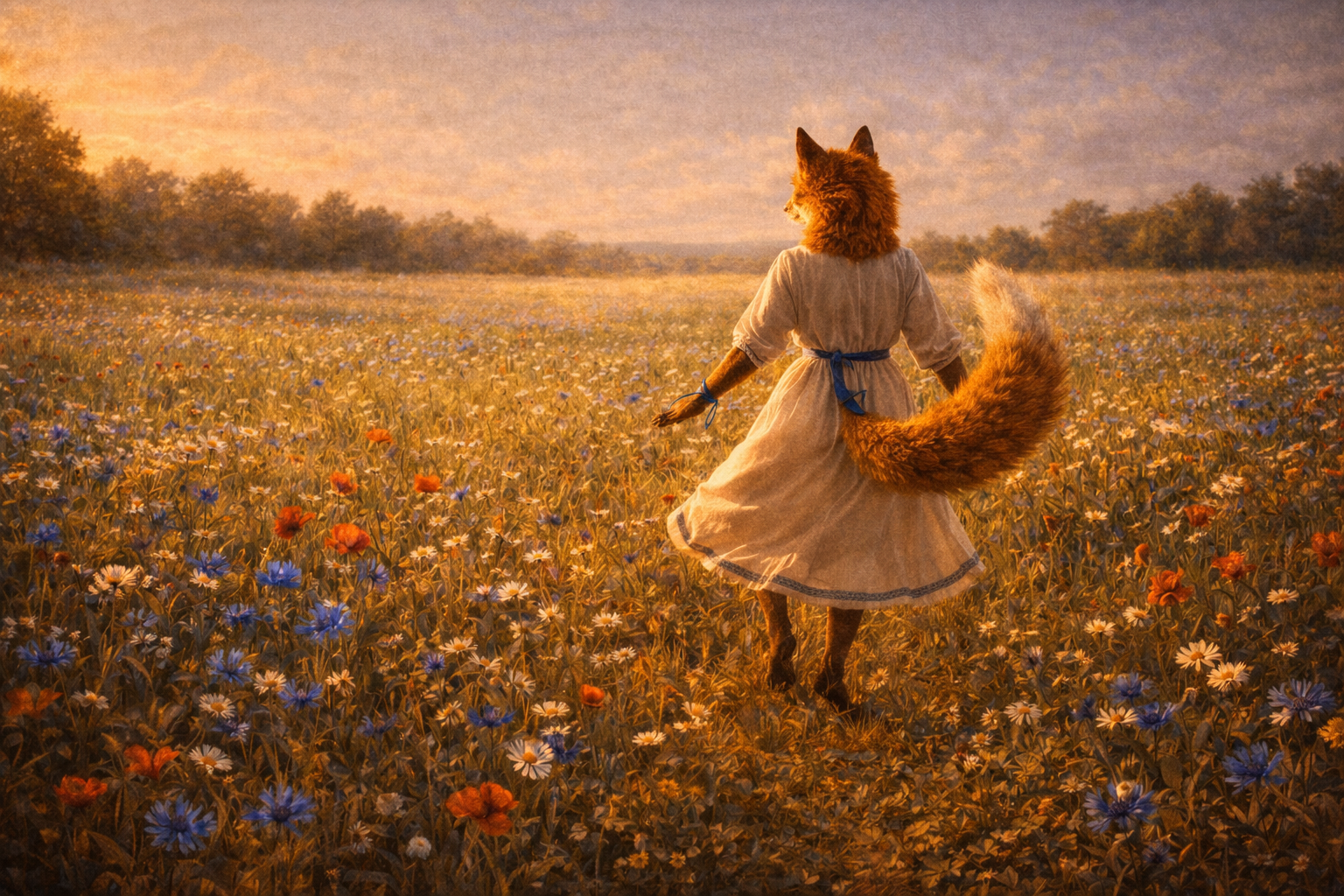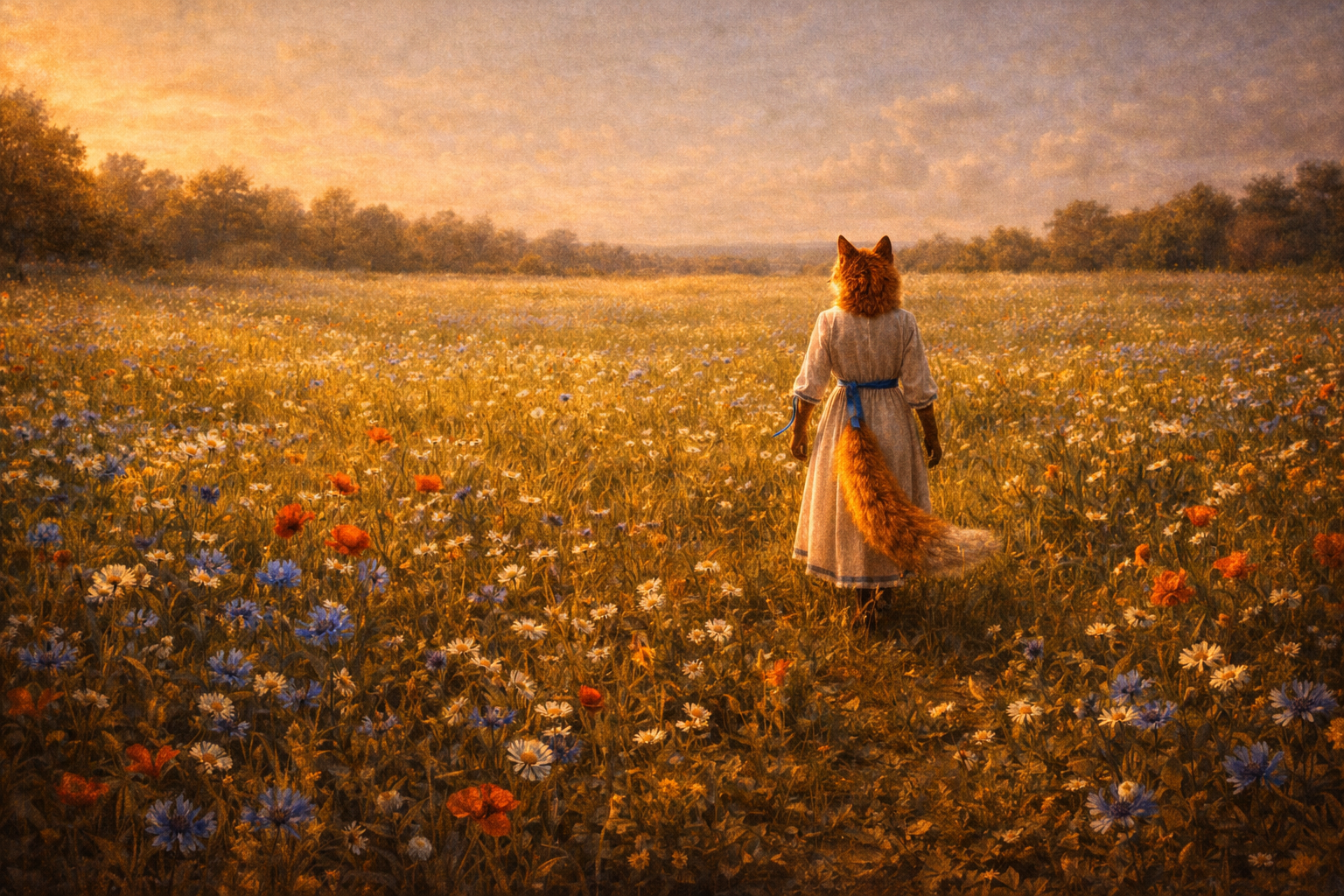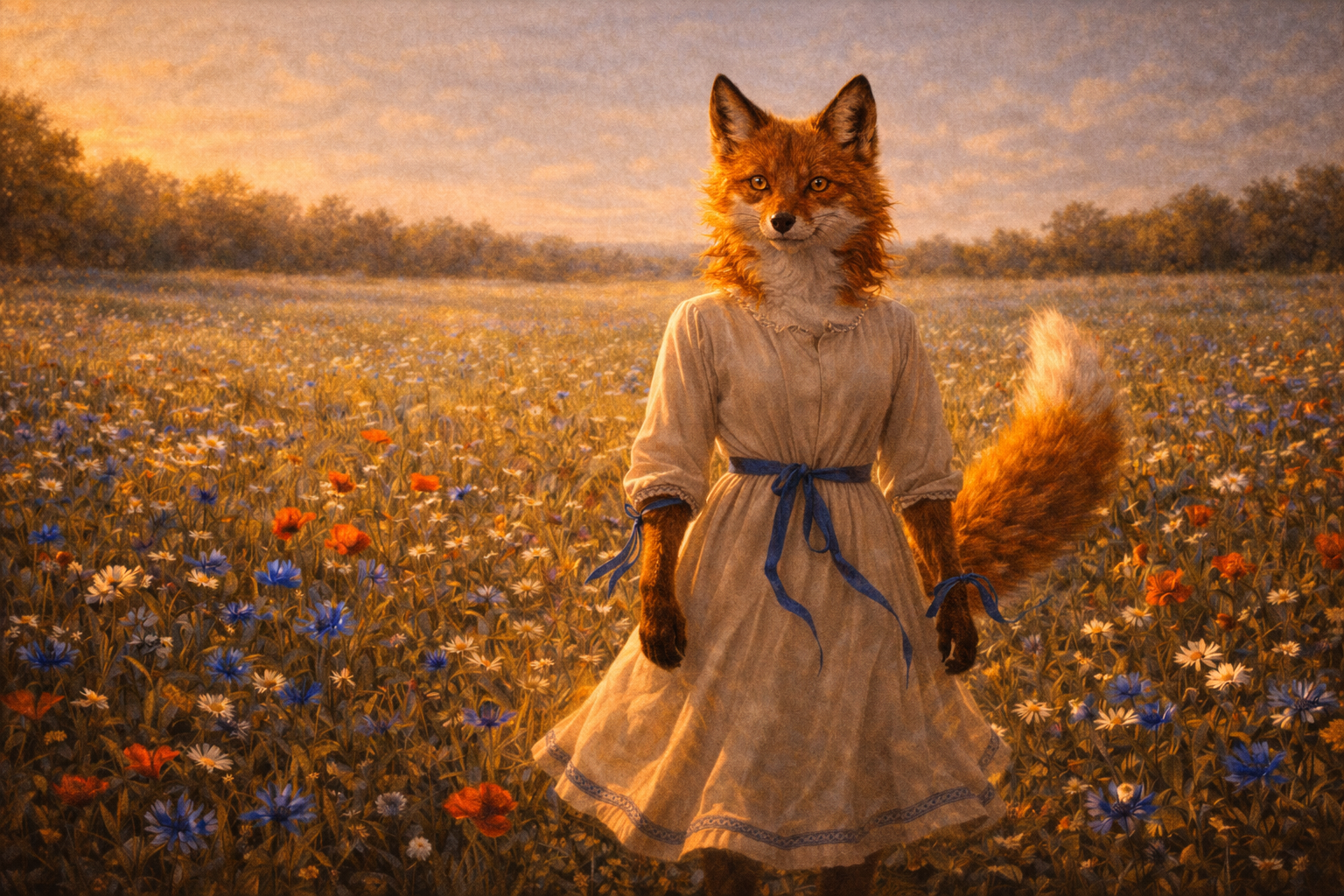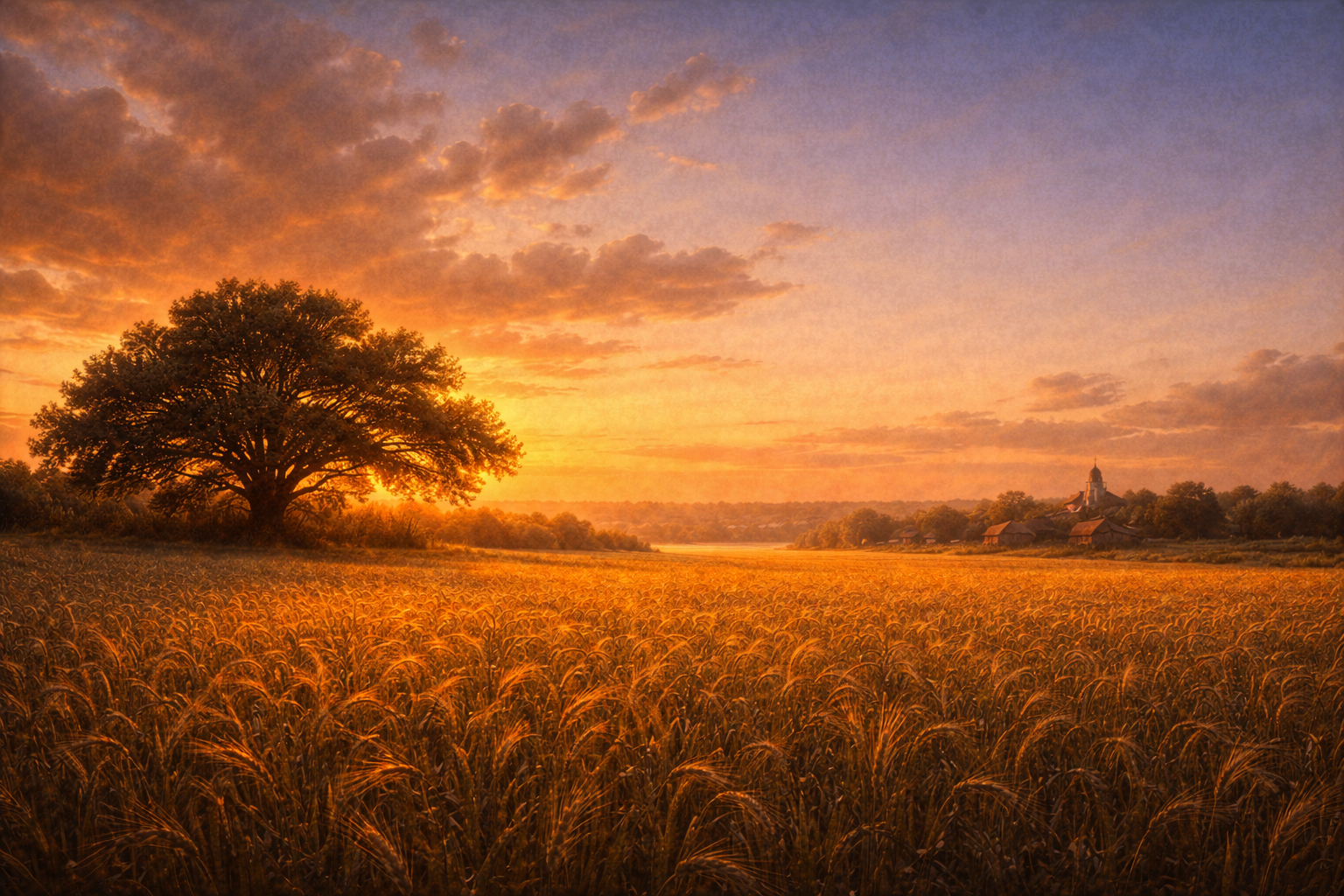
Golden sunset over the Ukrainian countryside — rolling hills bathed in warm light

Through Foxyana's Eyes — Season One

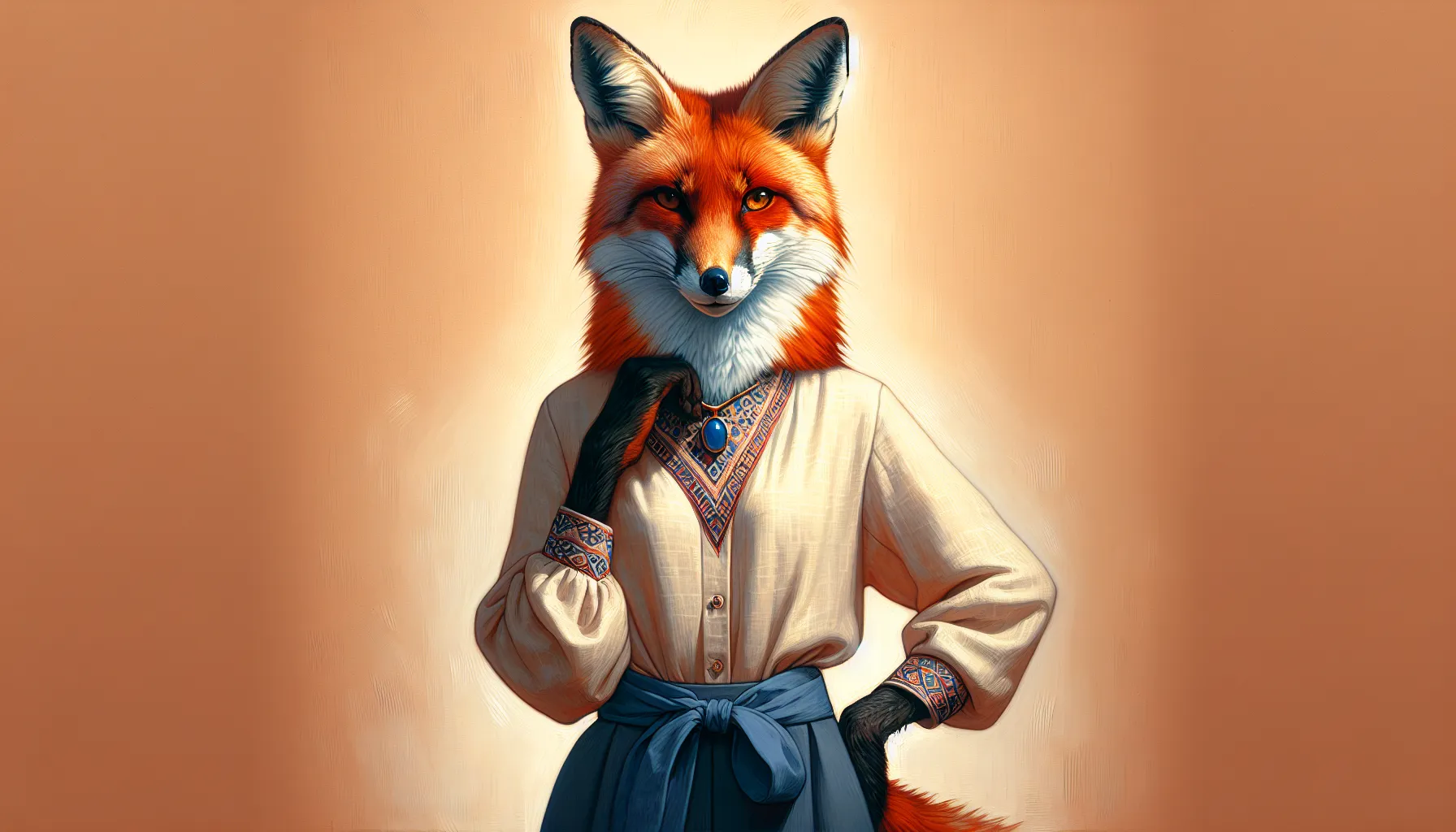
A Guide to Ukraine

Ten episodes. Mountains, kitchens, poetry, rivers.
One word per episode. A country's story, told through movement.

Explore the episodes

Ten Episodes

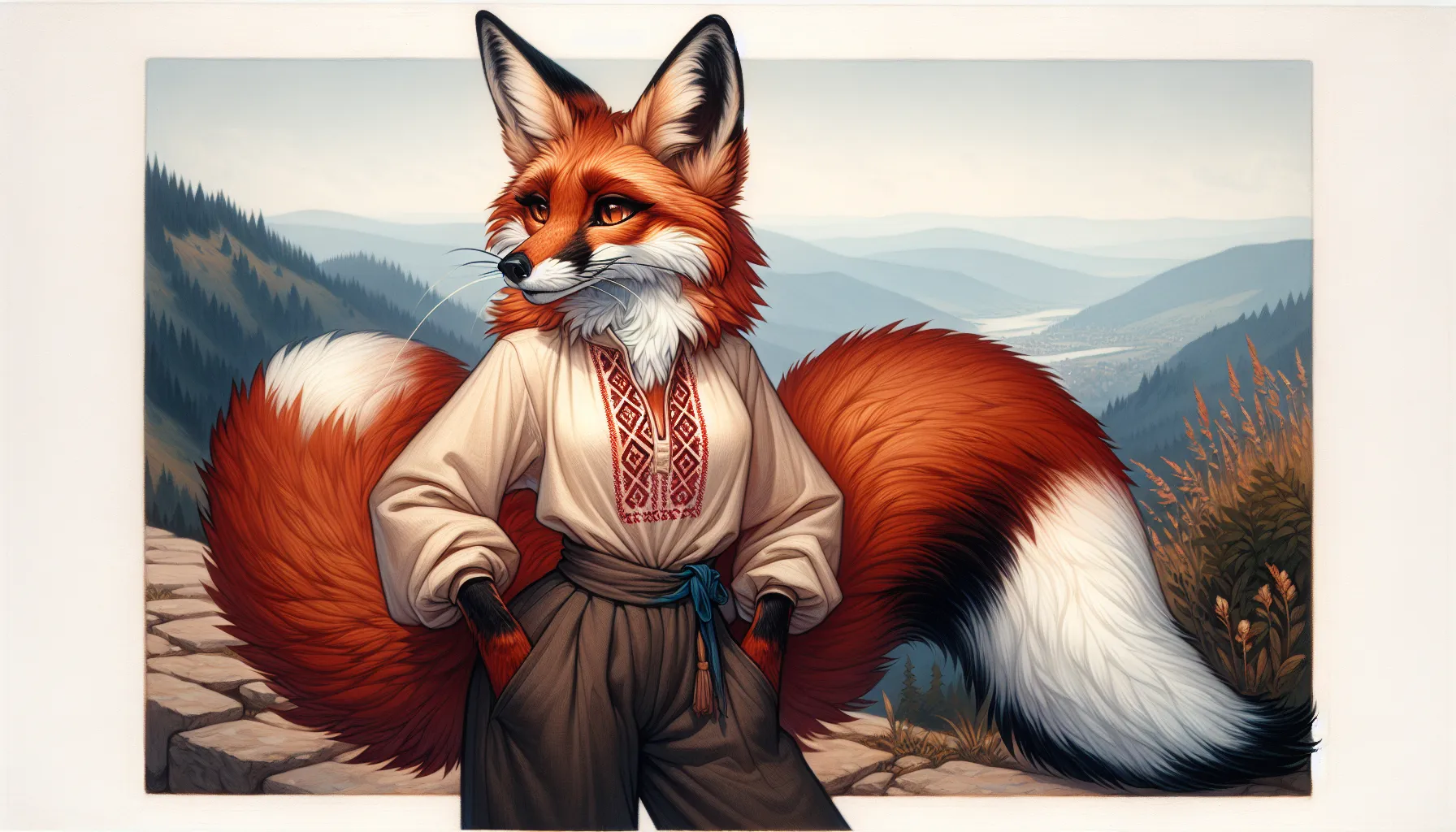
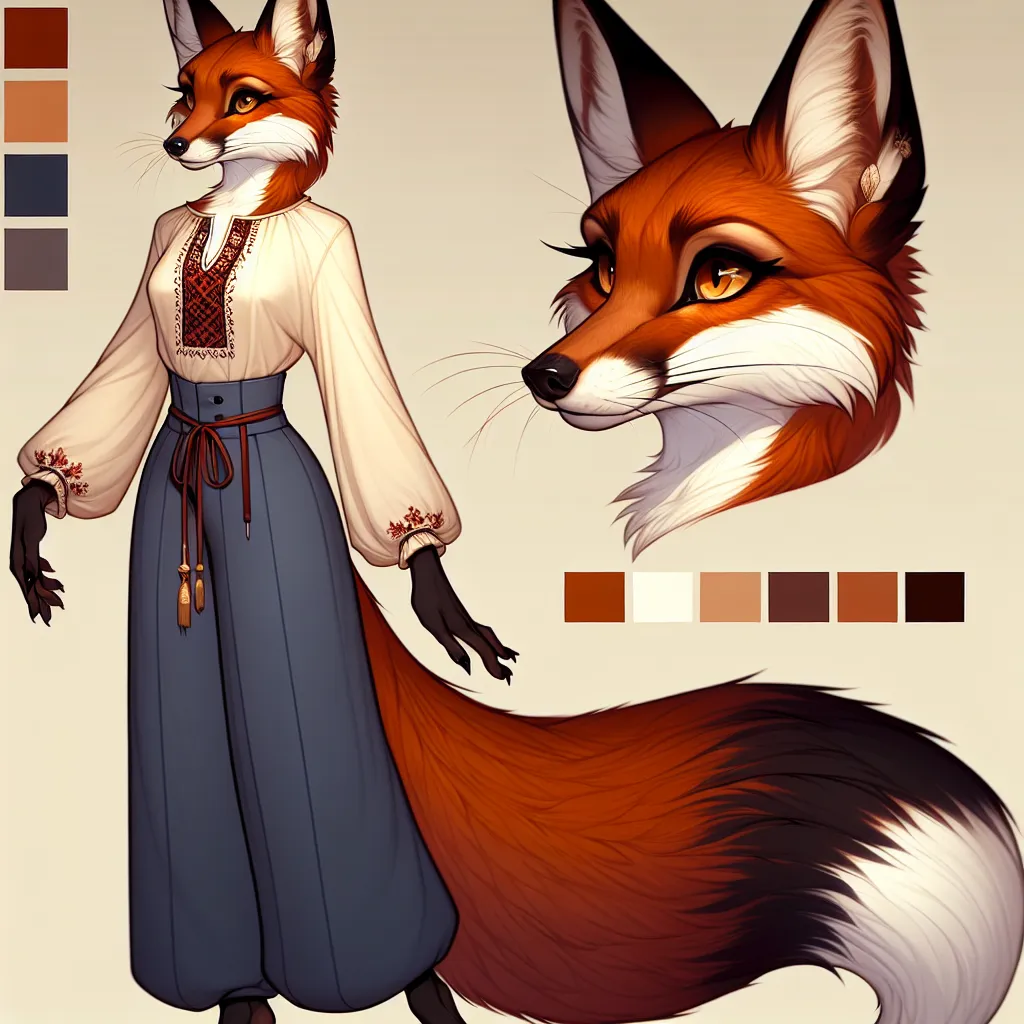
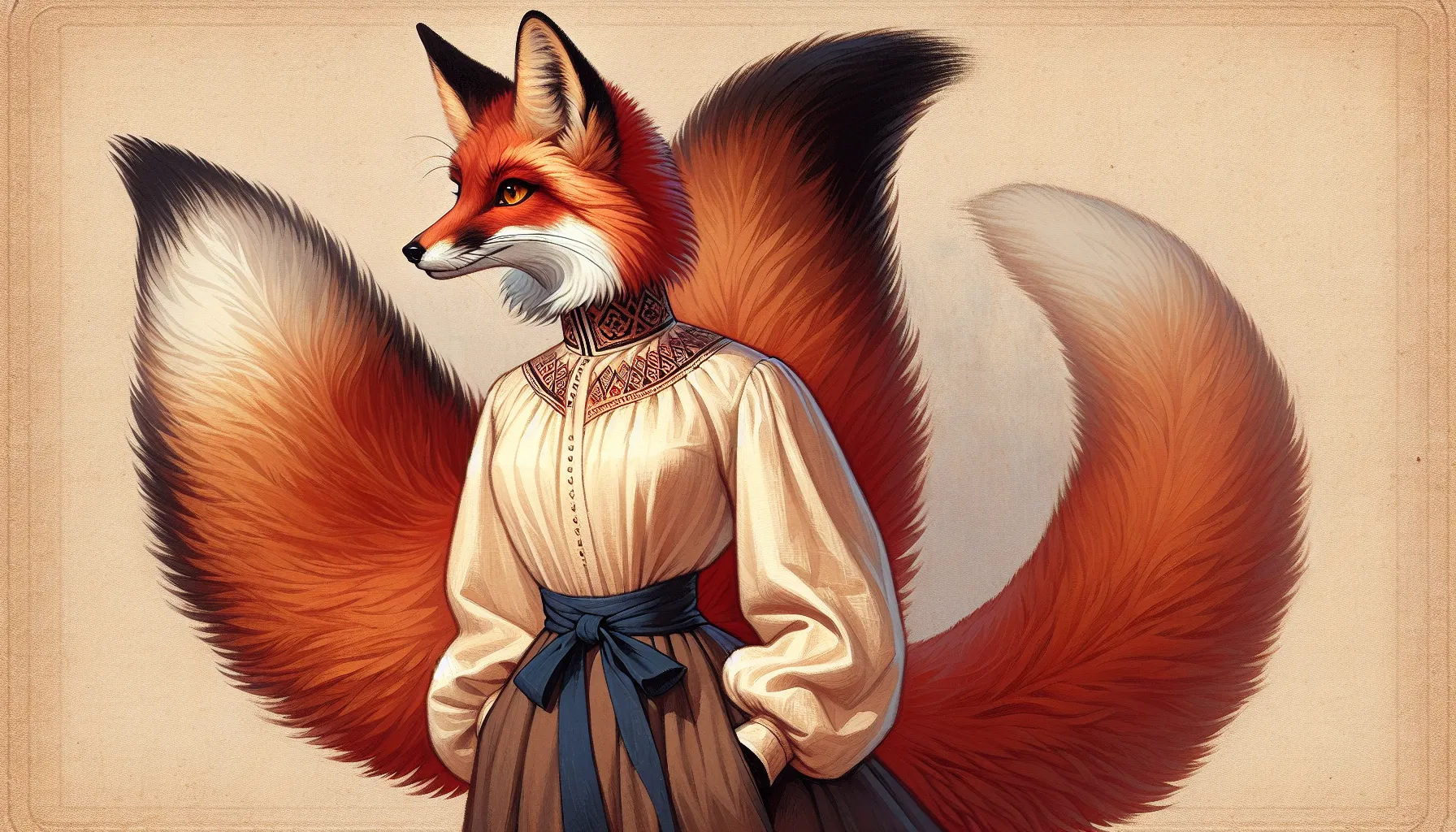
Foxyana on a Carpathian mountain path surrounded by embroidered ritual trees

Episode 01

Vyshyvanka

The Mountains Remember

Hutsul village, Carpathian highlands

She smells it before she sees it. The Carpathians in early morning: pine resin, cold stone, something damp in the folds of the hillside that has no name in any city she has lived in.

Every geometric pattern on a Hutsul shirt has a name and a meaning. It is a wearable manuscript — and the person wearing it carries their family's entire cosmological worldview against their body. Solar wheels for protection. Tree-of-life for continuity. Water symbols for prosperity.

Vyshyvka is “written,” not painted. Each family line has recognizable pattern variations. A single garment told the room where you came from and whose family line you belonged to. A manuscript no border guard ever thought to confiscate.

These patterns pre-date Christianity. They were protected as identity documents under Soviet rule. Since 2022, Ukrainian soldiers have worn vyshyvanky under their military gear.

Вишивка — Vyshyvka
The embroidery pattern itself — not the garment. From the verb “to write.”
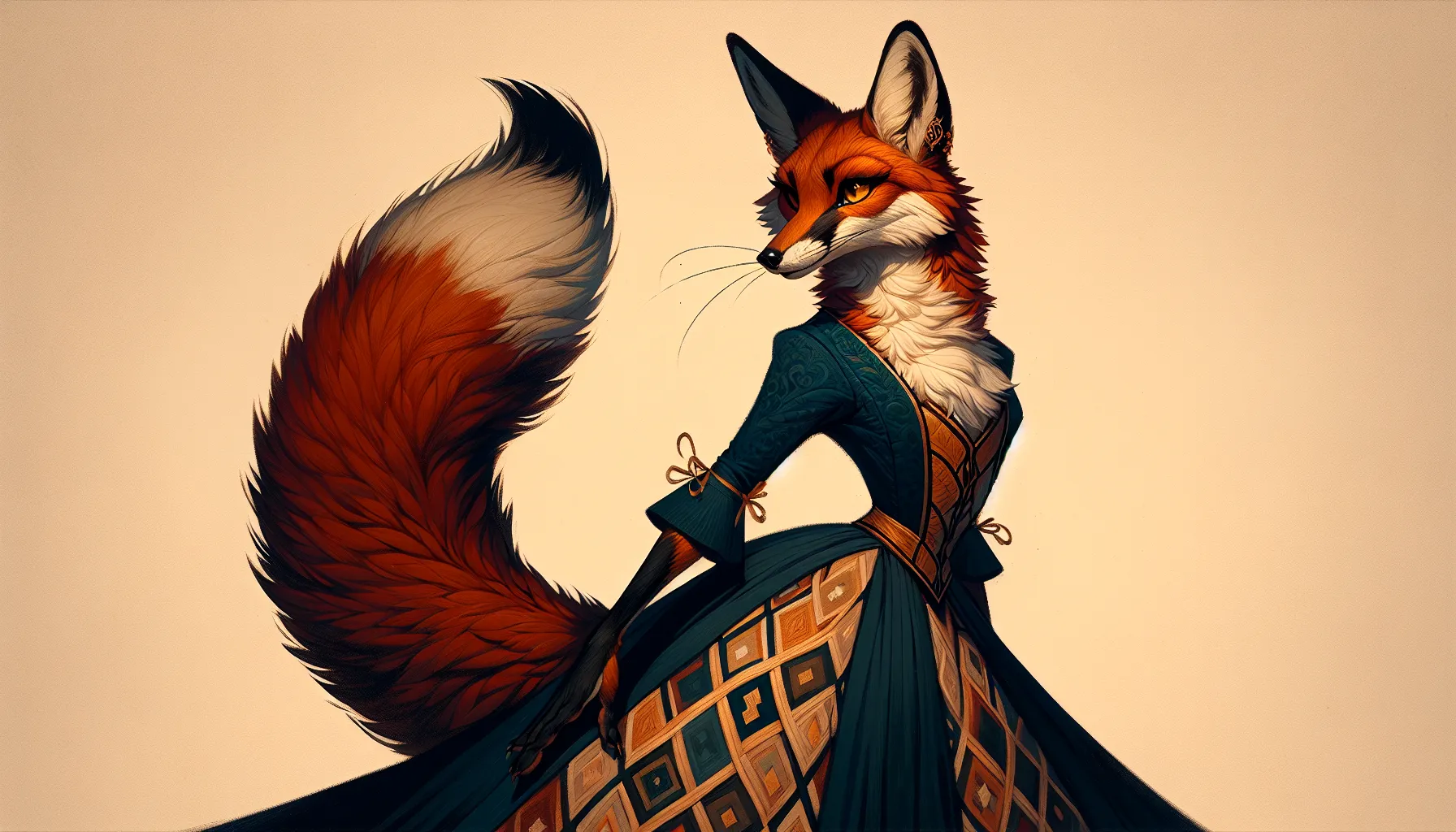
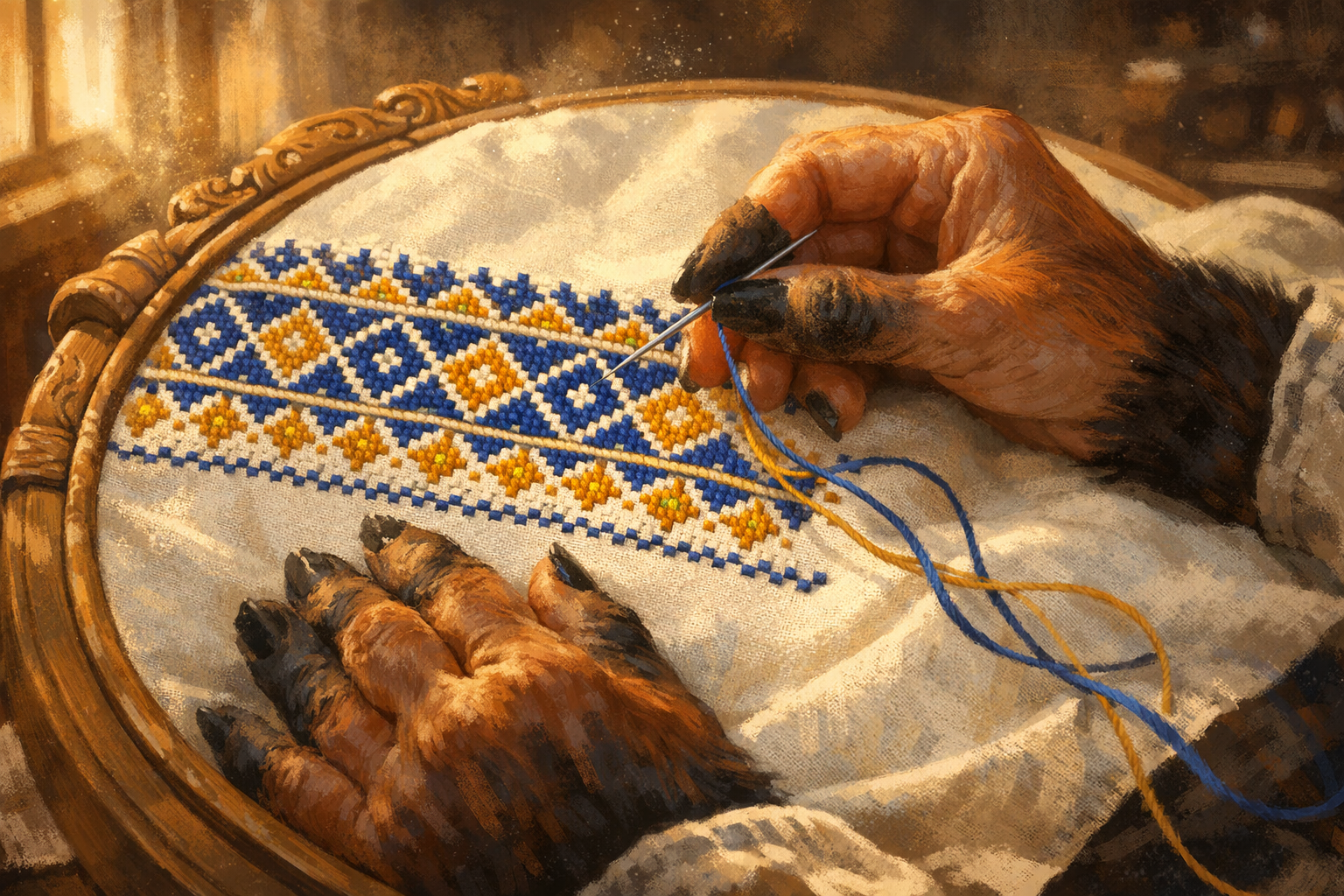
Foxyana examining Hutsul embroidery patterns on traditional garments

Cultural Insight

The embroidery on your sleeves told the room where you came from and whose family line you belonged to. A single garment — a manuscript no border guard ever thought to confiscate.

Some things are the same as they were. Not because nothing has happened. Because someone kept making them.
Episode 01 — The Mountains Remember
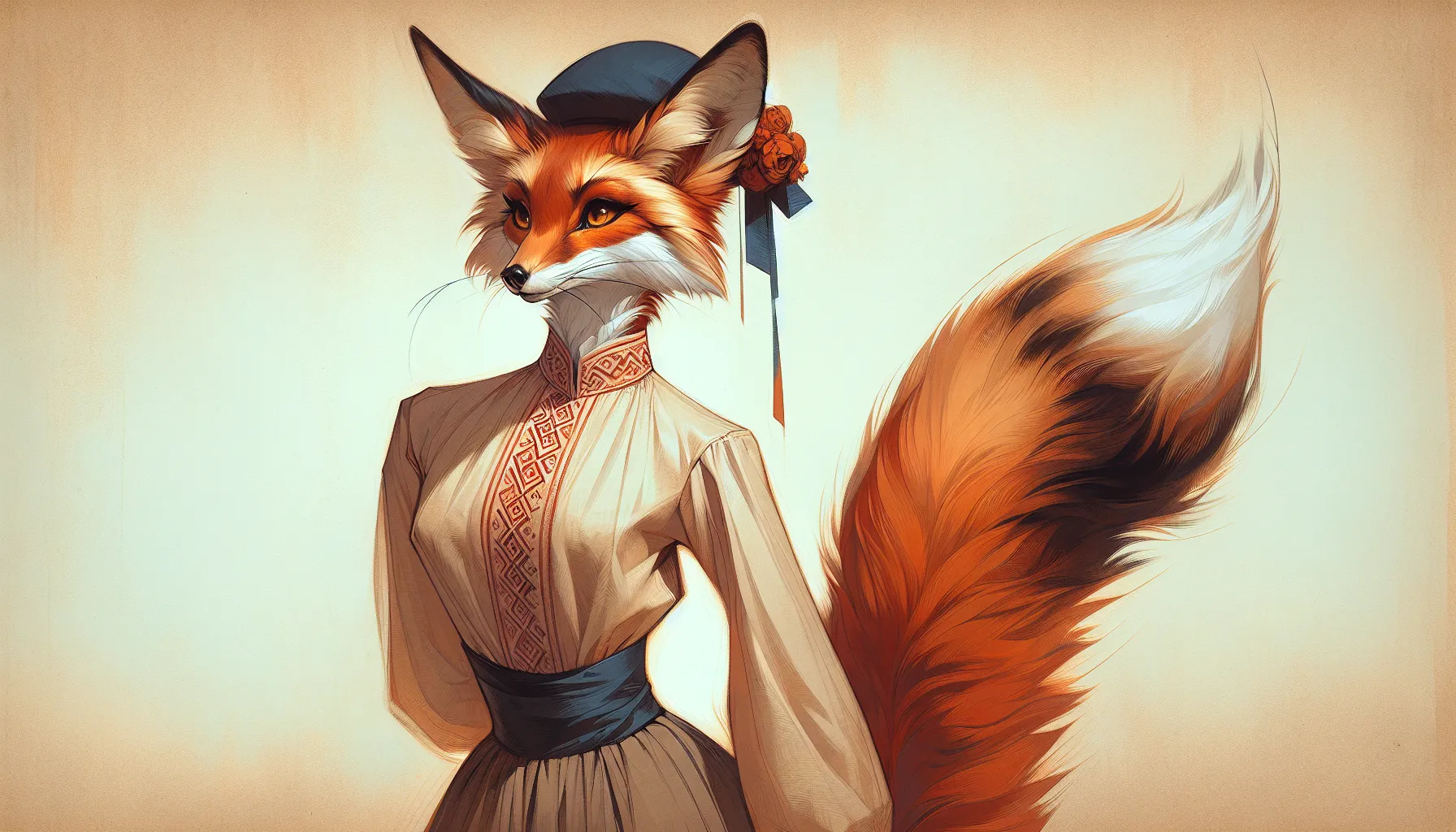
Morning mist settling over the Carpathian highlands
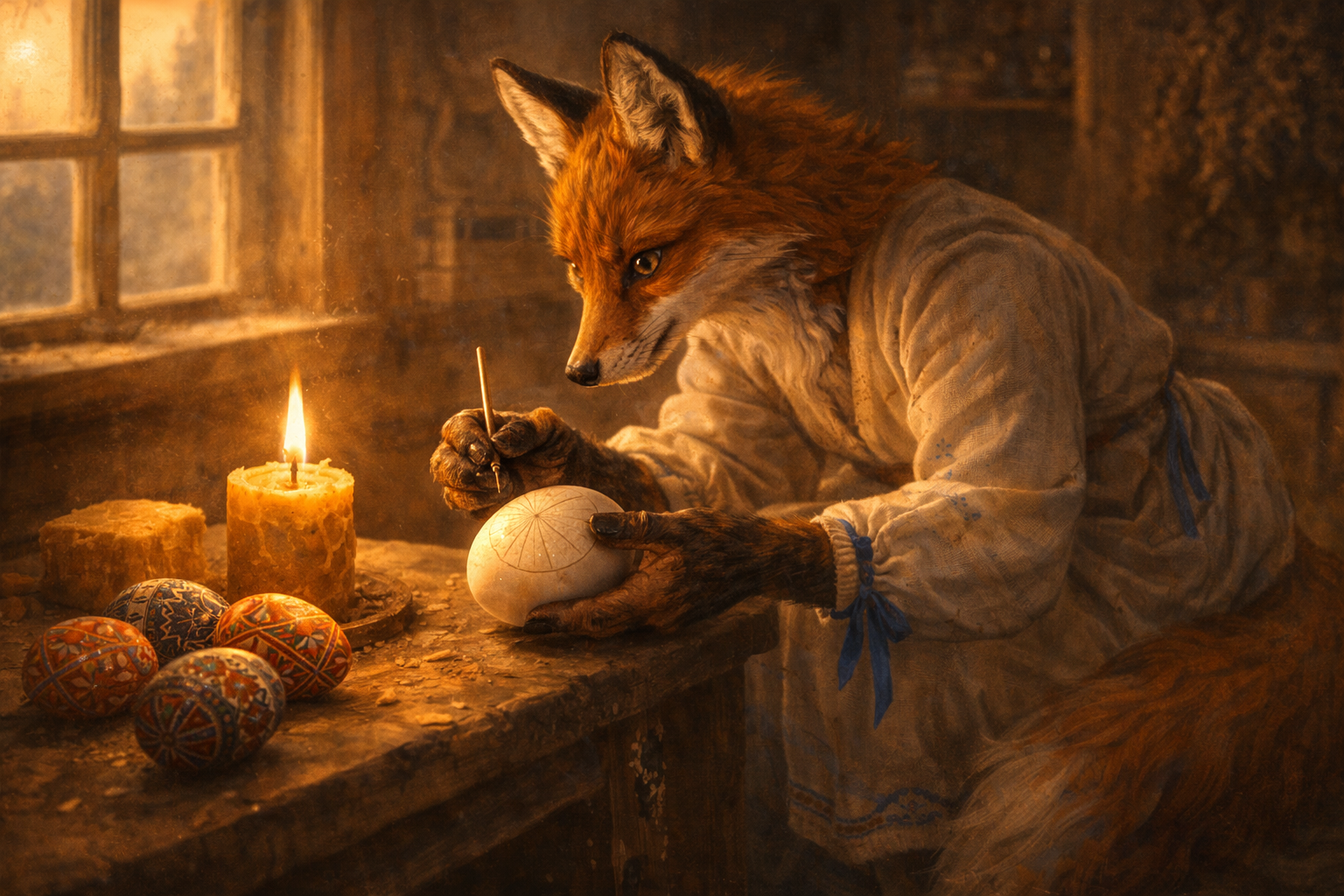
Foxyana at a Pysanka workshop table surrounded by intricately decorated eggs

Episode 02

Pysanka

The Egg That Holds the World

Pysanka workshop, Carpathian foothills

You protect what is already true, and the color finds everywhere else. This is the whole cosmological point — preservation before creation.

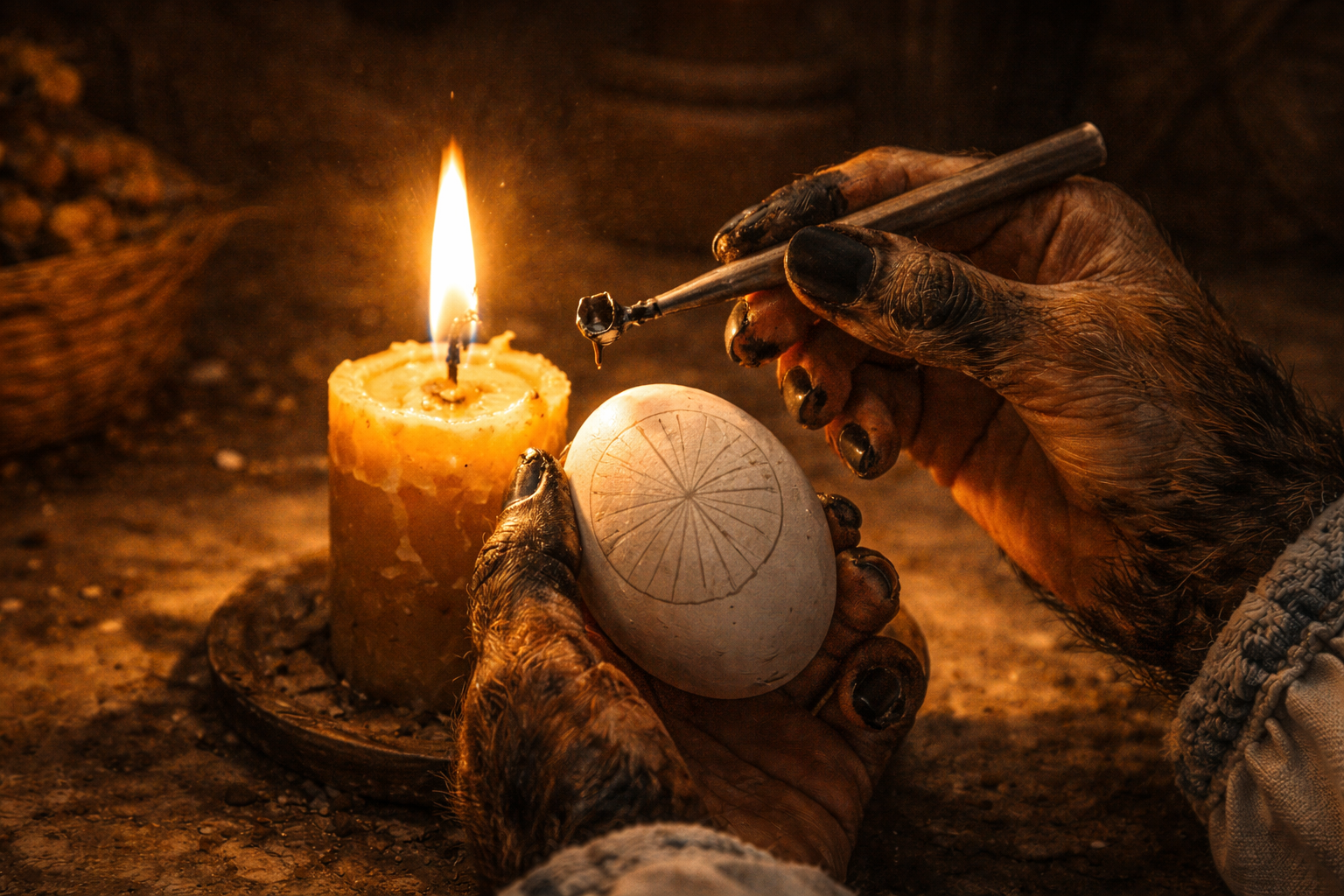
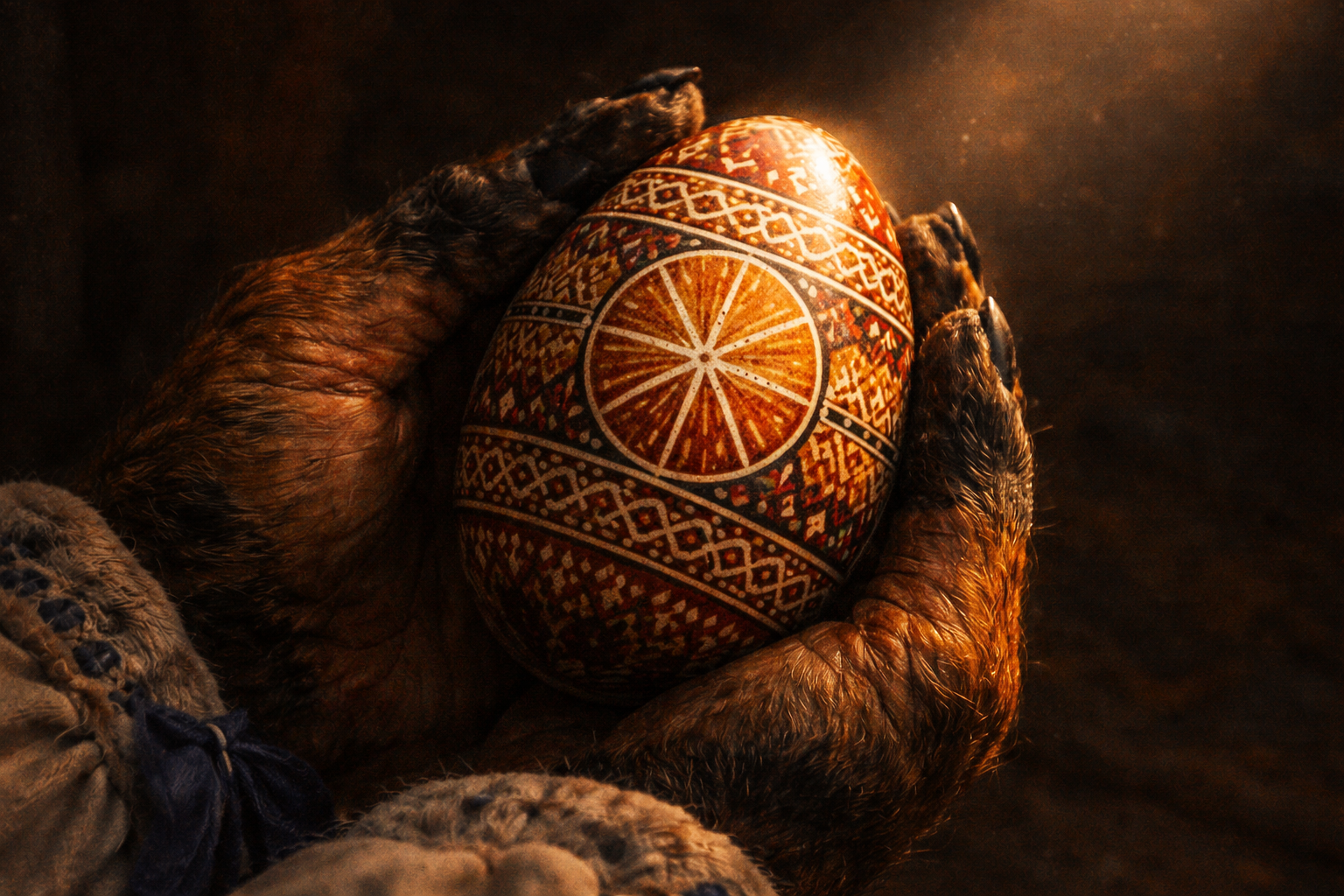
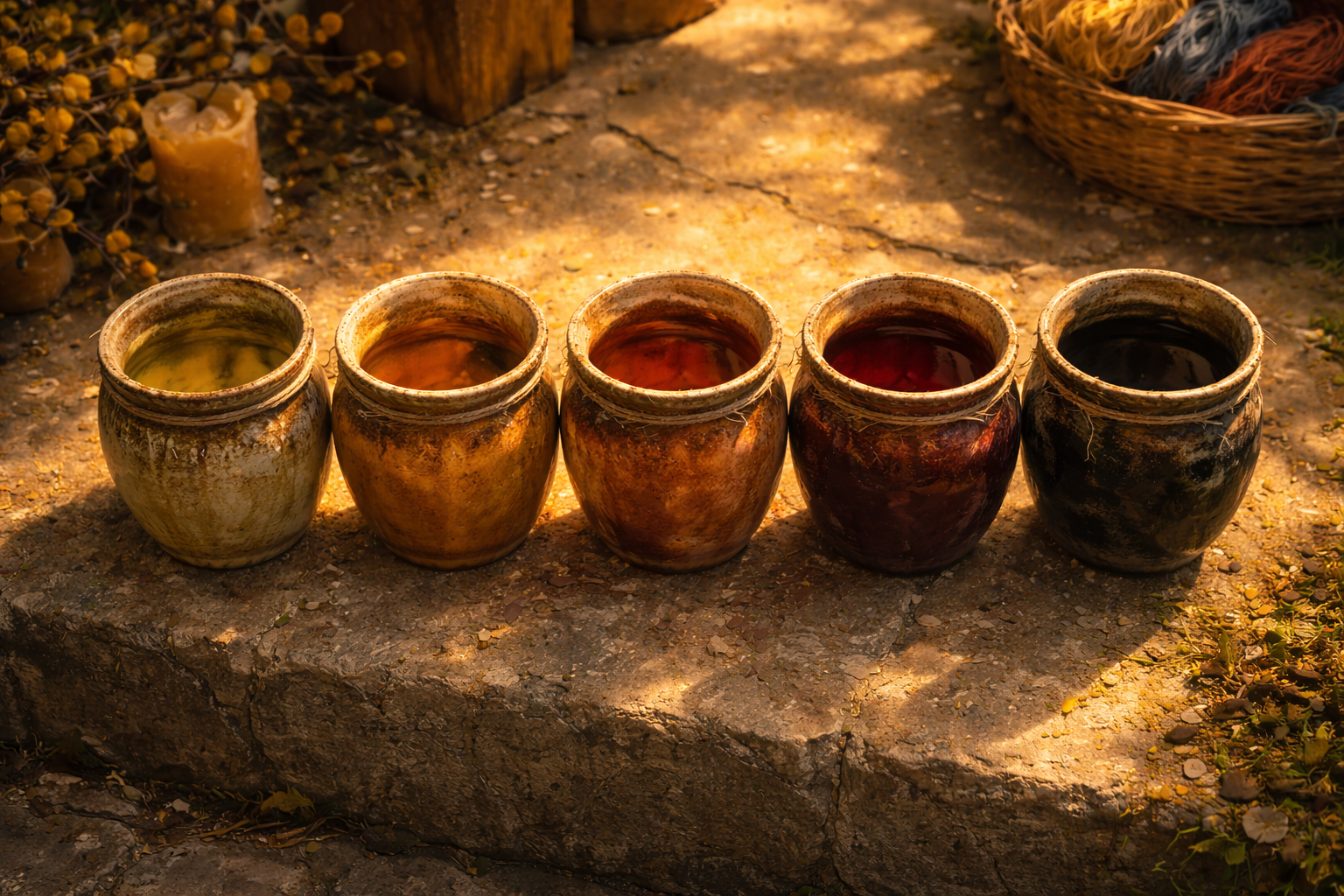
Pysanka comes from pysaty — to write. The egg is written, not painted. The process is wax-resist: you protect what was already there from a color that comes after. Colors are applied lightest to darkest — white, yellow, orange, red, black — each layer sealing what the previous one revealed.

This is a pre-Christian cosmological tradition tied to folk belief about a great serpent's binding. Legend says the number of pysanky made each year determines how tight the bind holds. When people stop writing eggs, the serpent breaks free.

In 2022, pysanky were made in bomb shelters. Children in displaced families continue the tradition in Warsaw apartments, Berlin refugee housing, Toronto community kitchens. The practice travels because it was always meant to.

Pysanka shares its root with pysmenstvo — literature. The verb pysaty (to write) holds the egg, the poem, and the alphabet in the same hand.

Писанка — Pysanka
“Written egg” — from pysaty (to write). A cosmological object, not a decoration.
Foxyana's hands guiding a kistka stylus over a wax-resist egg

Cultural Insight

The process is wax-resist — like batik in textile. You are not adding color. You are protecting what was already there from a color that comes after. The egg is already whole; you are just deciding what to preserve.

The egg is already whole. You are just deciding what to preserve.
Episode 02 — The Egg That Holds the World
Warm workshop light falling across rows of finished pysanky
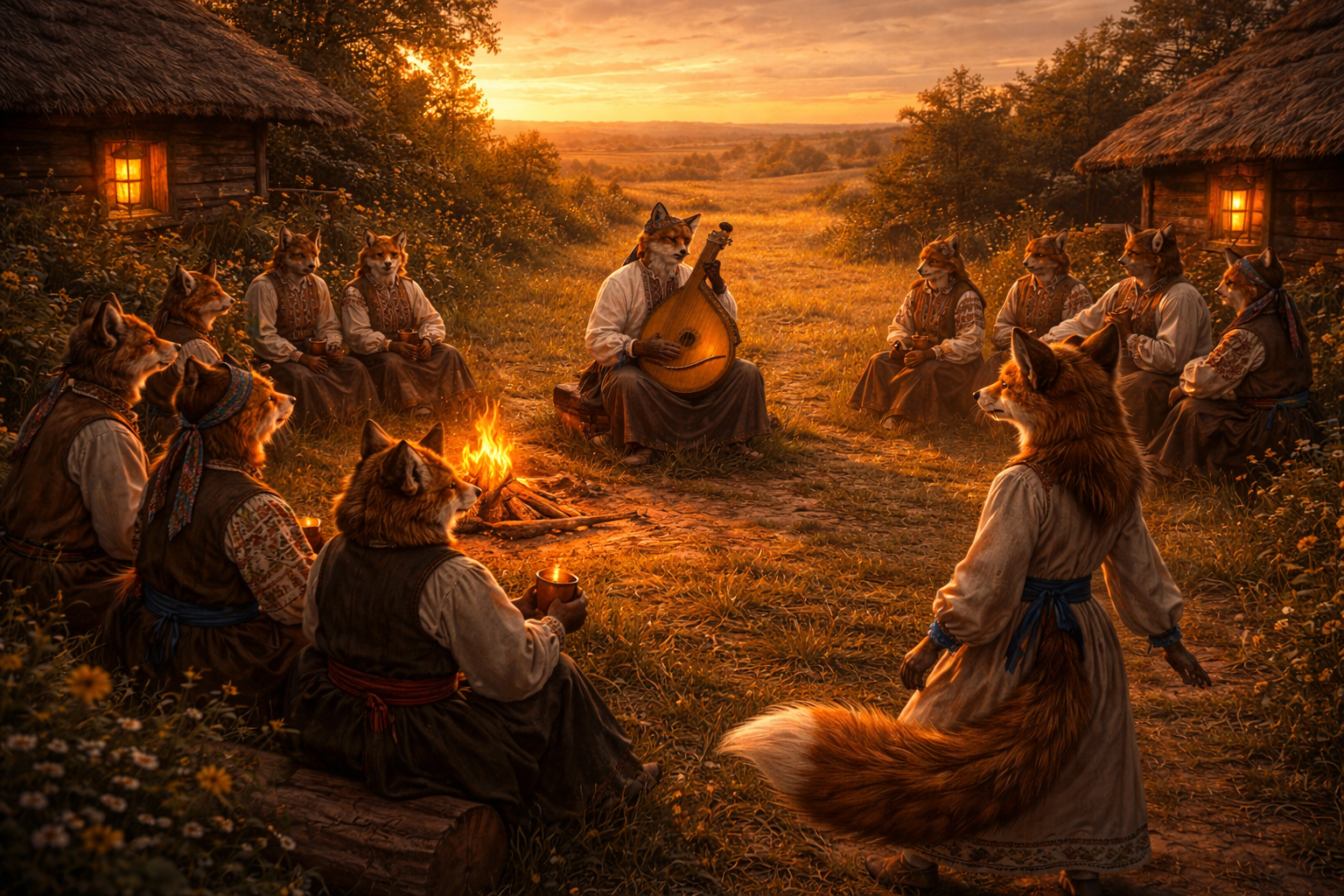
Foxyana at an outdoor evening gathering in the Poltava region as a bandura player performs

Episode 03

Duma

What the Bandura Knows

Poltava region, outdoor evening gathering

Imagine Homer was still alive in the 19th century, traveling between villages with a 65-string instrument, memorizing entire national epics in his head. And then imagine someone decided to systematically locate and kill every Homer in the country.

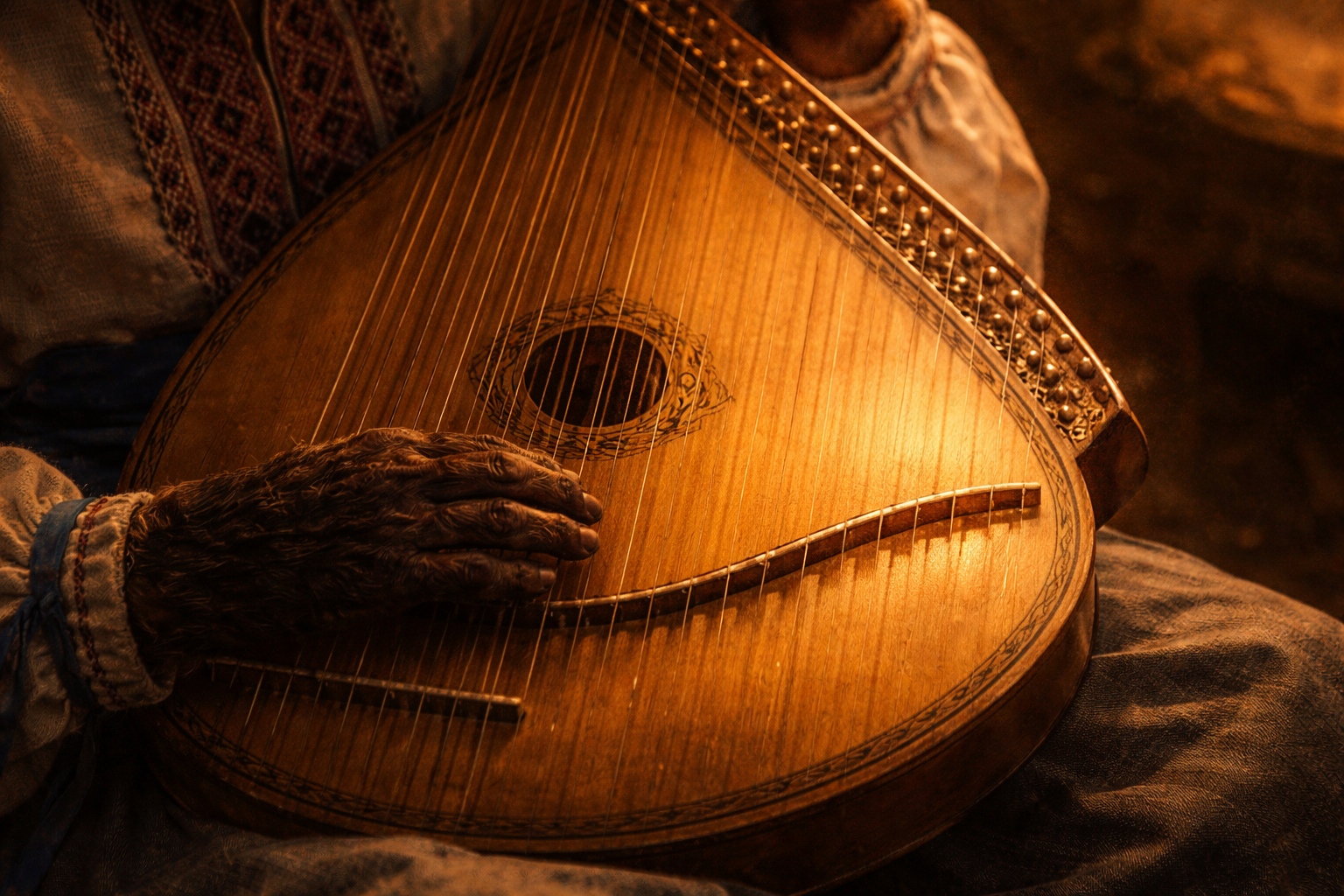
The bandura is a 55–68 string chordophone with a complex timbre — plucked, resonant, percussive. The kobzari were itinerant blind bards who memorized entire epics called dumy — hundreds of stanzas without manuscript.

Dumy are the Ukrainian national epic form: long narrative poems about Cossack heroism, captivity, ransom. A distinctly Ukrainian oral tradition that carries historical memory in the body of the performer.

In the 1920s–30s, the Soviet government systematically arrested kobzari, confiscated their instruments, and executed many of them — targeted specifically because they memorized Ukrainian historical narratives that ran counter to Soviet historiography. You cannot burn a memory that lives in a person's body. So they removed the persons. The tradition survived through students and hidden instruments.

Дума — Duma
Epic narrative poem. Also means “thought” and “parliament” — three meanings held simultaneously.
Foxyana watching a kobzar's hands move across bandura strings

Cultural Insight

That history is the bandura. A 65-string instrument whose players memorized an entire nation's narrative poetry — and were systematically killed for it.

You cannot burn a memory that lives in a person's body. So they removed the persons.
Episode 03 — What the Bandura Knows
Evening light over the Poltava region gathering
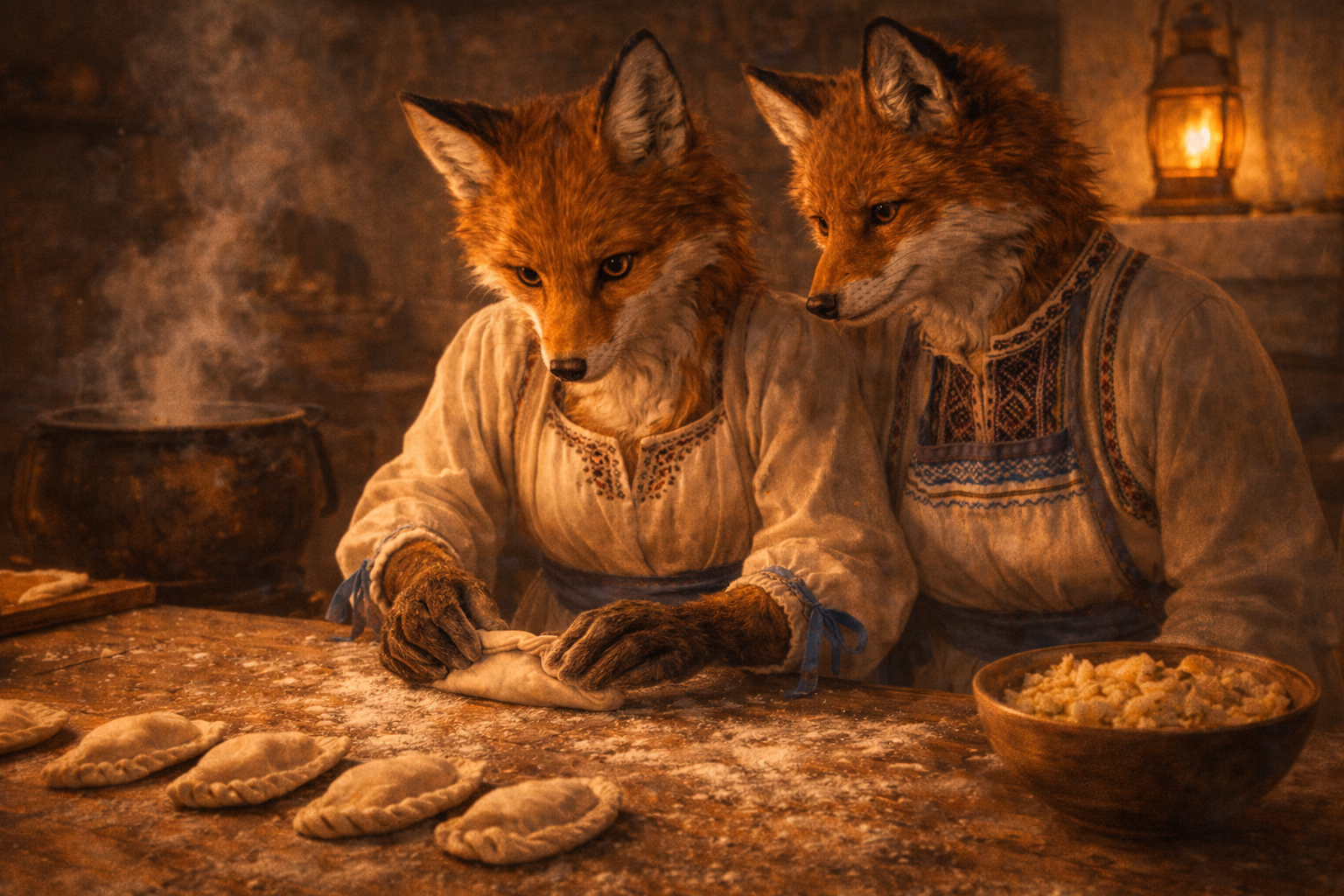
Foxyana folding varenyky in a traditional Ukrainian farmhouse kitchen

Episode 04

Varenyky

The Fold

Traditional farmhouse kitchen, winter

The crimp-fold is artisanal signature — each practitioner's angle of pinch, number of folds per unit, edge width is identifying like handwriting. Recognizable within families across generations.

Varenyky means “boiled things” — from varyty, to cook. The canonical filling is potato with farmer's cheese, but regional variations include sauerkraut with mushroom, sour cherry, and seasoned meat.

Varenyky survived Soviet collectivization because the domestic kitchen was private space. The fold pattern — the precise way each family crimps the dough — became an act of intergenerational transmission. Now diaspora families make them as cultural survival, hands teaching hands across kitchen tables in cities that never heard of the Carpathians.

Making varenyky was traditionally a communal act — women gathered before weddings, before winter, before the long harvest to produce hundreds together. The correct crimp was never described in words. It was learned through years of watching, then muscle memory. The body carries what the document cannot hold.

Вареники — Varenyky
“Boiled things” — from varyty (to cook/boil). The fold is the signature.
Foxyana's hands crimping the signature fold of a varenyky

Cultural Insight

Like the fresh pasta packet at the market — the one that took someone's grandmother thirty years to learn to make the right way. Varenyky are that, except the fold pattern at the top is how that grandmother's grandmother signed her name.

The fold is a form of writing. It signs the thing that it closes.
Episode 04 — The Fold
Steam and flour dust in a warm farmhouse kitchen
Foxyana walking Lviv's old city cobblestones in early morning golden light

Episode 05

Vichne Misto

The Golden City

Lviv old city, early morning

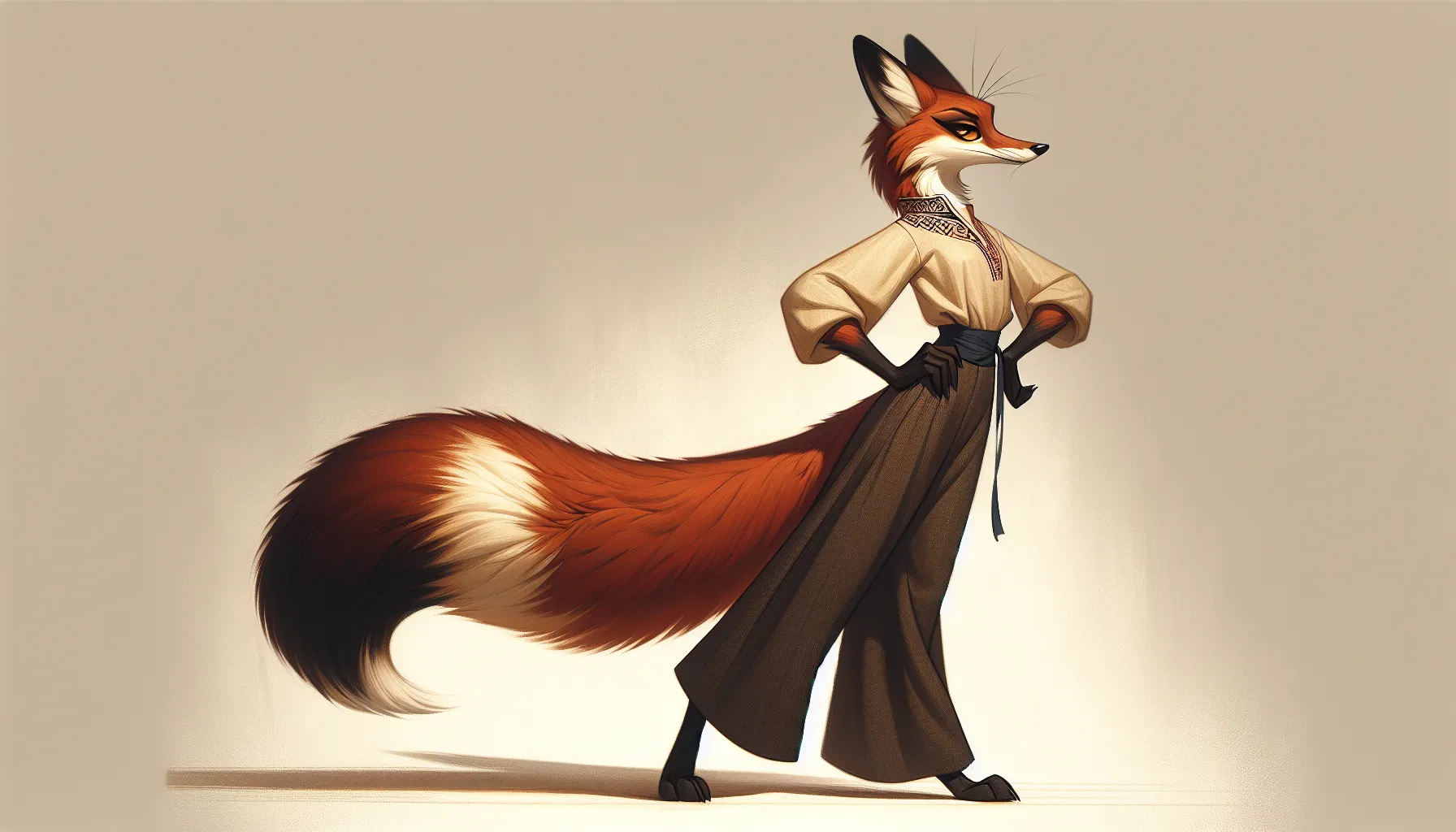
She is reading the city through her feet. In ballroom, the floor tells you everything before your eyes do. She has been reading floors her entire professional life.

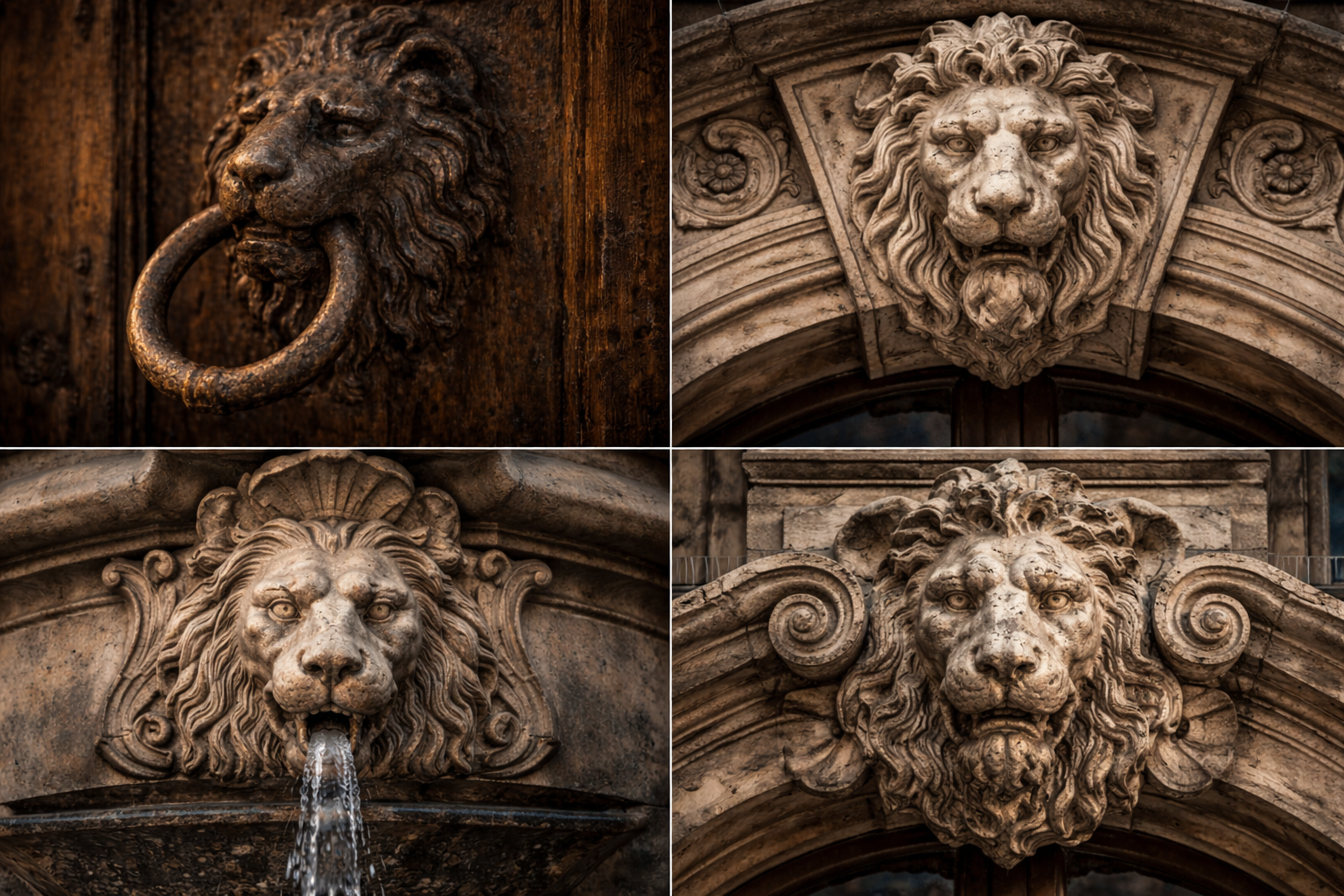
Lviv has been named four times — Львів (Ukrainian), Leopolis (Latin: City of Lions), Lemberg (German), Lwów (Polish) — and survived them all. One of Europe's oldest continuously inhabited cities, it carries layers of Gothic, Renaissance, Baroque, Art Nouveau, and Socialist eclecticism on the same block.

The city's pre-war Jewish community was approximately 30% of the population, nearly completely destroyed in the Holocaust. This absence is part of the architecture now — the buildings that remain, the synagogues that do not.

Ivan Franko — poet, writer, translator — is Lviv's civic literary compass. His statue anchors the university district. He wrote in Ukrainian, Polish, and German in a city that required all three, and insisted on the Ukrainian identity of a place that was never only one thing without requiring it to stop being everything else.

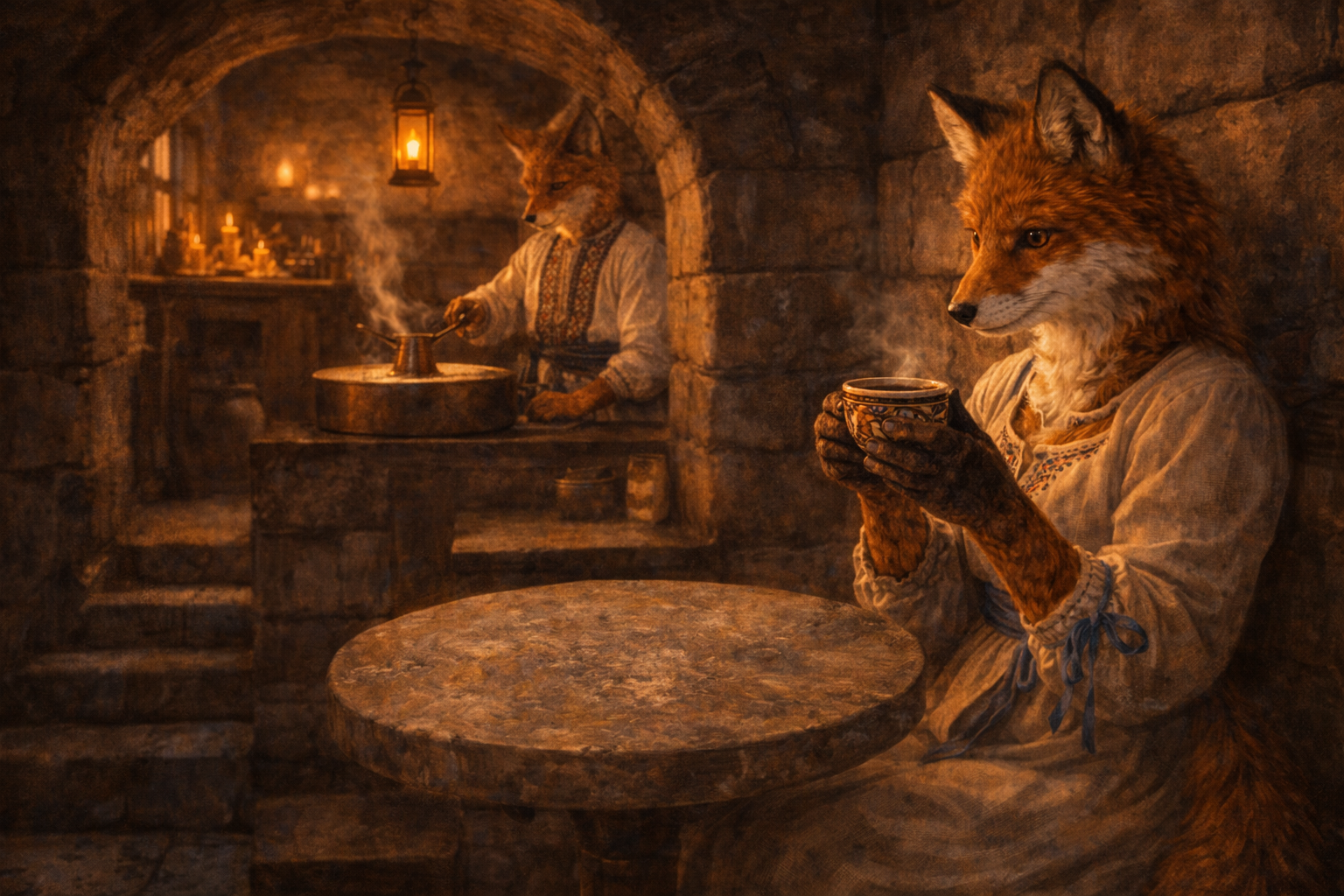
Since 2022, Lviv has served as the primary transit and stabilization city for internally displaced Ukrainians. Cultural institutions continue to operate under air raid alerts. The café culture maintains an Austro-Hungarian copper cezve coffee tradition — Ottoman preparation adapted through Habsburg contact.

Львів — Lviv
Also Leopolis, Lemberg, Lwów. Four names, one city. The lions know the counting.
Foxyana in a Lviv courtyard, architecture layered behind her

Cultural Insight

If Prague and Vienna had a child and gave it to the Carpathians to raise — and that child spent four hundred years being told it was someone else's city — Lviv is what grew up anyway.

The city has been named four times and survived them all. The lions know the counting.
Episode 05 — The Golden City
Golden morning light illuminating Lviv rooftops
Foxyana standing in the vast Poltava steppe under a golden-hour sky

Episode 06

Volia

The Wide Open

Poltava steppe, golden hour

Three meanings in one word: freedom, will, and open space. Not separate concepts fused together — the same reality named from three angles.

The steppe covers approximately 40% of Ukraine. Standing in it, you can see the earth's curvature. The word volia holds freedom (existential), will (philosophical), and open space (geographic) simultaneously — because for the people who named this landscape, those three things were never separate.

The Cossacks — from a Turkic root meaning “free person” — built the Zaporozhian Sich: a democratic self-governing republic on the Dnipro islands below the rapids. Elected leadership. Assembly decision-making. An anti-feudal model centuries before the concept had a name in Western political theory.

This history is also complex. The Khmelnytsky Uprising of 1648 included documented massacres of Jewish communities across Ukraine. Ukrainian national pride in the Cossack tradition and honest accounting of those events exist in the same history. The serious treatment holds both.

Hopak is the dance of this landscape: athletic, improvisational, with explosive prysiádka (deep squat-kick). Competition as generosity — showing what the body can do as a gift to the community.

Воля — Volia
Freedom + will + open space. Three meanings that were never separate.
Foxyana in the steppe with wind moving through the grass

Cultural Insight

The American West had the frontier myth — free land, self-made people, escape from the old system. Ukraine had the steppe and the Cossacks, and they got there four centuries earlier. The word for freedom and the word for open space are the same word.

The people who named this landscape called freedom and open space the same word. They were describing the land. They were describing themselves. They were describing the same thing.
Episode 06 — The Wide Open
Endless steppe horizon at golden hour
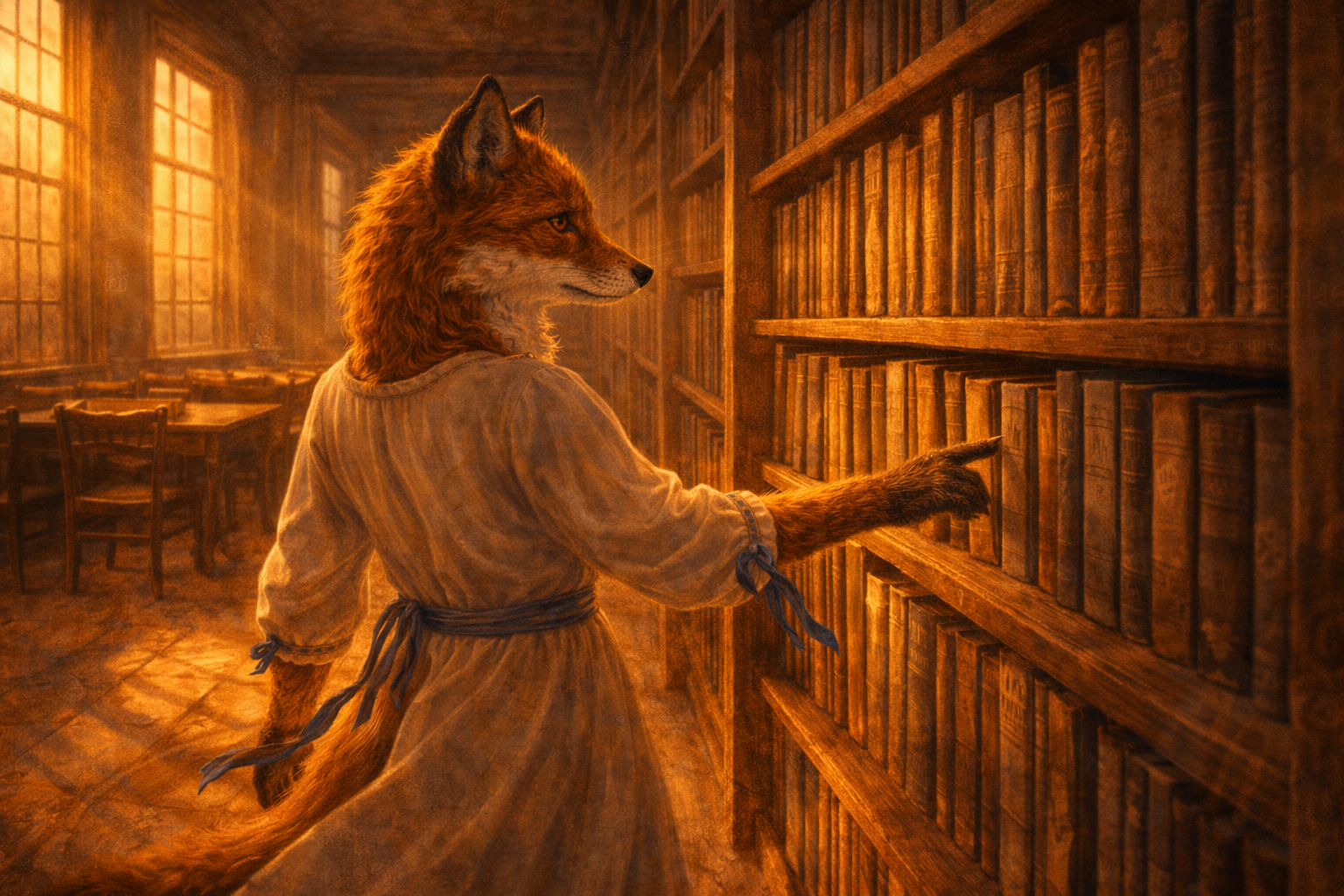
Foxyana reading Ukrainian poetry in a library in afternoon light

Episode 07

Nenyia

The Word

Library, afternoon light

A language can be made illegal. Ukraine knew this for two centuries. They kept writing anyway — in margins, in letters, in printed books smuggled past censors.

Ukrainian is an East Slavic language — mutually somewhat intelligible with Russian but a distinct language with its own vocabulary, phonology, and grammar. To suggest otherwise is not a linguistic position but a political one.

The Ems Ukaz of 1876 formally banned Ukrainian publishing and theatrical performance. The goal: prevent a distinct Ukrainian literary identity from consolidating. The “Executed Renaissance” of the 1920s–30s saw hundreds of Ukrainian writers, poets, and artists killed or sent to labor camps — an entire generation of sophisticated practitioners erased.

Taras Shevchenko (1814–1861) remains the central figure of Ukrainian literary identity. Born a serf, he purchased his freedom through art. Exiled by Tsar Nicholas I, forbidden from writing or painting, he hid poems underground. He died at 47. His Kobzar — named after the bards of Episode 3 — defined literary Ukrainian for all subsequent generations.

Since 2022, Russian-speaking Ukrainians have been switching to Ukrainian in significant numbers — not because they did not know it, but as a deliberate act of self-identification. The language carries the memory of two centuries of suppression. Every sentence in Ukrainian now declares what the Ems Ukaz tried to prevent.

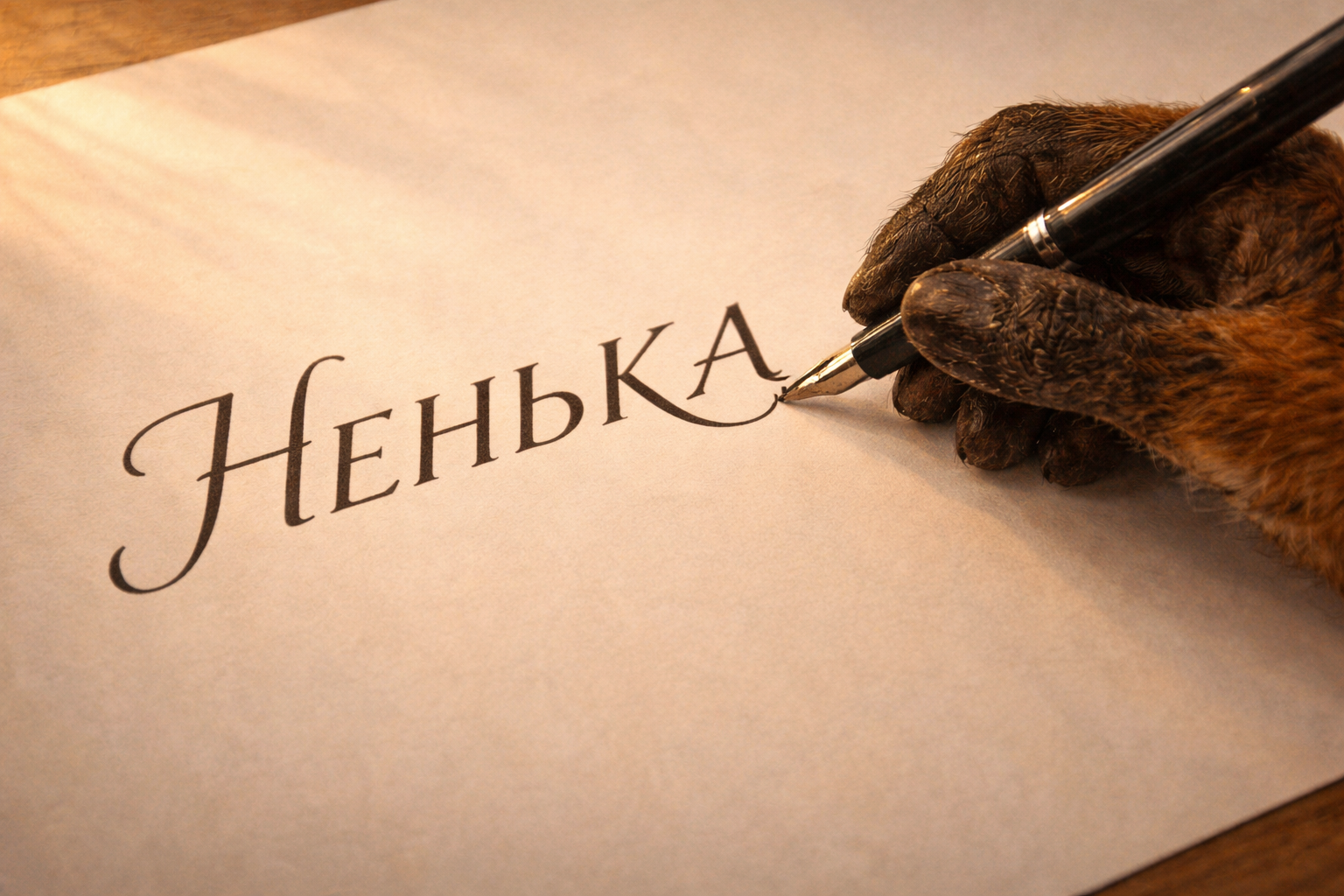
Ненька — Nenyia
Diminutive-tender “mother.” Also used for motherland. The word itself is an act of tenderness.
Foxyana turning pages of a worn Kobzar collection

Cultural Insight

The survival of the language is not passive. It required specific people making specific decisions to disobey. Every sentence in Ukrainian is an act that was once forbidden.

Taras Shevchenko died at 47, exiled by Tsar Nicholas I, forbidden from writing or painting. He hid poems underground and in correspondence. He wrote anyway.
Episode 07 — The Word
Afternoon light streaming through library windows
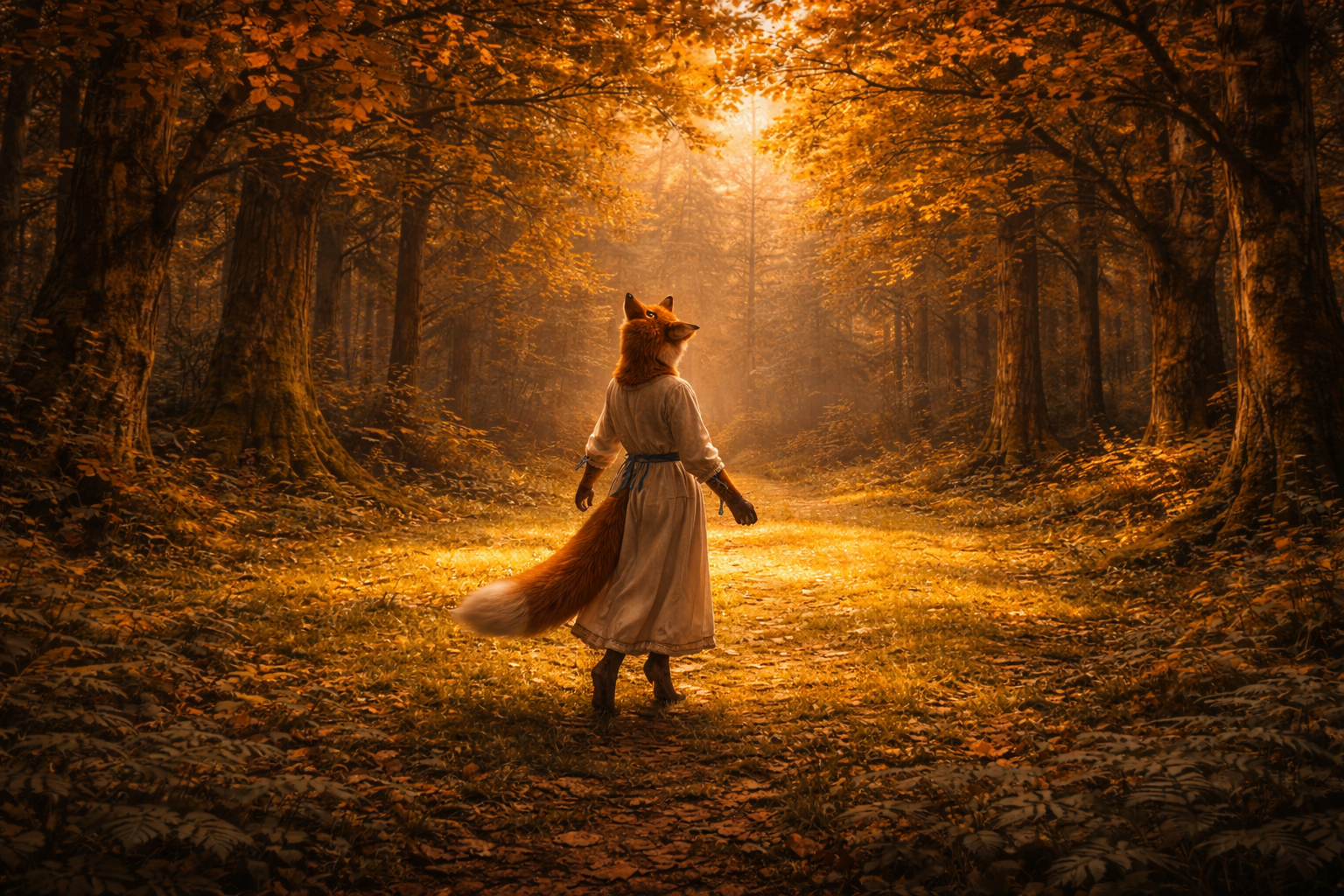
Foxyana on a misty Polissia forest path in autumn

Episode 08

Lisovik

The Forest Path

Polissia forest-wetland, autumn

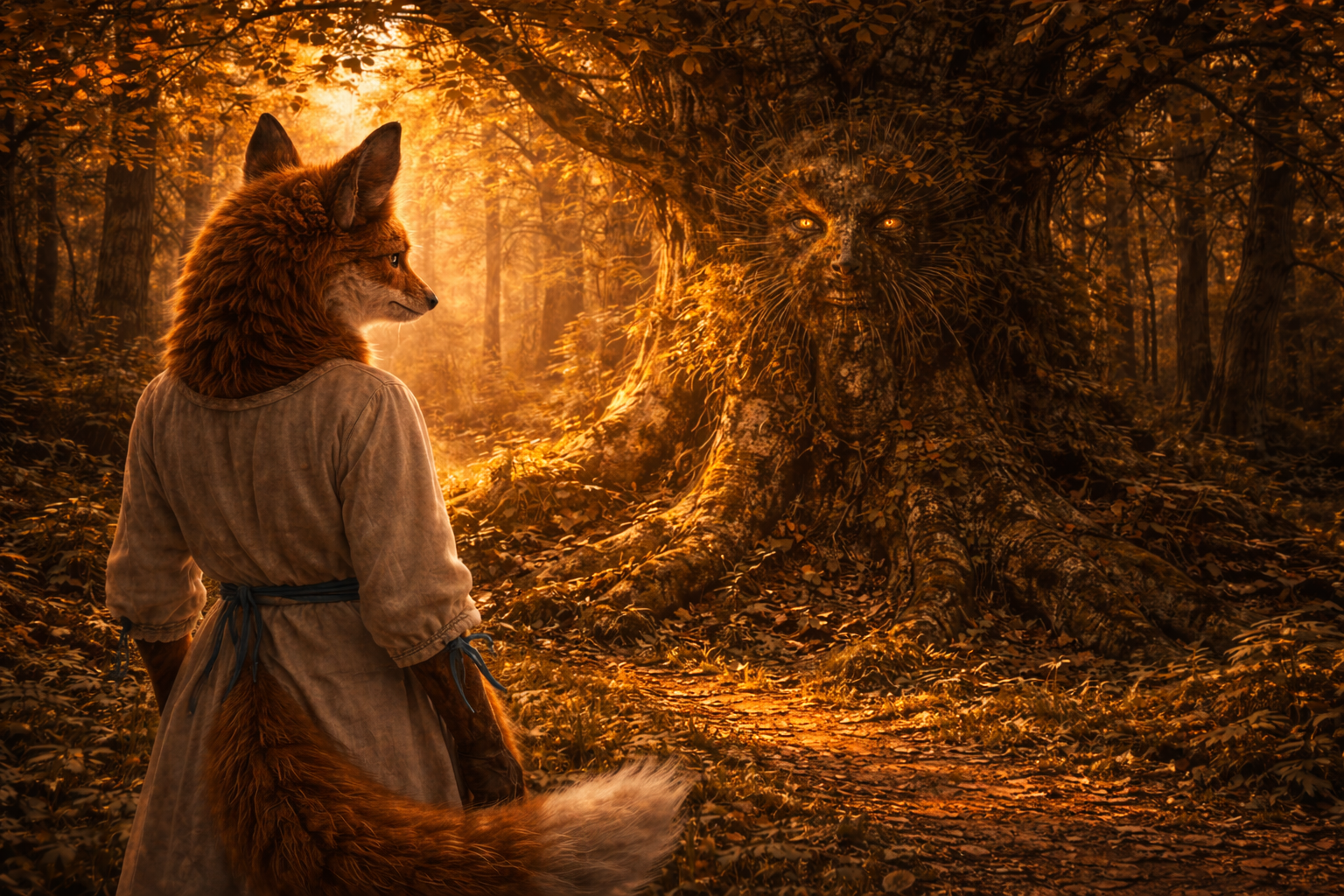
Most European cultures have stories about forest spirits. Slavic forest spirits are unusual in not being primarily evil or good — they are present. The Lisovik does not want your soul. It wants you to know where you are.

Polissia is a vast lowland forest-wetland zone of northern Ukraine: mixed forests, peat bogs, river floodplains. The Chernobyl Exclusion Zone sits within it — an involuntary wildlife reserve where wolves, lynx, bears, and Przewalski's horses now roam without human interference.

Lisovik is not a ghost or a demon. In pre-Christian Slavic animist belief, it is the forest's own intelligence with intentionality. Interaction requires courtesy and orientation — specific days for cutting wood, never taking more than needed.

Polissia women historically maintained medicinal plant knowledge as community pharmacopeia: plant preparation methods, seasonal timing, dosage through observation. This was suppressed during Soviet collectivization. Ethnobotanists have been documenting surviving practices since independence.

Лісовик — Lisovik
Forest being. Not the forest's ghost — the forest's own subjectivity, with agency.
Foxyana pausing on a forest trail, ears forward, listening

Cultural Insight

If you enter a forest and feel the pace of it ask you to slow down — that is not your imagination. That is accurate perception. The Lisovik is not a belief requiring literal interpretation. It is a posture toward the nonhuman world with practical consequences for how you behave in it.

The forest was here before the categories we use to describe it. The Lisovik is not waiting for anyone to believe in it. It is operating at scale.
Episode 08 — The Forest Path
Autumn mist moving through Polissia forest canopy
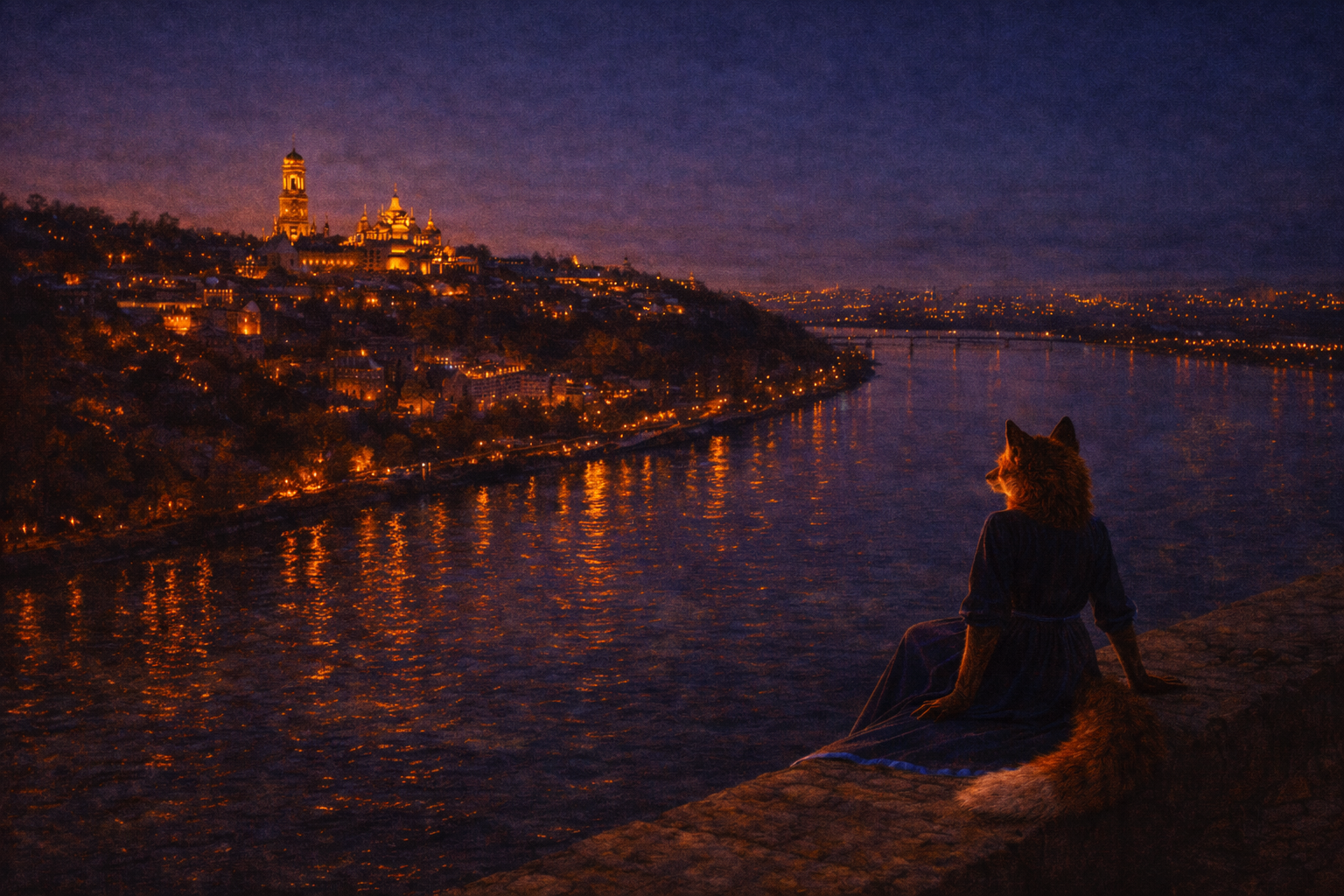
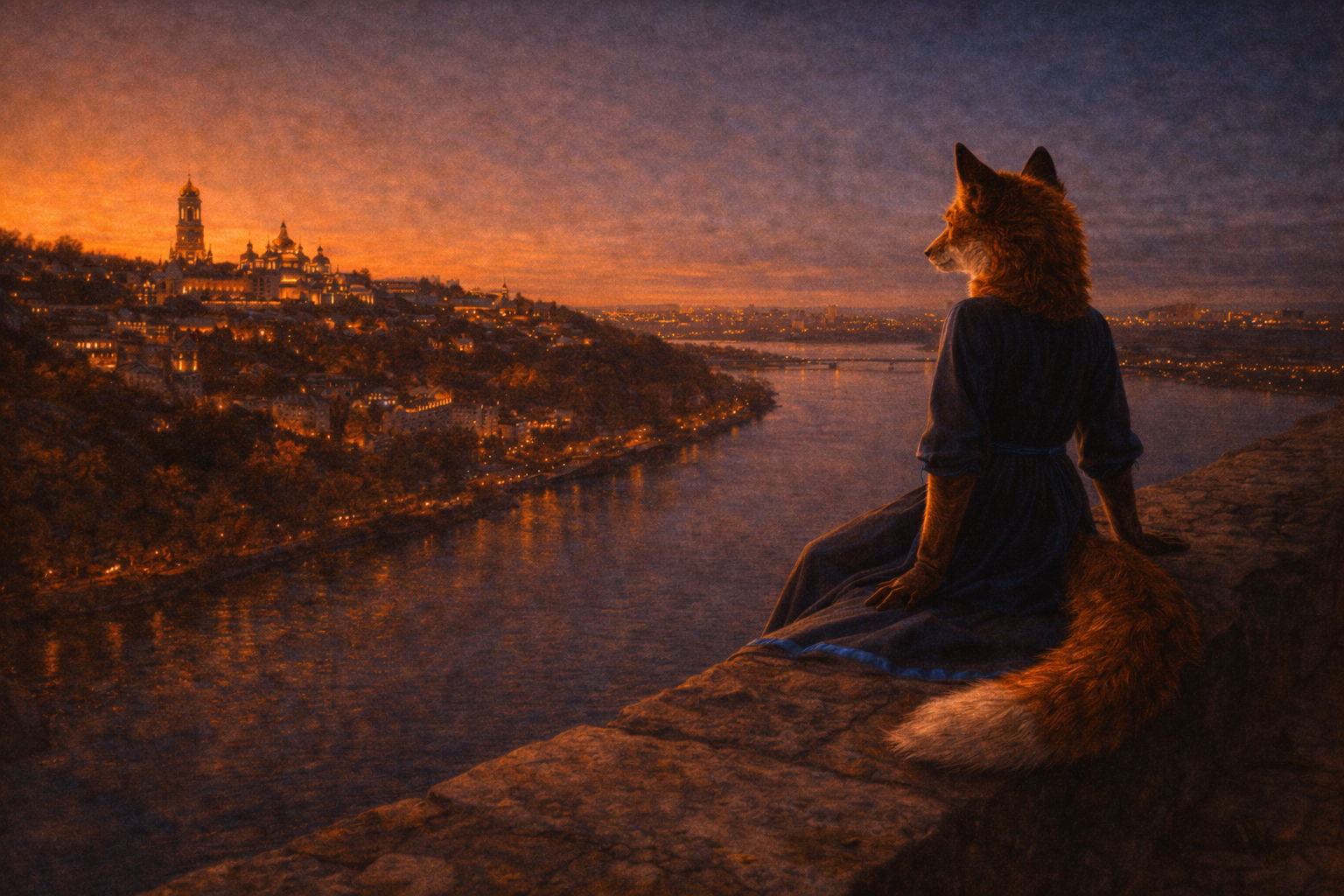
Foxyana on the Dnipro embankment in Kyiv at dusk

Episode 09

Porih

The River

Dnipro embankment, Kyiv, dusk

Every civilization has a river it is. The Nile is Egypt. The Ganges is India. The Dnipro is Ukraine — every major city on it, every major poem about it, every major battle fought across it.

The Dnipro flows 2,285 kilometers from Russia through Belarus into Ukraine and the Black Sea. It is the spine of Ukrainian geography and self-understanding. Taras Shevchenko's Hamaliya opens: “The wide Dnipro roars and groans.” The river is literary protagonist.

Shevchenko made one specific request before his death: to be buried where he could see the Dnipro. He is buried at Kaniv, on a high hill above the river. He specified the view. The river was there when he asked. The river is still there.

Kyivan Rus (9th–13th century) was centered in Kyiv — ancestor to Ukrainian, Belarusian, and Russian cultures. Ukrainian historical scholarship locates Ukrainian cultural continuity directly from Kyivan Rus. Moscow was a later principality.

The Kakhovka Dam was destroyed in June 2023 — a catastrophic act causing flooding, agricultural destruction, water contamination, and displacement of tens of thousands. The Soviet era had already dammed the rapids (porohy — thresholds), submerging the site of the Zaporozhian Sich. The Dnipro now carries both ancient and contemporary historical weight.

Поріг — Porih
Threshold, doorstep, and river rapids. The place where you cross from one thing into another.
Foxyana watching the Dnipro at dusk, city lights reflected

Cultural Insight

The Zaporozhian Cossacks lived beyond the thresholds — za porogamy — beyond the limits where ordinary rules applied. The rapids are gone now, dammed by Soviet engineering. But the threshold remains in the language.

The wide Dnipro roars and groans. The Dnipro now carries both ancient and contemporary historical weight.
Episode 09 — The River
Dusk settling over the Dnipro river in Kyiv
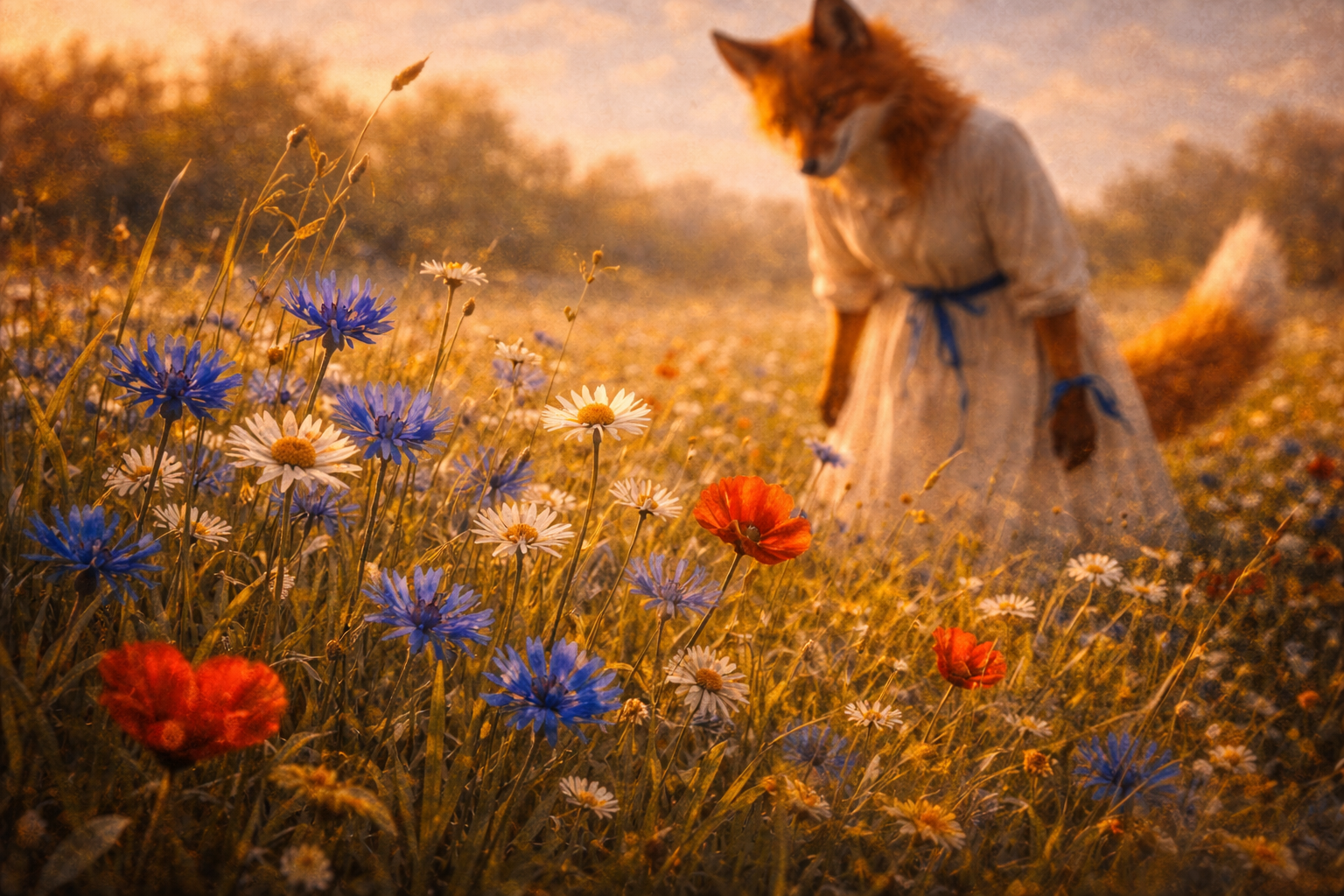
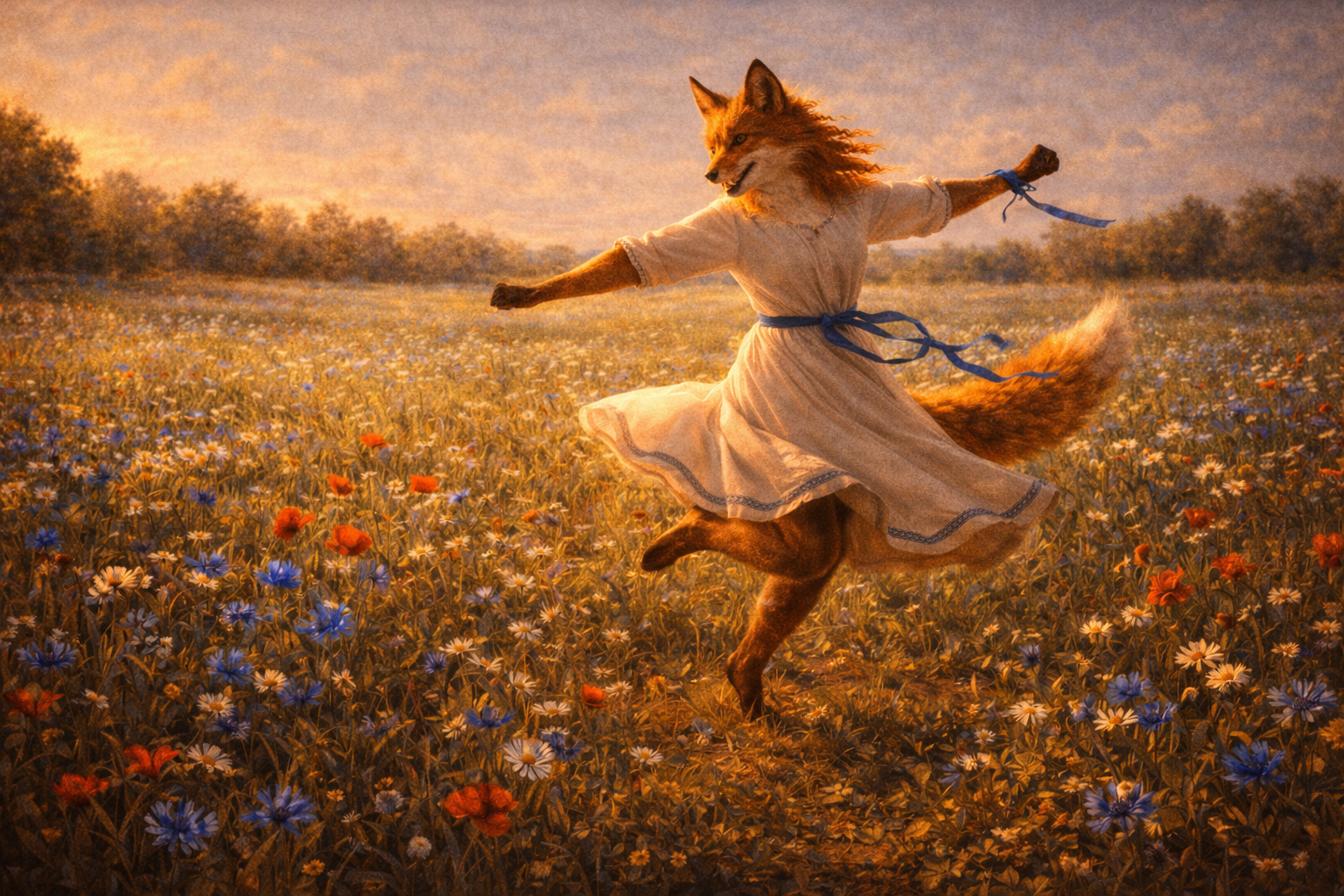
Foxyana in a wildflower meadow in late spring watching a child take first dance steps

Episode 10

Pruzhynka

The Child's Step

Wildflower meadow, late spring

She does not look back. She trusts that feet are finding the same path hers found. That the ground is returning the weight the way it returned hers. That this is already happening behind her.

Kozachok means “little Cossack” — a diminutive. A child's word for a grown-up thing. The dance inherits Viennese waltz rotational quality and folk floor-connection in the same form.

Pruzhynka is the foundation: a gentle up-down bounce using the spring of knee and ankle. Not stiff — elastic. Teaching one pruzhynka step gives a child the physical vocabulary for dozens of folk forms. The same pruzhynka foundation is used by concert dancers on international stages.

Folk dance was traditionally taught body-to-body: the child mirrors the parent or elder without verbal instruction. The body carries the step through diaspora displacement — across kitchen floors in cities that never heard of the Carpathians, the feet remember what the language might not.
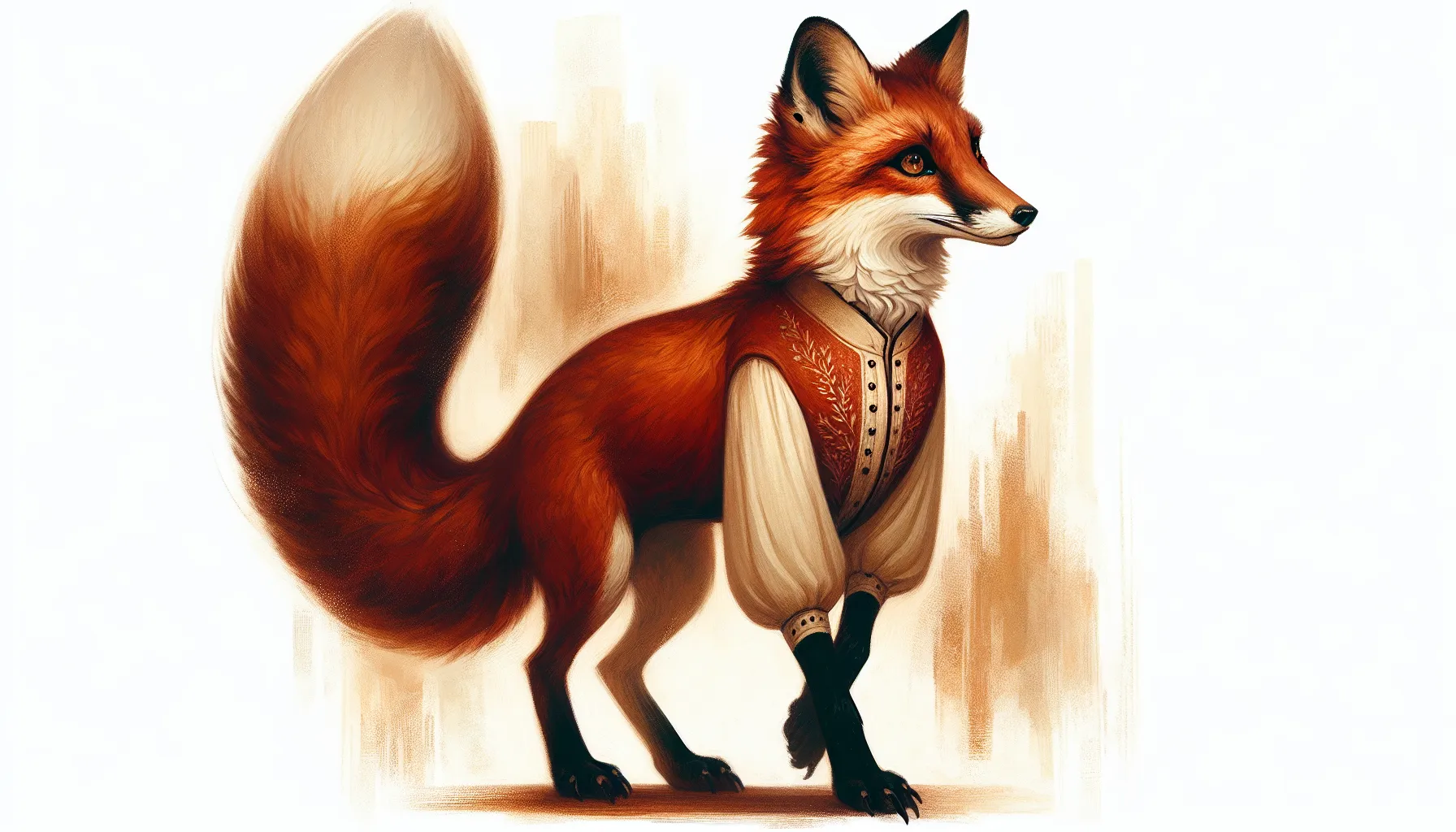
The series closes with a folk tale: Лисичка та Журавель — The Fox and the Crane. A fox invites a crane to dinner and serves the food on a flat plate. The crane's beak is too long for a flat plate; the fox eats everything. The crane returns the invitation and serves food in a tall narrow jar. The fox's snout cannot reach it; the crane eats everything. Reciprocity requires knowing how the other person receives. It takes exactly one return invitation to learn this.
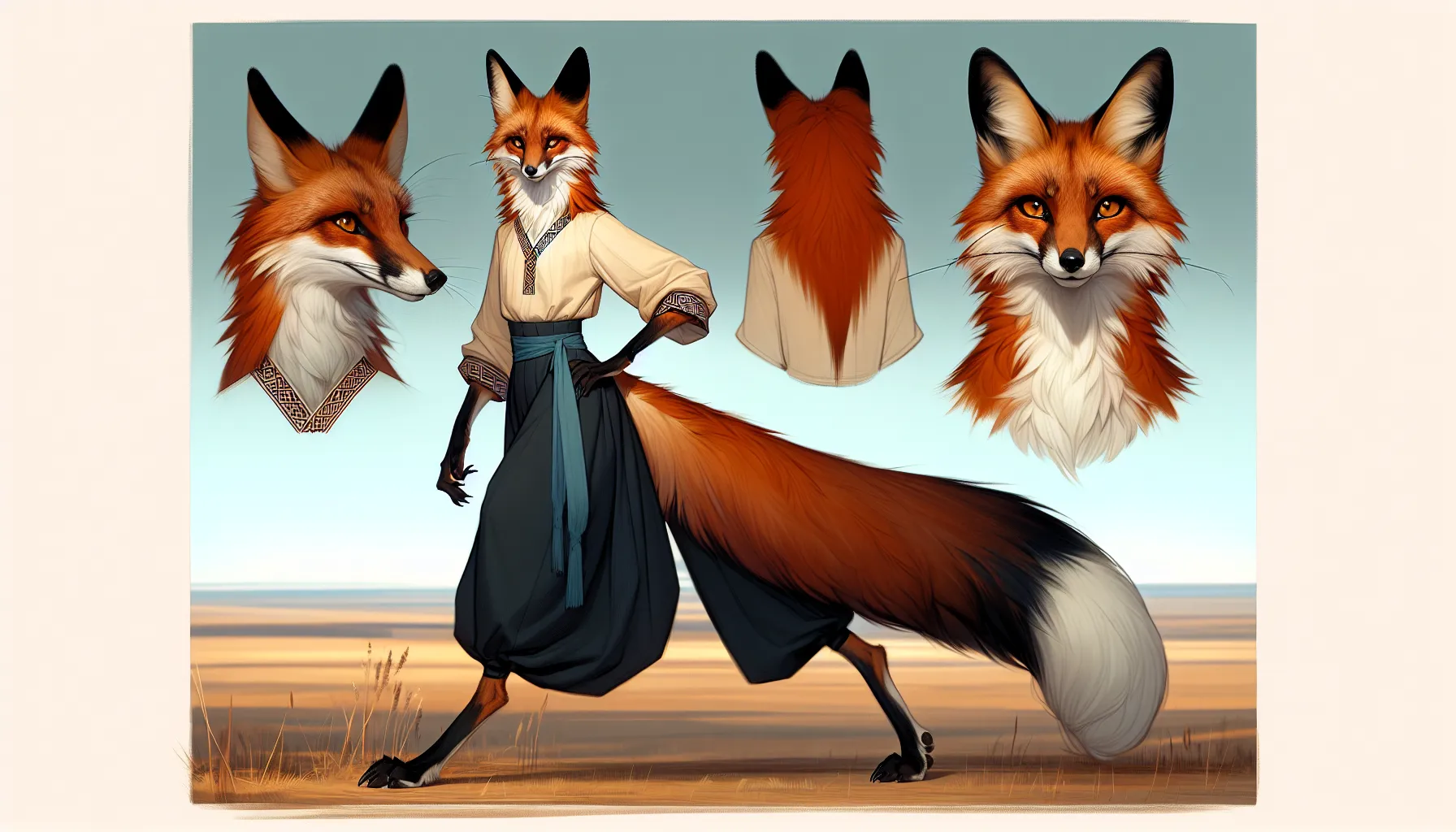
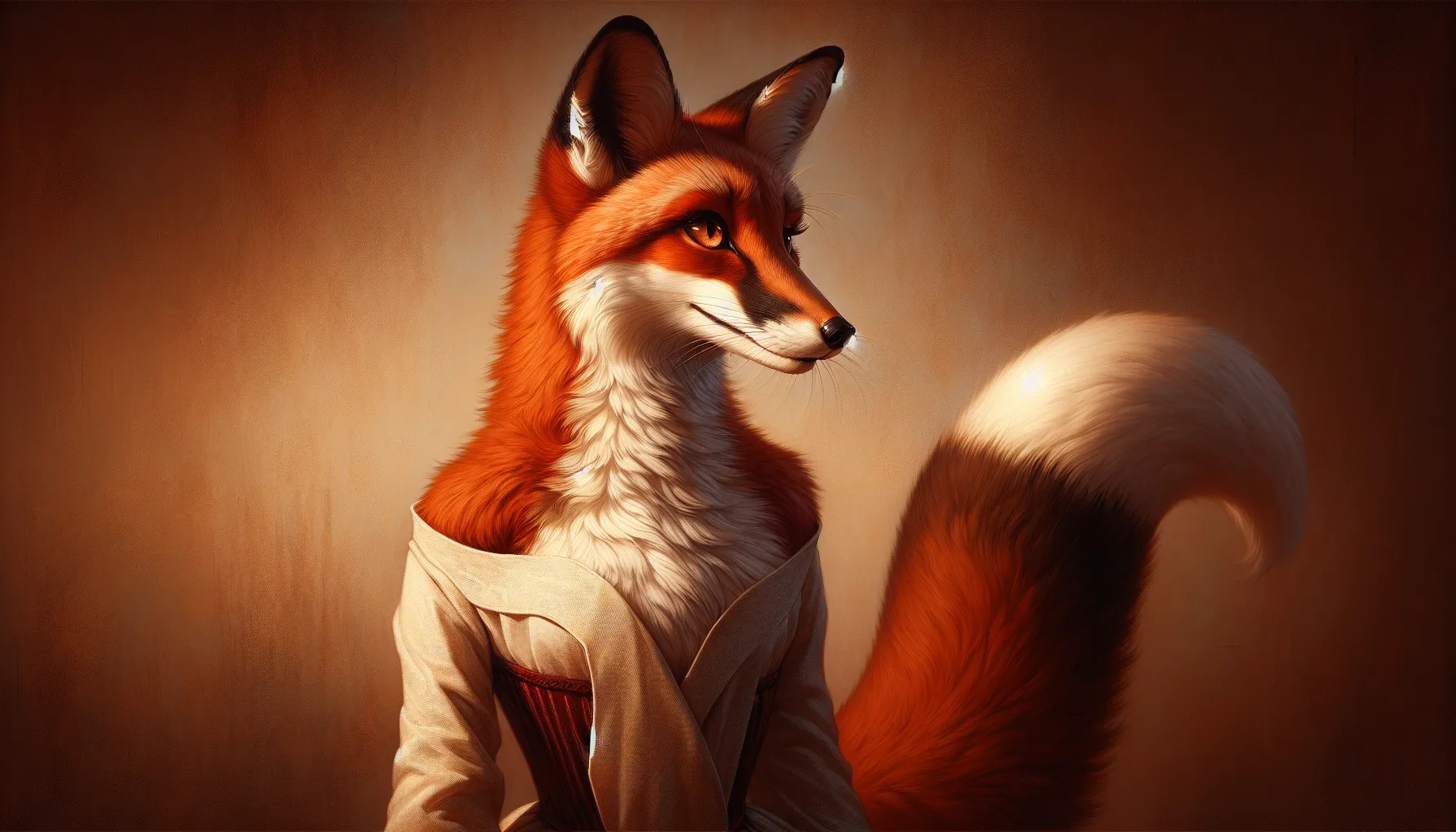
Пружинка — Pruzhynka
“Little spring” — the foundation bounce-step. Every folk dance begins here.

Cultural Insight

Every folk dance is also a children's game. Every children's game is also a folk dance. Ukraine never forgot this — the pruzhynka step is the same spring a child uses to jump on a bed.

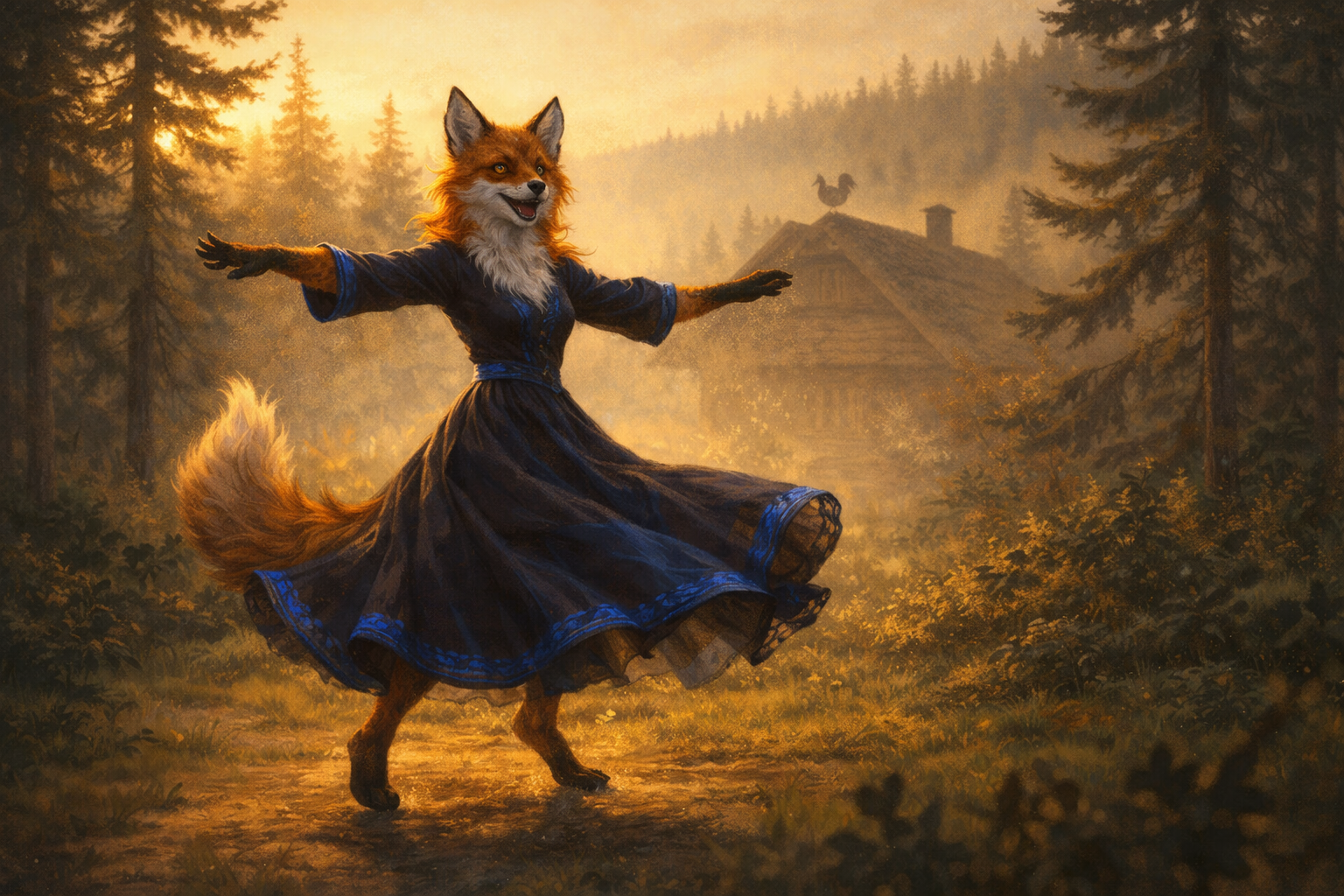
Foxyana demonstrating the pruzhynka bounce-step in a meadow
Late spring wildflower meadow with warm light

The ground gives back what you give it.

She does not look back. She trusts that feet are finding the same path hers found. That the ground is returning the weight the way it returned hers.
Episode 10 — The Child's Step

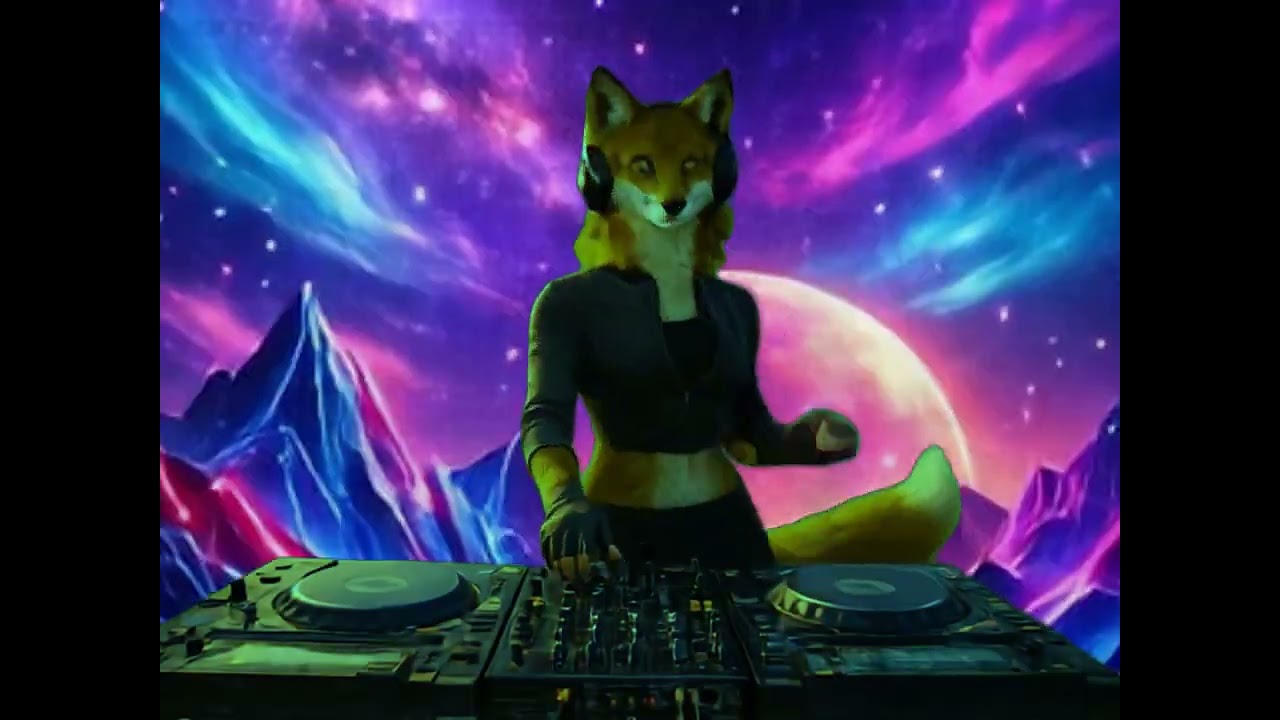
DJ Foxyana — Official Music Video

Душа вже знала

The Soul Already Knew

Ten episodes of heritage, held in the body. Before language, before record — the soul already carried what these mountains taught.

DJ Foxyana — Душа вже знала music video thumbnail

Original Performance

As it began — before the frequencies

Ten episodes of heritage, held in the body.
This is the dance that preceded the track — the original recording, before the electronic frequencies found their shape.

This art belongs to a country still standing.

Ukraine continues to defend its culture, its people, and its future. United24 is the official fundraising platform of the Ukrainian government — transparent, publicly reported, and direct.

Donate to Ukraine via United24